While global attention turns toward the Artemis II mission and the return of human lunar exploration, Huntsville, Alabama, stands as the quiet industrial heart of the project. The city, long dubbed "Rocket City," serves as the primary development site for the engineering that makes deep-space travel possible.
Historically a rural hub defined by cotton fields, Huntsville’s trajectory shifted in 1958 when the Redstone Arsenal launched Explorer 1, the first American satellite. The city soon became a focal point of the Cold War space race under the direction of Wernher von Braun. It was here that the Saturn rockets were developed, eventually carrying the Apollo missions to the lunar surface.
The legacy of the Marshall Space Flight Center
Today, the Marshall Space Flight Center remains a central nervous system for NASA. Engineers there developed the propulsion systems for the Space Launch System (SLS), the rocket responsible for the Orion capsule’s recent successful orbit around the Moon. This technical work continues to define the city’s identity, moving it far beyond its agricultural origins.
The mission recently concluded with the safe return of the crew to Earth, marking the first human lunar orbit in over 50 years. According to BioBioChile, the mission set a record for the distance humans have traveled from Earth, with astronaut Christina Koch becoming the first woman to orbit the Moon. Following the mission's success, Koch shared personal footage of her reunion with her dog, Sadie, noting on social media that the pet served as a vital emotional support animal during her preparation, BioBioChile reported.
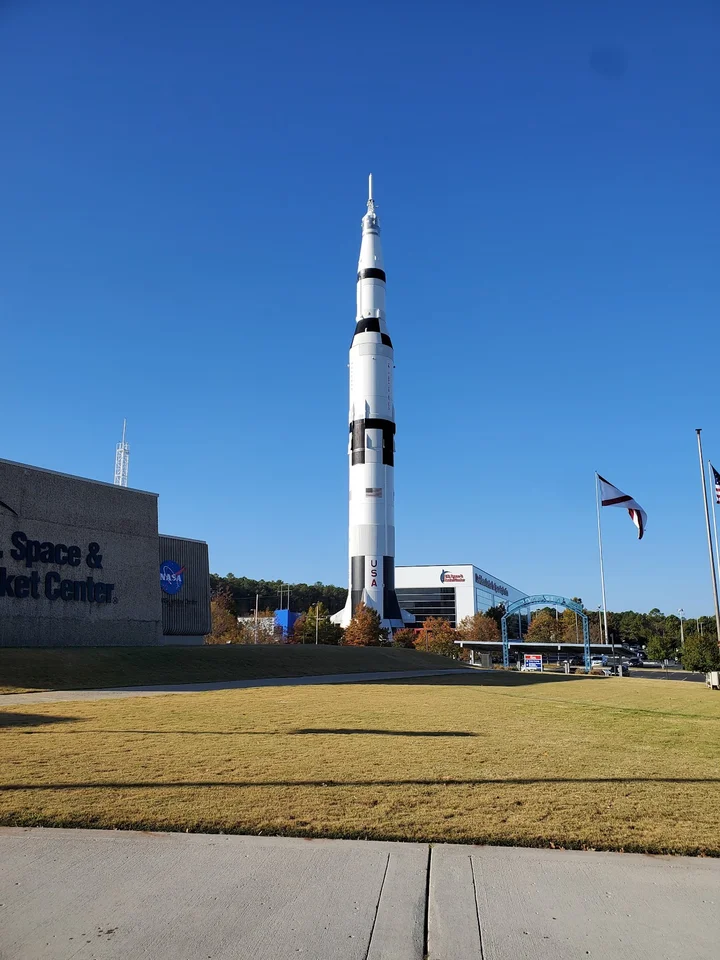
Visitors can trace this history at the U.S. Space & Rocket Center. The facility houses over 1,500 artifacts, including life-sized replicas of spacecraft and various simulators that allow civilians to experience F-16 flight or gravity-defying conditions. Since 1982, the center has hosted a space camp program that has trained participants from over 150 countries in aeronautics and space science.
Beyond the laboratories and launch pads, Huntsville maintains a distinct Southern character. The city’s urban landscape now blends modern amenities like the Orion Amphitheater and the MidCity District with the historical architecture of downtown’s Big Spring Park.
Culinary traditions also remain a cornerstone of local life. The region is famous for its barbecue, with institutions like Big Bob Gibson Bar-B-Q in nearby Decatur drawing visitors for century-old techniques, including their signature white-sauce smoked chicken. Huntsville represents a rare intersection where the high-stakes engineering of the future meets the enduring pace of the American South.