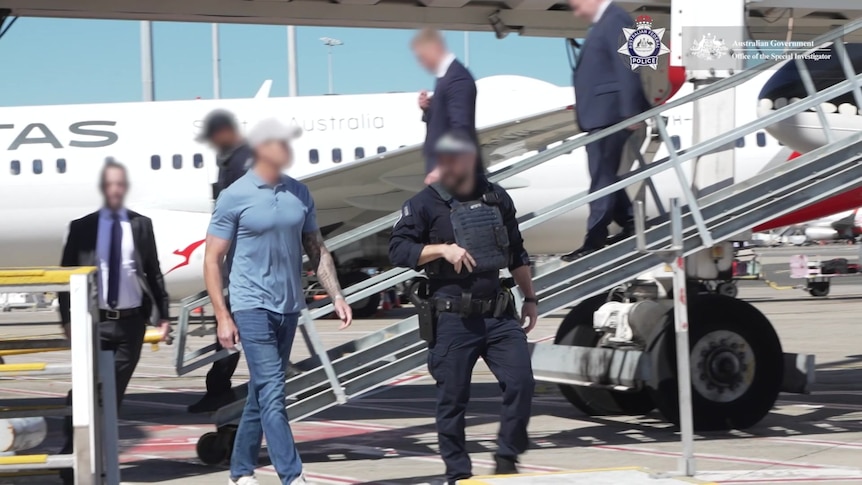
Australian authorities arrested Ben Roberts-Smith at Sydney airport on Tuesday, charging the former special forces corporal with five counts of murder. The charges stem from his deployment in Afghanistan between 2009 and 2012.
Roberts-Smith, 47, spent the night in a police cell ahead of a scheduled bail hearing on Wednesday. The Australian Federal Police (AFP) confirmed the arrest, noting the charges include one count of war crime murder, one count of jointly commissioning murder, and three counts of aiding, abetting, counseling, or procuring murder.
"It will be alleged the victims were shot by the accused or shot by subordinate members of the ADF in the presence of, and acting on the orders of, the accused," AFP Commissioner Krissy Barrett said during a press conference.
A legal battle over conduct
This criminal action follows a 2023 civil defamation judgment where a Federal Court judge found that Roberts-Smith, who served in the Special Air Service Regiment, had participated in the killing of unarmed Afghans. Justice Anthony Besanko concluded that the former soldier had ordered the execution of detainees to "blood" rookie soldiers. The judge also found evidence that Roberts-Smith was involved in the death of a handcuffed farmer and the mistreatment of a captured Taliban fighter.
Roberts-Smith has consistently denied all wrongdoing, previously describing the allegations as "egregious" and "spiteful." He unsuccessfully appealed the civil court findings last year.
The investigation into his conduct is part of a broader inquiry prompted by the 2020 Brereton Report, which identified credible evidence of 39 unlawful killings by elite Australian troops. The Office of the Special Investigator (OSI) has been tasked with handling these complex cases.
Ross Barnett, the OSI’s director of investigations, called the arrest a "significant step" despite the difficulties inherent in the case. "The OSI has been tasked with investigating literally dozens of murders alleged to have been committed in the middle of a war zone in a country 9,000km from Australia," Barnett said. He cited the lack of access to crime scenes, physical evidence, and witnesses as major obstacles for prosecutors.
Prime Minister Anthony Albanese declined to comment on the matter, citing the ongoing judicial process. Meanwhile, the Australian War Memorial stated it will review its exhibit dedicated to the Victoria Cross recipient to reflect the criminal charges.