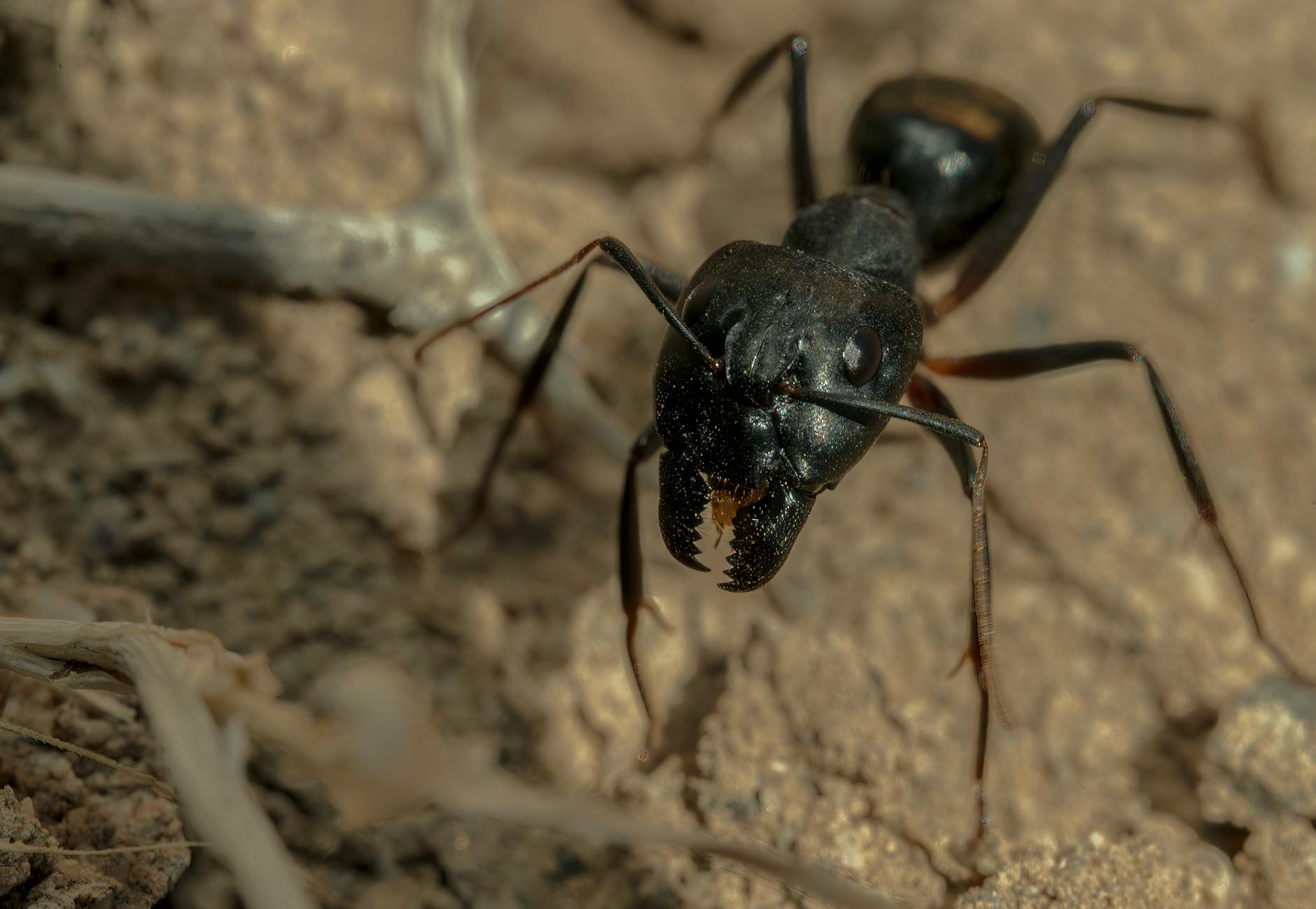
In the deserts of southeastern Arizona, researchers have discovered a unique symbiotic relationship where tiny cone ants act as 'cleaners' for much larger harvester ants, according to a report from ScienceDaily.
Entomologist Mark Moffett, a research associate at the Smithsonian's National Museum of Natural History, observed the interaction while studying ants in the Chiricahua Mountains. He noted that the smaller ants climb onto the larger specimens to lick and nibble debris from their bodies.
This behavior is the first known instance of one ant species cleaning a much larger, unrelated species. Moffett compared the phenomenon to the way certain fish clean larger predators in the ocean.
"This new ant species is the insect equivalent of cleaner fish in the ocean," Moffett said, as reported by ScienceDaily. "The potentially dangerous harvester ants even permit the visitors to groom between their open jaws."
A chance encounter
Moffett first noticed the unusual activity while observing harvester ants (_Pogonomyrmex barbatus_) leaving their nests to collect seeds. He noticed several ants remained unusually still, a rarity for the species.
Upon closer inspection with a camera, he found the motionless ants were covered in tiny cone ants from an undescribed species in the genus _Dorymyrmex_.
"Given the usual tendencies of ants, I first assumed that I was observing aggression," Moffett said. However, he realized the larger ants actually sought out the cone ant nests to initiate the grooming.
The cleaning sessions lasted anywhere from 15 seconds to over five minutes. During these encounters, the cone ants use their mouthparts to lick the harvester ants, sometimes with up to five small ants working on a single large ant at once.
Scientists are still investigating the biological benefits of this interaction. Moffett suggests the cone ants might be feeding on energy-rich particles, such as seed fragments, that the larger ants collect.
While harvester ants already groom themselves to remove parasites and spores, the cone ants may reach areas that are otherwise inaccessible. Future research will examine if this behavior impacts the microbiome or reduces infections for both species.