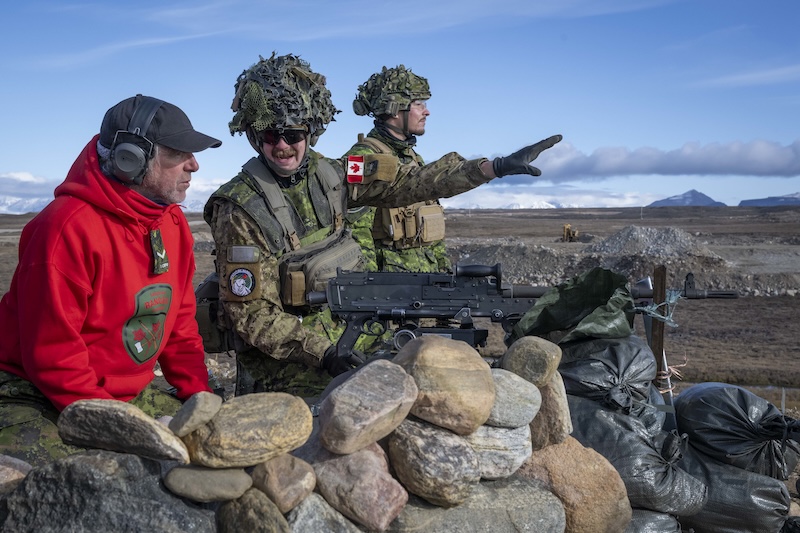
Canadian army reservists and Rangers concluded a grueling two-month mission in Churchill, Manitoba, on Friday, marking the end of the largest Arctic patrol in the history of the Canadian Armed Forces. The 1,300-person operation covered 5,200km through some of the planet’s most volatile environments.
Participants navigated snowmobiles across Hudson Bay and remote northern regions, facing temperatures as low as -60C. The mission served as a strategic survey of land that accounts for 40% of Canada’s territory and 70% of its coastline, testing the military’s ability to operate in extreme cold.
Sovereignty in a shifting climate
Brigadier General Daniel Rivière, commander of the task force, stated the mission was designed to prepare for “the worst-case scenario.” While he noted that incidents in the region, such as Russian military probing, do not constitute an immediate threat, he warned that rival nations are becoming increasingly proficient in Arctic operations.
Climate change has introduced new variables, creating both hazards and opportunities. Lieutenant Colonel Travis Hanes reported that unseasonably warm weather has caused rivers to overflow, creating unstable ice, while record cold spells have opened new, previously impassable maritime corridors.
Indigenous Inuit members of the Canadian Rangers proved vital to the mission’s success. These local experts navigated the terrain, provided traditional knowledge, and shared subsistence food like caribou and Arctic char to sustain troops throughout the journey.
“We would’ve failed without them,” Hanes said. The Inuit Rangers acted as essential guides, ensuring the patrol could traverse the ice safely while monitoring for dangers ranging from polar bears to hazardous terrain.
Barnie Aggark, a Ranger from Chesterfield Inlet, emphasized the cultural and national importance of the patrol. “We have to let the rest of the world know that we are here, and this is our home, and we are going to protect it with everything that we have,” Aggark said.
Operation Nanook-Nunalivut included international cooperation, with observers from the United States and the United Kingdom monitoring progress from a command center in Edmonton. Soldiers from France and Belgium also participated in ice-diving exercises alongside Canadian personnel. These efforts signal a commitment to NATO-aligned defense in the Arctic, a region where Russia maintains dozens of permanent military bases.