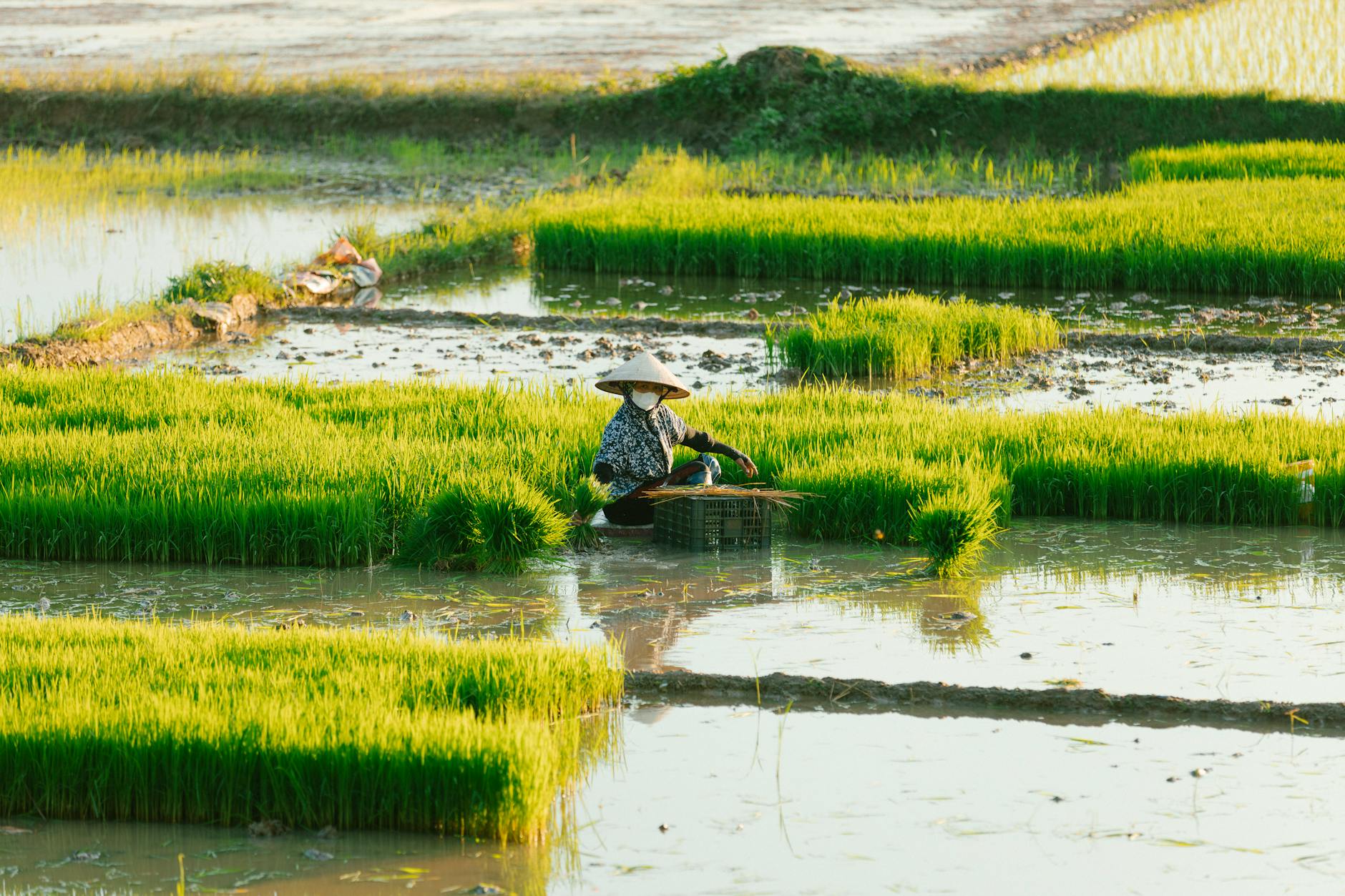
Projected global warming is set to exceed the long-term thermal limits of rice cultivation, potentially devastating food security for over one billion people in Asia, according to a study published in Communications Earth & Environment.
Researchers integrated archaeological data and contemporary cultivation records to assess how temperature shifts impact the crop. The findings suggest that the thermal boundaries for rice have remained remarkably stable throughout 9,000 years of domestication.
Historically, domesticated Asian rice has rarely thrived in regions where the mean annual temperature exceeds 28°C or where warm-season maximum temperatures surpass 33°C. However, climate projections indicate a massive shift is approaching.
By the end of this century, the land area in Asia’s primary rice-growing nations that exceeds these critical thermal thresholds could expand by ten to thirty times, the report states.
A lack of evolutionary adaptation
The study highlights a disconnect between the speed of climate change and the biological capacity of the crop to adapt. While humans use scientific breeding to introduce new traits, these advances have not successfully expanded the plant's heat tolerance.
In fact, the research notes that as temperatures have risen, rice farming has shifted from warmer areas to cooler ones rather than adapting to increased heat. This migration of cultivation areas serves as a primary method of climate adaptation.
Recent increases in harvested rice areas are largely attributed to farming technology rather than an expansion of the plant's climatic tolerance, the outlet reported.
This trend presents a severe risk to the global food supply. The rate of anticipated climate change is expected to eclipse the rate of historical niche adaptations in grasses. By 2070, temperatures are projected to rise at a rate 5,000 times faster than what most varieties of the Poaceae family have experienced throughout their evolution.
Rice-dependent regions now face unprecedented challenges in maintaining production. Because more than 90% of the world's rice is grown in Asia, the expansion of heat-stressed zones threatens the livelihoods of one fifth of the global population.