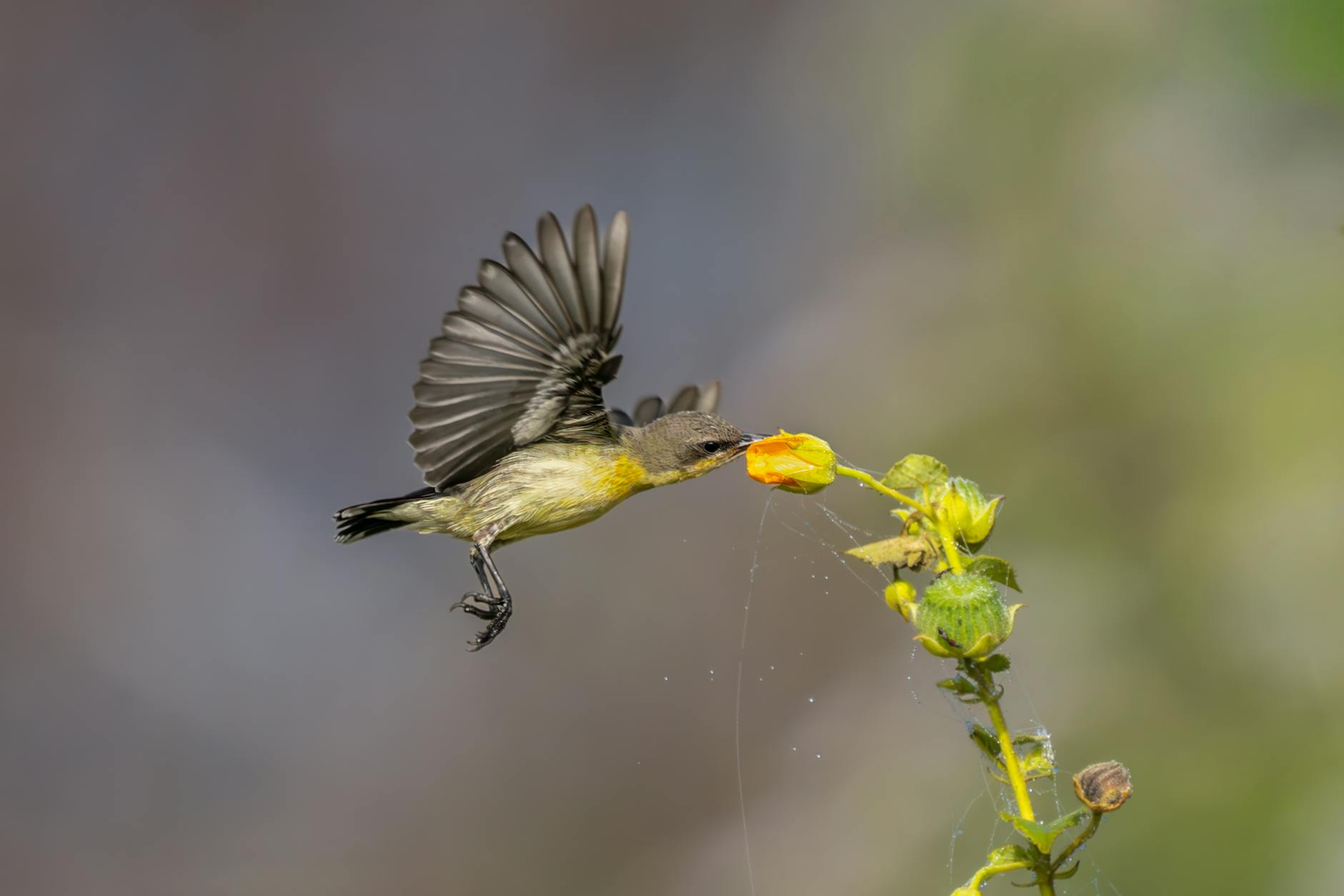
Biologists at the University of California, Berkeley, have discovered that sunbirds use a unique tongue-suctioning technique to drink nectar, distinguishing them from the nectar-sipping hummingbirds of the Americas.
While hummingbirds use their tongues to sponge up liquid and squeeze it into their mouths, sunbirds employ a mechanism that allows them to actively suction nectar through their beaks. This finding, published in the journal Current Biology, identifies the first known instance of a vertebrate using its tongue to create suction.
Researchers used high-speed cameras and microCT scans to compare the feeding mechanics of the two bird groups. The study, led by postdoctoral fellow David Cuban, highlights how different evolutionary paths can lead to similar ecological roles.
"I am fascinated by the phenomena of convergent evolution," Cuban said. "Hummingbirds and sunbirds... have similar morphology, coloration, behavior and ecological niches, but once we zoom in on something specific... we find that they use completely distinct mechanisms."
A novel biological mechanism
Most vertebrates, such as cats and dogs, use licking or lapping to ingest liquids. While some fish and butterflies use suction, sunbirds appear to be unique among vertebrates in using their tongues for this purpose.
Previously, scientists believed nectar-eating birds relied on capillary action—the passive pulling of liquid via surface tension—to feed. However, the energy demands of high-metabolism birds made this theory unlikely.
"There’s no way they would ingest enough nectar, given that sunbirds and hummingbirds have this incredibly beautiful ornamentation that they’re very actively displaying," said Rauri Bowie, a UC Berkeley professor of integrative biology and study author.
CT scans of the birds revealed that the sunbird's tongue shifts from a U-shaped trough to a closed tube. This structure interacts with the upper bill to create the necessary seal for suction.
Bowie described the discovery as a remarkable example of biological innovation, noting that nature often finds different solutions to the same environmental challenges.