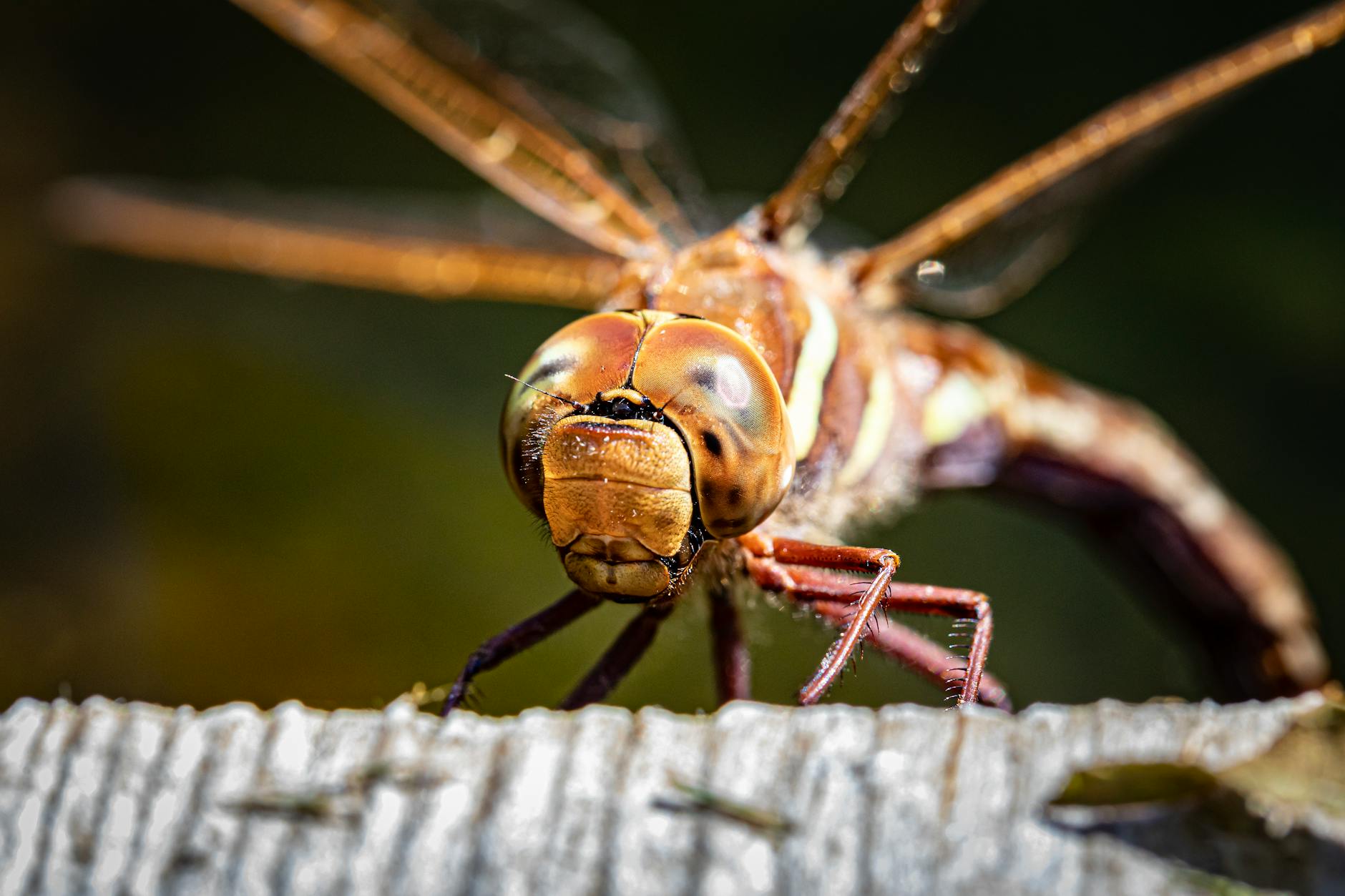
Researchers at Osaka Metropolitan University have discovered that dragonflies use a red-light detection mechanism nearly identical to that found in humans and other mammals.
The study, published inCellular and Molecular Life Sciences, suggests that these two distantly related lineages underwent parallel evolution to achieve similar visual capabilities.
While humans rely on three types of opsin proteins to perceive blue, green, and red light, dragonflies possess an unusually potent red vision. The team identified a dragonfly opsin capable of detecting light at approximately 720 nm, extending into the deeper red end of the visible spectrum.
"This is one of the most red-sensitive visual pigments ever found," said Professor Akihisa Terakita of OMU’s Graduate School of Science. "Dragonflies can likely see deeper into red light than most insects."
Evolutionary convergence and medical potential
The researchers believe this heightened sensitivity helps dragonflies identify mates during flight. By measuring reflectance, the team found significant differences between male and female dragonflies in the red to near-infrared range.
"Surprisingly, the mechanism by which dragonfly red opsin detects red light is identical to that of red opsin in mammals, including humans," said Ryu Sato, the study's first author.
Beyond zoology, the discovery offers new possibilities for medical technology. The researchers successfully identified a single position in the protein that controls light sensitivity. By tweaking this position, they engineered a version of the protein that responds to even longer wavelengths.
This breakthrough could advance optogenetics, a field that uses light-sensitive proteins to study and treat medical conditions. Because the modified dragonfly opsin responds to near-infrared light, it can penetrate deeper into living tissue.
"These findings demonstrate this opsin as a promising optogenetic tool capable of detecting light even deep within living organisms," said Professor Mitsumasa Koyanagi.