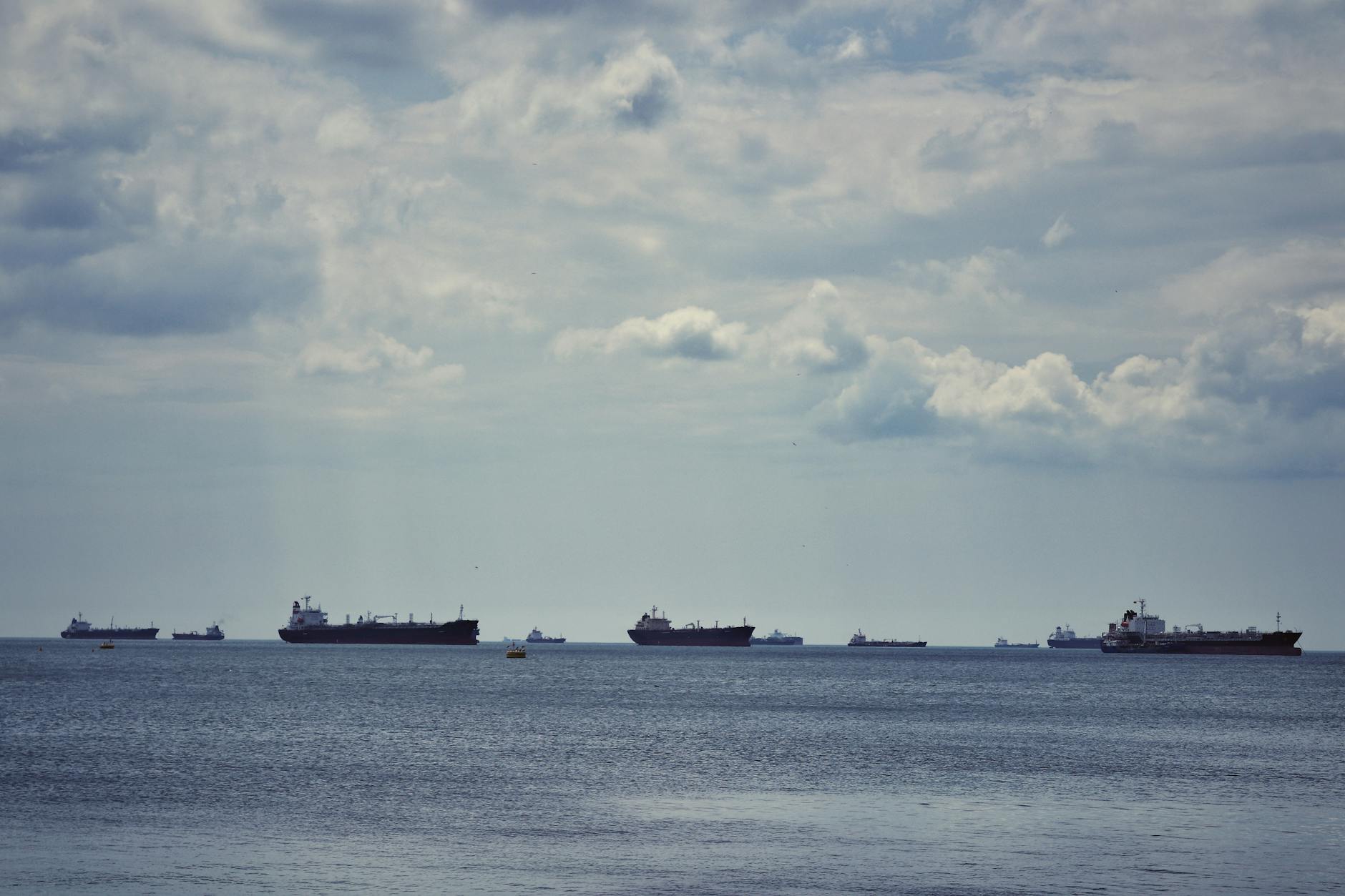
More than 20 commercial ships have passed through the Strait of Hormuz in the past 24 hours, according to a report by the Wall Street Journal citing U.S. officials, marinelink.com reported on Tuesday.
The movement occurs despite a naval blockade of Iran's ports and coastal areas recently established by the United States. The U.S. military's Central Command previously stated that no ships had bypassed the blockade and that six merchant ships had received orders to turn back.
President Donald Trump announced the blockade on Sunday following the failure of peace talks between the U.S. and Iran in Islamabad. The operation involves over 10,000 U.S. forces, dozens of aircraft, and more than a dozen warships, according to the U.S. military.
Shipping patterns shift under blockade
Security company Windward reports that initial vessel movements show a mix of continued transit, route deviation, and potential blockade evasion. Some sanctioned and falsely flagged vessels are proceeding through the Strait, while others are delaying or shifting routing patterns, marinelink.com reported.
Traffic levels have dropped significantly from the 130-plus daily crossings recorded before the conflict between the U.S. and Israel and Iran began on February 28. Industry sources noted on Tuesday that the blockade has created deep uncertainty for oil companies, shippers, and war risk insurers.
Three Iran-linked vessels transited the strait but were not heading to Iranian ports and remained unaffected by the blockade. This included the Panama-flagged Peace Gulf, a medium-range tanker destined for the UAE's Hamriyah port.
Two other U.S.-sanctioned tankers also passed through the waterway. The Murlikishan, a handy tanker, is currently heading to Iraq to load fuel oil. The Rich Starry, owned by Shanghai Xuanrun Shipping Co, would be the first sanctioned vessel to exit the Gulf since the blockade began.
The Rich Starry is carrying approximately 250,000 barrels of methanol loaded at the UAE's Hamriyah port. The vessel is operated by a Chinese crew.
China's foreign ministry criticized the blockade on Tuesday, calling the U.S. actions toward Iranian ports "dangerous and irresponsible" and warning of increased tensions.
Five other vessels have sailed through the strait since the blockade began at 1400 GMT on Monday. These include two dry bulk vessels, two chemical and gas tankers, and the Ocean Energy cargo ship, which docked at Iran's Bandar Abbas port.
A U.S. military note sent to mariners indicates that humanitarian shipments are exempt from the blockade.
"The United States does not need to block every type of ship or enter the Strait of Hormuz; it can carry out an intermittent blockade," said Fabrizio Coticchia, a professor of political science at Italy's University of Genoa. He added that U.S. warships would likely remain positioned in the Gulf of Oman to divert rather than attack ships.
While war-risk insurance costs have not yet spiked, they remain hundreds of thousands of dollars higher in weekly costs. Ship broker BRS stated in a report that a return to normalcy in the Middle East appears more distant than it did a week ago.