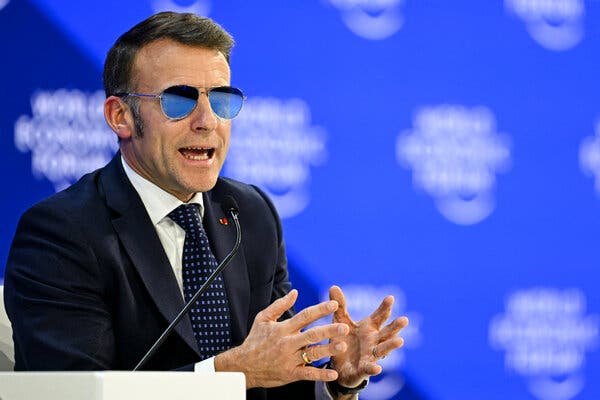
French President Emmanuel Macron announced Monday that he will host a summit with the United Kingdom in the coming days to establish a multinational mission for the Strait of Hormuz. The initiative seeks to ensure the free flow of maritime traffic in the strategic waterway following a breakdown in diplomatic negotiations between Washington and Tehran.
Macron shared the plan via social media, describing the proposed operation as a strictly defensive effort. He emphasized that the mission would remain independent of the parties currently involved in the regional conflict. The French leader noted that the deployment would begin as soon as circumstances allow, though he provided no specific timeline for the operation.
Economic fallout and market volatility
The push for a maritime coalition comes as the global economy faces mounting pressure from the conflict. Following the U.S. military's announcement that it would block traffic to and from Iranian ports, international oil prices surged. According to La Tercera, U.S. crude futures for May delivery rose more than 7% to reach $103.66 per barrel, while Brent crude for June delivery climbed 7.2% to $102.05. Markets reacted sharply to the news, with Dow futures sliding 1.04% and S&P 500 futures dropping 1%, according to CNN Chile.
Diplomatic friction and the blockade
The escalation follows the failure of peace negotiations in Pakistan over the weekend. The U.S. Central Command (CENTCOM) announced Sunday that it would block all maritime traffic entering or exiting Iranian ports as of 10:00 a.m. ET Monday, specifying that the measure applies to vessels of all nations but will not interfere with ships traveling to or from non-Iranian ports, La Tercera reported. Additionally, The Wall Street Journal reported that President Trump is evaluating the possibility of limited strikes against Iran to break the diplomatic stalemate.
Amid these tensions, the Vatican has faced its own friction with the White House. Pope Leo XIV recently stated he is not afraid of criticism from the Trump administration after the U.S. president remarked he was "not a fan" of the Pope, citing the pontiff's comments regarding nuclear weapons, according to European Pravda. The Pope emphasized that the church does not operate as a political entity, stating, "We are not politicians, we don't deal with foreign policy with the same perspective (as) he might understand it."
Macron stated that diplomatic channels must remain open to secure a lasting agreement in the Middle East. He argued that such a deal must provide a solid framework for regional peace and security. According to the French president, the strategy must address Iran’s nuclear and ballistic activities while curbing actions that destabilize the region.
“No efforts should be spared to achieve a firm and lasting agreement quickly through diplomatic means,” Macron said. He added that the mission must also ensure the restoration of uninterrupted navigation through the strait and support the sovereignty and territorial integrity of Lebanon.
Paris remains committed to its role as a mediator in the conflict, which escalated sharply on February 28 when the United States and Israel launched a surprise offensive against Iran. The French government has maintained its involvement in the diplomatic process since the initial outbreak of hostilities. Officials in Paris have yet to disclose which other nations might join the British-French coalition.