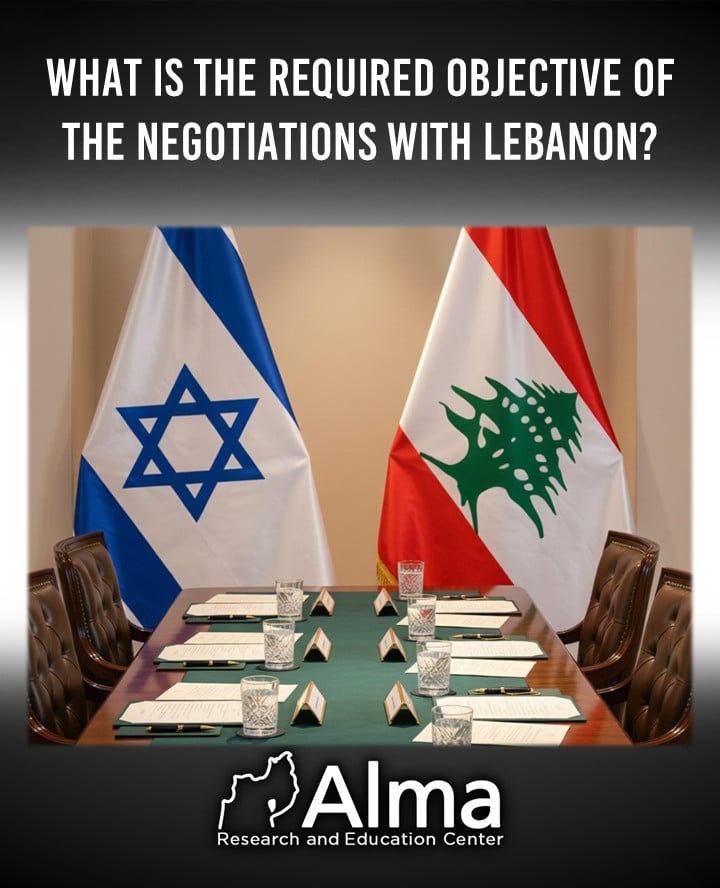
Israel’s ambassador to the United States, Yechiel Leiter, held a high-level phone call with his Lebanese counterpart, Nada Hamadeh Moawad, over the weekend to finalize plans for upcoming peace talks. The engagement marks a rare departure from the lack of formal diplomatic relations between the two nations.
Leiter confirmed the development in a statement, noting that the negotiations will take place under the auspices of the U.S. State Department. "In the conversation earlier today in Washington between the Israeli and Lebanese ambassadors to Washington, together with the US ambassador to Lebanon, and under the auspices of the US State Department, Israel agreed to begin formal peace negotiations this coming Tuesday," Leiter said. Lebanese Prime Minister Nawaf Salam confirmed on Sunday that he is working to stop the Israel-Hezbollah war ahead of these planned Washington talks, according to France 24.
While planning moves forward, the path to a broader truce remains blocked. Leiter explicitly stated that Israel will not discuss a ceasefire with Hezbollah. He labeled the group the "main obstacle to peace" due to its ongoing attacks against Israel. This hardline stance was echoed by Prime Minister Benjamin Netanyahu, who visited the front lines in southern Lebanon on Sunday. France 24 reported that this was Netanyahu's first visit to the region since fighting against the Iran-backed movement began on March 2. During the visit, Netanyahu declared that "the war continues" even as his government prepares for diplomatic engagement, asserting that Israel has "changed the landscape of the Middle East" and that while they have "frustrated the threat of an invasion from Lebanon"—or as France 24 noted, "eliminated the threat of an invasion"—there is "more to do" to counter high-trajectory rocket fire.
Lebanese lawmaker Hassan Fadlallah, who is affiliated with Hezbollah, rejected the premise of the talks on Saturday. He stated that the organization opposes direct negotiations between the two countries. The diplomatic push follows a period of intense military escalation, including a widespread Israeli ground offensive in southern Lebanon. La Tercera reported that the official death toll in Lebanon has now surpassed 2,050, including 165 children, with nearly 6,600 people injured, among them 644 children.
The background of Israel's envoy
Yechiel Leiter, a Scranton-born diplomat, assumed his post as Israel’s ambassador to the U.S. in January 2025. A long-time figure in Israeli right-wing politics, Leiter previously served as a senior adviser to former Prime Minister Ariel Sharon and as chief of staff for Benjamin Netanyahu during his tenure as finance minister.
Leiter’s background includes extensive work with pro-settlement organizations in the occupied West Bank. He holds a PhD in political philosophy from the University of Haifa and has previously held leadership roles at the Israel Ports Company. Before his appointment to Washington, he was a researcher at the Herzl Institute, a policy organization aligned with right-wing ideological positions.
His role as ambassador places him at the center of a volatile geopolitical landscape. Israel’s current military campaign in Lebanon intensified following the February 28 U.S.-Israel war on Iran and the subsequent assassination of Iranian Supreme Leader Ayatollah Ali Khamenei. As formal talks approach, the international community continues to track the potential for a diplomatic breakthrough against the backdrop of a conflict that has resulted in the displacement of more than one million people.