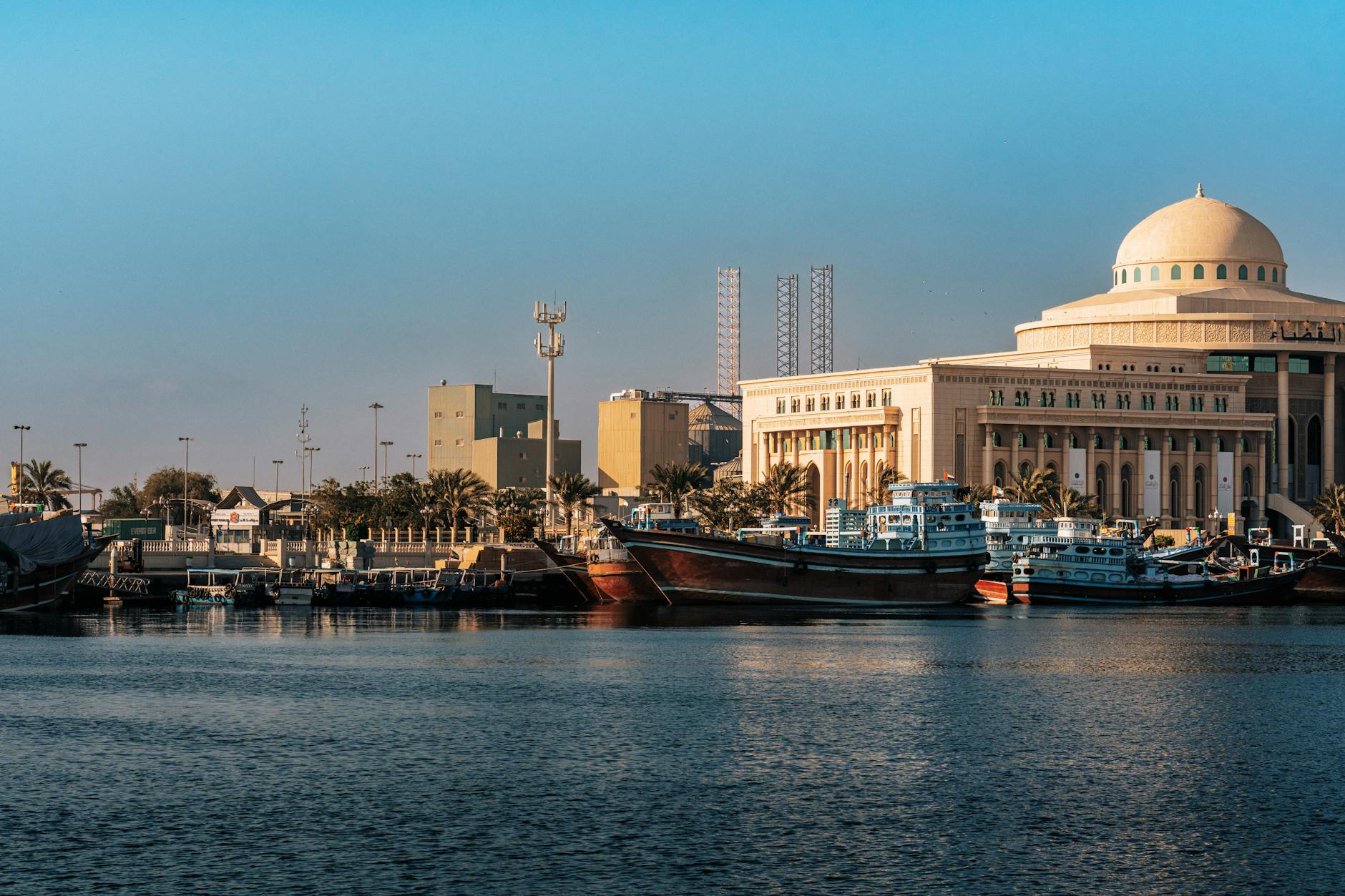
A regional ceasefire, in effect since April 8, faces mounting instability as Gulf nations report a series of coordinated drone attacks against maritime and coastal targets. On Sunday, Qatar’s Ministry of Defence confirmed a drone struck a cargo ship in its waters northeast of the port of Mesaieed, sparking a fire that was later extinguished. Simultaneously, the United Arab Emirates reported that its air defense systems intercepted two unmanned aerial vehicles launched from Iran, while Kuwaiti officials stated they dealt with “hostile drones” detected in their airspace at dawn.
The United Kingdom Maritime Trade Operations (UKMTO) confirmed a bulk carrier was struck by an “unknown projectile” approximately 23 nautical miles northeast of Doha, noting no casualties. Iran’s Fars news agency later claimed the vessel was a United States-flagged ship. These incidents follow a week of direct maritime friction, including reports from Friday that U.S. forces engaged in combat with Iranian missiles, drones, and small boats, while Iran alleged the U.S. targeted an Iranian oil tanker and another vessel near the Strait of Hormuz.
Tehran has issued direct warnings regarding the U.S.-led naval blockade of its ports. Military spokesman Mohammad Akraminia stated that vessels passing through the Strait of Hormuz would face “severe consequences” if they did not cooperate with Iranian authorities first. “The Americans will never be able to turn this vast expanse in the northern Indian Ocean into a real blockade by covering it with their fleet,” Akraminia said in a statement reported by IRNA.
Diplomatic efforts to end the conflict are ongoing, with Iran confirming it has sent a response to a 14-point U.S. peace proposal via Pakistani mediators. The U.S. plan, floated earlier this week, requires Iran to freeze uranium enrichment for at least 12 years, hand over its current 440kg (970lb) stockpile of 60-percent enriched uranium, and reopen the Strait of Hormuz within 30 days. In exchange, Washington has offered to lift decades-long sanctions and release frozen Iranian assets. Pakistani officials confirmed they received the response, though the timeline for communicating it to Washington remains unclear.
Intelligence reports suggest that Russia may have provided Iran with contingency plans for a potential conflict with the U.S. in the Persian Gulf. According to a 10-page document described by The Economist on May 8, the Russian GRU proposed supplying Tehran with up to 5,000 short-range, fiber-optic drones designed to resist electronic warfare. The document reportedly included operational diagrams for targeting U.S. amphibious landing ships and oil terminals, such as Kharg Island, and suggested recruiting drone operators from Iranian students in Russia, Tajik nationals, and Syrian Alawites.
Investigator Christo Grozev told The Economist that the proposal aligns with evidence of Moscow seeking to deepen military cooperation with Tehran during the regional escalation. While regional intelligence officials deemed the document “plausible,” they could not independently verify its implementation. The report claims Vladimir Putin personally proposed training Iranian operators to use these drone swarms against U.S. military personnel.
The economic impact of the conflict continues to spread, as the Strait of Hormuz—a transit point for one-fifth of global crude oil and gas—remains contested. Central banks in the U.S., UK, and Europe are holding interest rates steady to manage the energy shock, even as inflation and rising fuel costs squeeze businesses and households. International authorities, including the IMF, have warned of a global slowdown, forcing governments in emerging markets to ration fuel, reintroduce subsidies, or deplete reserves to mitigate the crisis.