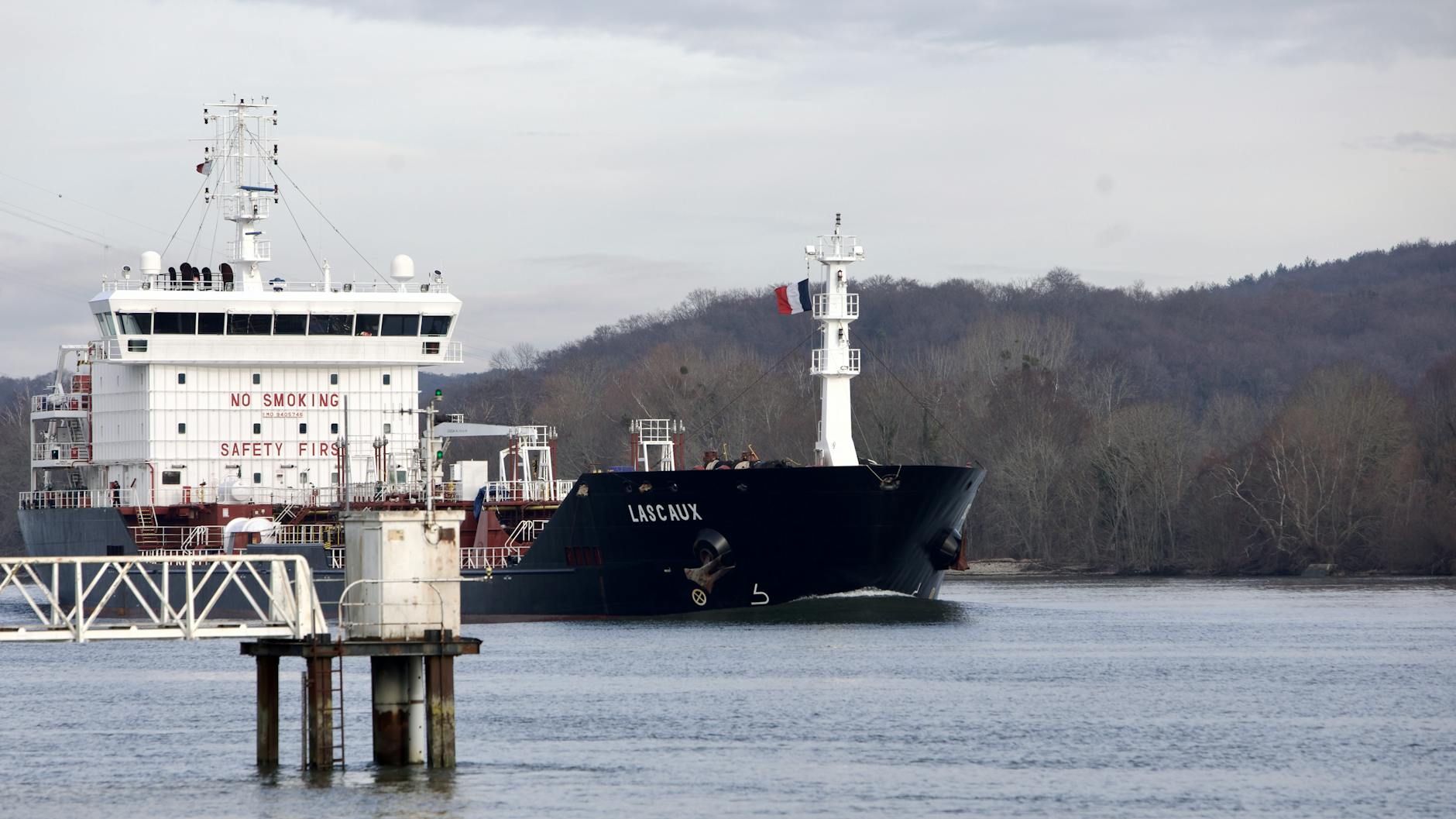
The French navy intercepted the oil tanker Tagor in the Atlantic Ocean on Sunday, marking the fourth such boarding by French forces since September 2025. President Emmanuel Macron confirmed the operation on X, stating that the vessel was seized in international waters with support from the United Kingdom to enforce sanctions against Russia.
French maritime authorities reported that the tanker, which had departed from the Russian port of Murmansk—identified by CNN as the port of Umba—was flying a false Cameroonian flag at the time of the boarding. The vessel had previously transmitted signals while flying a Madagascan flag, according to MarineTraffic data. Officials described the tanker as "almost empty" at the time of the interception.
Guillaume Le Rasle, a spokesman for the Atlantic maritime prefecture, stated that the vessel was under both European Union and United States sanctions. "It is a vessel that was known and tracked," Le Rasle told AFP. "The objective of the diversion is to verify the validity of its flag."
Kremlin Reaction and Economic Pressure
The Kremlin responded to the seizure with immediate condemnation, characterizing the intervention as "illegal" and "bordering on international piracy." Spokesman Dmitry Peskov emphasized that Russia is actively taking measures to ensure the safety of its cargo and will continue to do so in response to what he termed a "negative experience."
This interception occurs as the Russian economy faces mounting pressure. According to reporting from Reuters, Russian business leaders have begun openly advocating for an end to the war to facilitate economic recovery. Russia’s economic growth, which stood at 4.9% in 2024, slowed to 1% in 2025 and contracted by 0.2% in the first quarter of 2026. Business figures cited by Reuters suggest that the current economic stagnation and the impact of drone strikes on oil refineries have crippled industrial infrastructure.
While France has moved to block these tankers, the effectiveness of such measures remains a point of contention. Although British Prime Minister Sir Keir Starmer announced in March that the UK military had been granted permission to board sanctioned Russian vessels, BBC Verify analysis suggests that nearly 200 "shadow fleet" ships entered UK waters between mid-March and May 11. The Ministry of Defence maintained it is "disrupting and deterring" these vessels without detailing specific operations.
Macron defended the legality of the Sunday operation, writing, "It is unacceptable that boats skirt international sanctions, violate the law of the sea and finance the war that Russia has been waging for more than 4 years against Ukraine." He added that the vessels, which frequently bypass basic maritime navigation rules, pose a significant threat to both the environment and regional security.