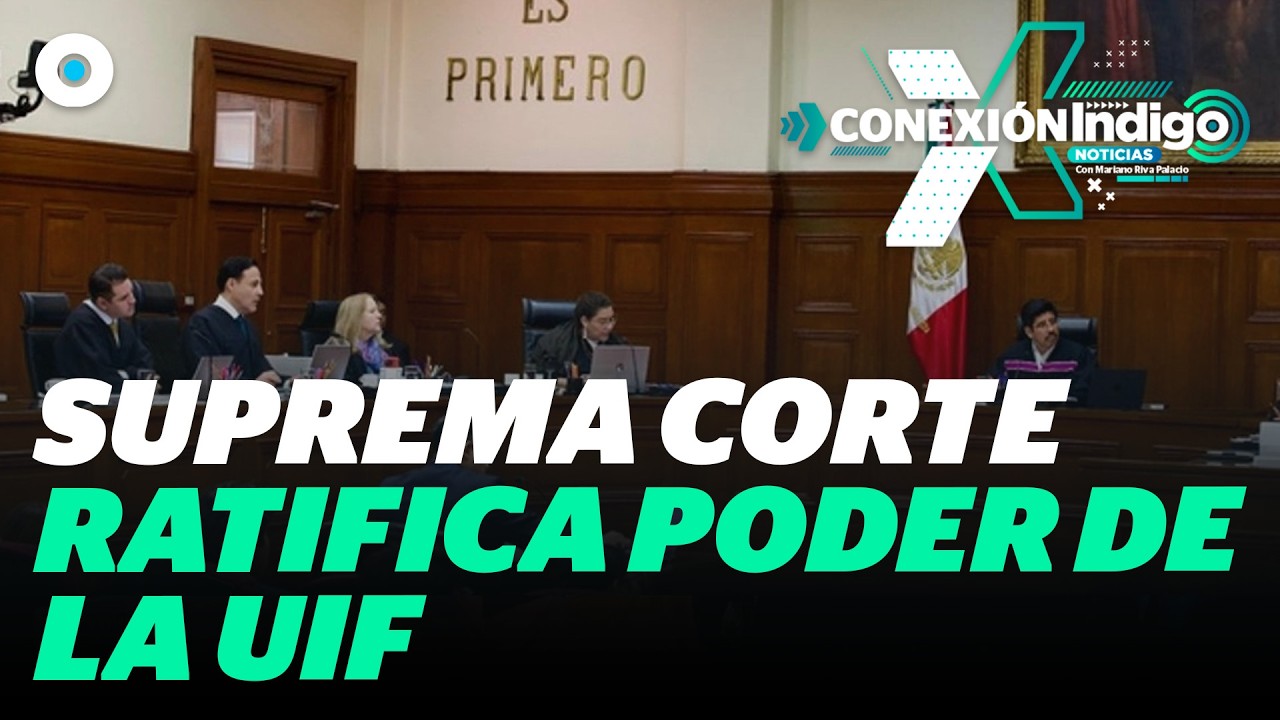
Mexico’s Supreme Court validated the authority of the Financial Intelligence Unit (UIF) to block bank accounts without a prosecutor's intervention or a judicial order on April 6. In a 6-3 ruling, the Court confirmed the agency can freeze assets based only on 'reasonable indications' of illicit operations.
The decision redefines the legal landscape for individuals and corporations holding accounts within the Mexican financial system. The ruling allows the UIF, an agency under the Ministry of Finance, to bypass the traditional requirement for a judge's signature or requests from foreign authorities.
Compliance specialist Pedro Javier Leyva Lizárraga notes the operational logic behind the ruling, stating that financial organized crime moves too quickly for judicial intervention. He argues that no serious anti-money laundering system can rely on the speed of a judge's signature.
Leyva Lizárraga points to data showing that between 2018 and 2025, previous legal criteria allowed for the unfreezing of more than 32 billion pesos through injunctions that did not deeply analyze the underlying evidence.
Risks to foreign investment
Despite the operational benefits, the ruling lacks precise definitions regarding what constitutes sufficient evidence for a freeze. Current laws no longer allow for immediate suspensions via injunctions, meaning an account freeze could remain in effect for up to two years while legal processes resolve.
The burden of proof has effectively shifted to the affected parties. Account holders must now prove the legitimacy of their funds rather than the authority proving their illegality.
Leyva Lizárraga warns that international markets view this through two lenses. While it may signal a harder stance against money laundering, it also suggests an expansion of executive power over the financial system without adequate institutional checks.
This lack of oversight could impact Mexico's competition for direct investment against nations like Brazil, Colombia, Vietnam, and Poland. For foreign correspondent banks, the primary concern is not the power to freeze accounts, but the presence of credible institutional safeguards against arbitrary use.
Companies operating in Mexico must now update their risk matrices and compliance programs. Banks face the added pressure of developing clear notification protocols for corporate clients to protect their institutional reputation during freeze events.