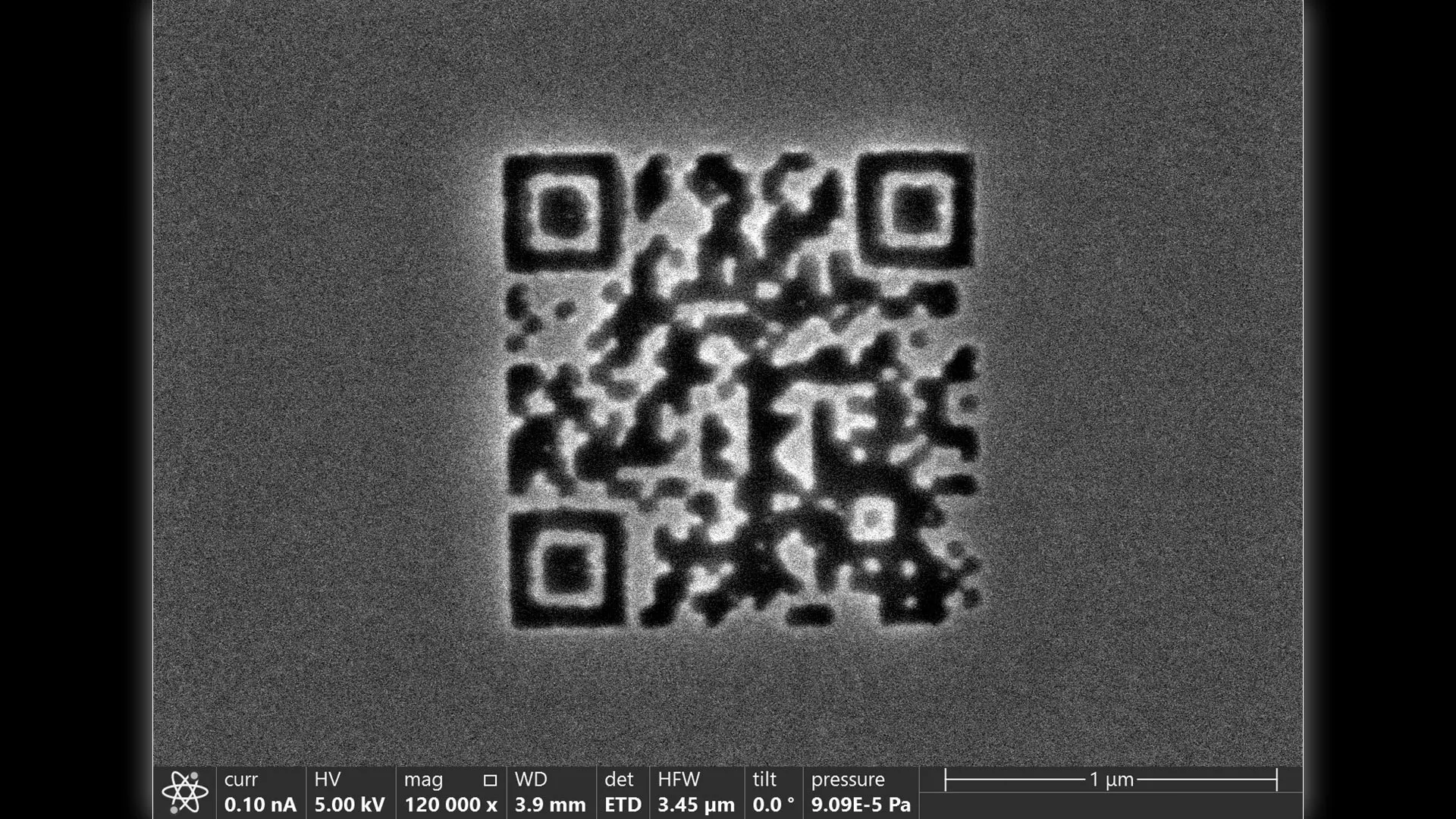
Researchers from Fujian Normal University in China have developed a novel holographic data storage method that records information in three dimensions. By combining three key properties of light, the team claims to significantly increase storage capacity compared to traditional systems. This breakthrough emerged in March 2026 and was published in the journal Optica.
Three-Dimensional Encoding
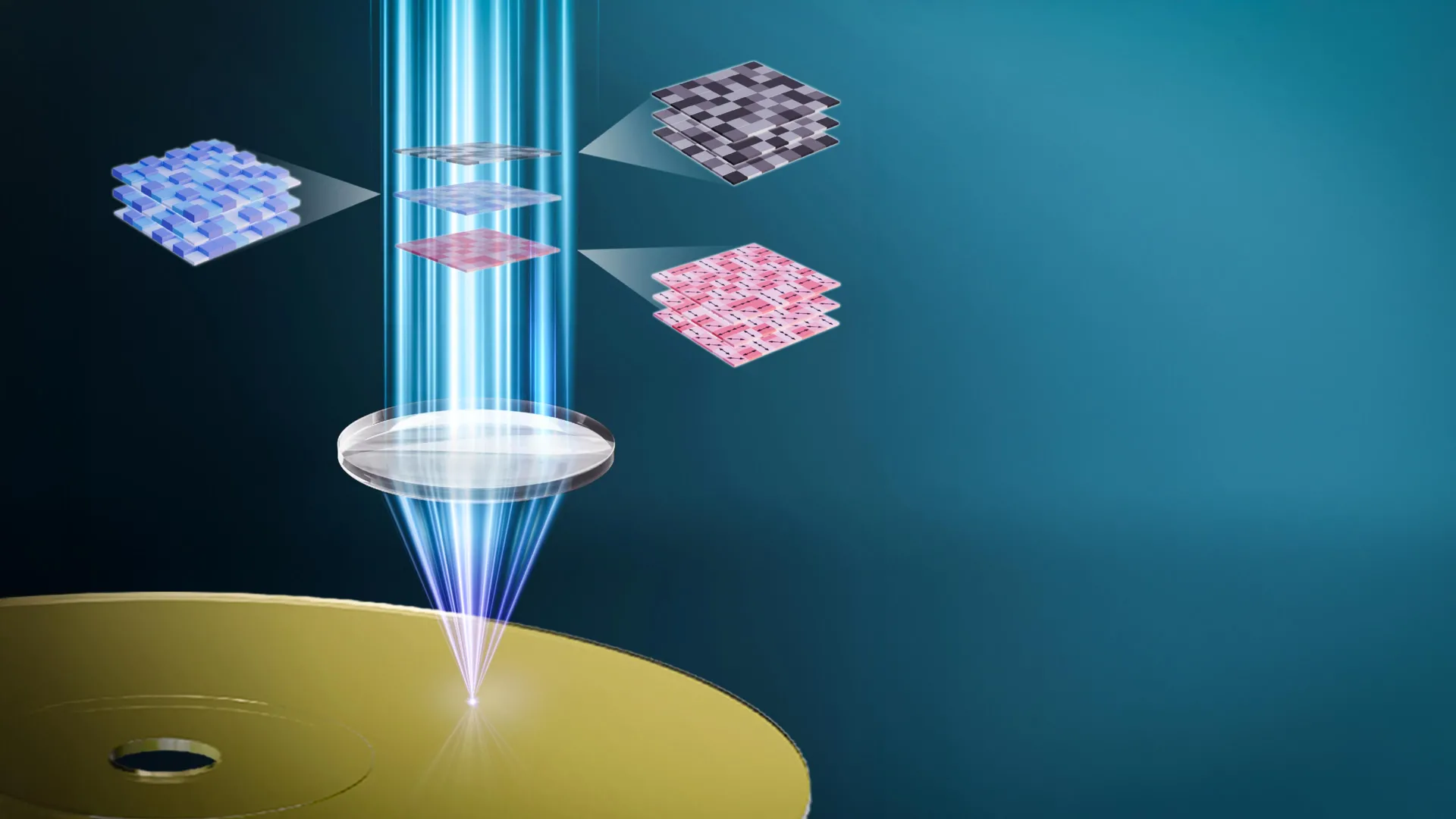
Traditional storage systems write data onto flat surfaces such as hard drives or optical discs. In contrast, holographic data storage embeds information throughout the volume of a material using laser light. The new approach utilizes amplitude, phase, and polarization simultaneously to create multiple overlapping light patterns within the same space.
According to research team leader Xiaodi Tan, conventional holographic data storage typically uses one light dimension such as amplitude or phase alone. He stated that the team used a deep learning architecture known as a convolutional neural network model to enable the use of polarization as an independent information dimension.
"In conventional holographic data storage, data encoding typically uses one light dimension such as amplitude or phase alone, or, at most, combines two of these dimensions," said research team leader Xiaodi Tan from Fujian Normal University.
Decoding this combined information is challenging because standard sensors only measure light intensity and cannot directly detect phase or polarization. To address this, the researchers used tensor-polarization holography theory along with a convolutional neural network to recover all three types of data from diffraction intensity images. The neural network is trained using two complementary diffraction images to identify patterns linked to amplitude, phase, and polarization.
Commercial and Geopolitical Implications
With further development and commercialization, this type of multidimensional holographic data storage could enable smaller data centers and more efficient large-scale archival storage. Tan noted that the technology could also contribute to safer data transmission, optical encryption, and advanced imaging. This efficiency is critical as global data demand continues to surge alongside artificial intelligence infrastructure.
Data centers currently consume significant amounts of electricity to power cooling systems for vast server arrays. Reducing the physical footprint of storage hardware could lower operational costs and energy consumption for major technology providers. Industry analysts suggest this shift aligns with broader efforts to mitigate the environmental impact of digital infrastructure.
The research team emphasizes that the system is still in the research stage and requires further development before it can be used commercially. Future work will focus on increasing the gray levels used in encoding to expand capacity even further. They also plan to integrate this method with volumetric holographic multiplexing techniques.
Strengthening the integration between optical hardware and decoding algorithms will be essential for achieving faster and more reliable data retrieval under real-world conditions. The findings could reshape how technology companies approach data management in the coming decade. Industry analysts will likely monitor the commercialization timeline closely for investment opportunities.
Future Challenges and Outlook
Materials provided by Optica indicate that long-term stability and uniformity of the recording materials remain key hurdles for widespread adoption. Researchers also plan to improve repeatability under varying environmental conditions to ensure consistency across different manufacturing batches. This technical refinement is necessary to meet the rigorous standards of enterprise-grade data storage systems.
Overall, the results showed that multidimensional joint encoding substantially increased the information carried by a single holographic data page. Neural network synchronous decoding reduced the need for complex measurements and step-by-step reconstruction. This could enable a practical route toward high-capacity, high-throughput holographic data storage.
Broader implications extend beyond simple storage density into the realm of secure communication and optical encryption protocols. As data centers consume increasing amounts of energy, reducing physical footprint offers significant operational cost savings for global technology providers. The scientific community will watch closely for the transition from laboratory prototype to commercial product.