Stockholm University researchers have confirmed a hidden critical point in supercooled water that explains its unique behavior. Published in the journal Science, the study identifies specific conditions where water undergoes a distinct phase transition. This discovery resolves a scientific debate that has persisted for more than 100 years among physicists globally.
The critical point occurs at approximately minus 63 degrees Celsius under 1000 atmospheres of pressure. Under these extreme conditions, 2 distinct liquid phases merge into a single state within the molecular structure. Scientists previously theorized this transition existed but lacked the advanced technology to observe it directly.
Experimental Breakthrough
Water behaves differently than most substances because it expands when it freezes rather than contracting. Liquid water remains most dense at four degrees Celsius, allowing ice to float on the surface of lakes. This anomaly influences ocean currents and global climate patterns significantly across all continents.
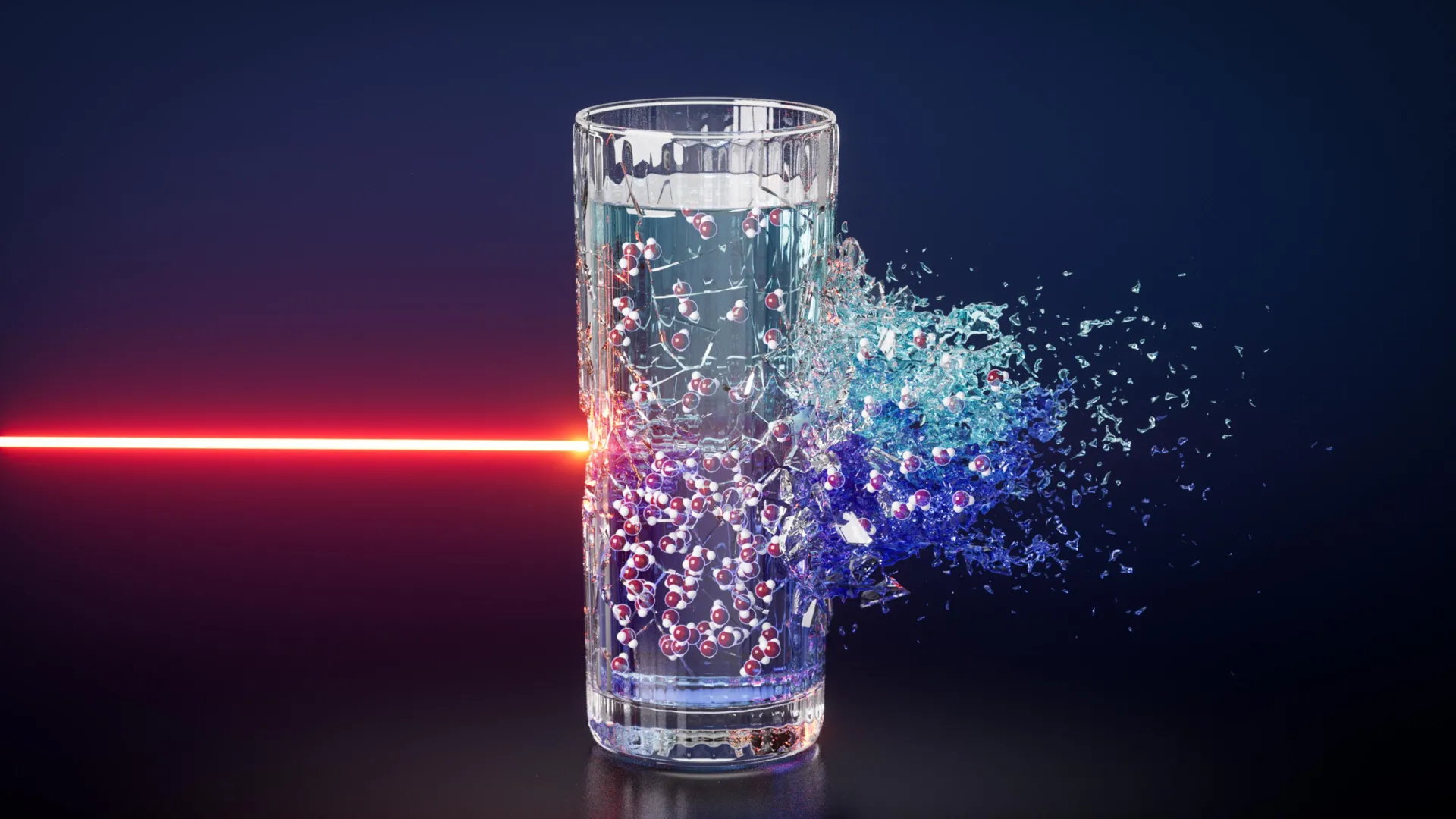
To capture the water state, scientists utilized extremely fast x-ray pulses generated in South Korea. The facility, PAL-XFEL, allowed observation before the liquid turned into ice crystals during the experiment. Anders Nilsson, a professor at Stockholm University, stated they could X-ray the sample unimaginably fast.
"For decades there has been speculations and different theories to explain these remarkable properties," Nilsson said. "Now we have found that such a point exists." The team confirmed the existence of the critical point through precise measurements and data analysis.
Broader Impact
Near the critical point, water molecules shift rapidly between 2 different liquid states continuously. These fluctuations extend across temperatures and pressures found in normal environmental conditions on Earth. This constant shifting explains the high heat capacity and compressibility of water observed today.
Robin Tyburski, a researcher in Chemical Physics, compared the motion slowdown near the point to a black hole. "It looks almost that you cannot escape the critical point if you entered it," Tyburski said. This dynamic suggests water has complex molecular bonding structures under low temperatures.
The findings settle a model regarding the origin of water's strange properties since the work of Wolfgang Röntgen. International collaboration included institutions from South Korea, Germany, and Canada working together. Researchers now focus on implications for physical and climate-related processes in their models.
Fivos Perakis noted that water is the only 1 supercritical liquid at ambient conditions where life exists. He asked if the presence of this critical point is a coincidence or essential knowledge for biology. Understanding this could impact biological and geological studies in the coming years globally.
Next steps involve finding implications for physical, chemical, and biological processes in industrial settings. A big challenge lies in applying these findings to climate models and industrial applications accurately. The research provides a foundation for future studies on supercooled substances and materials.