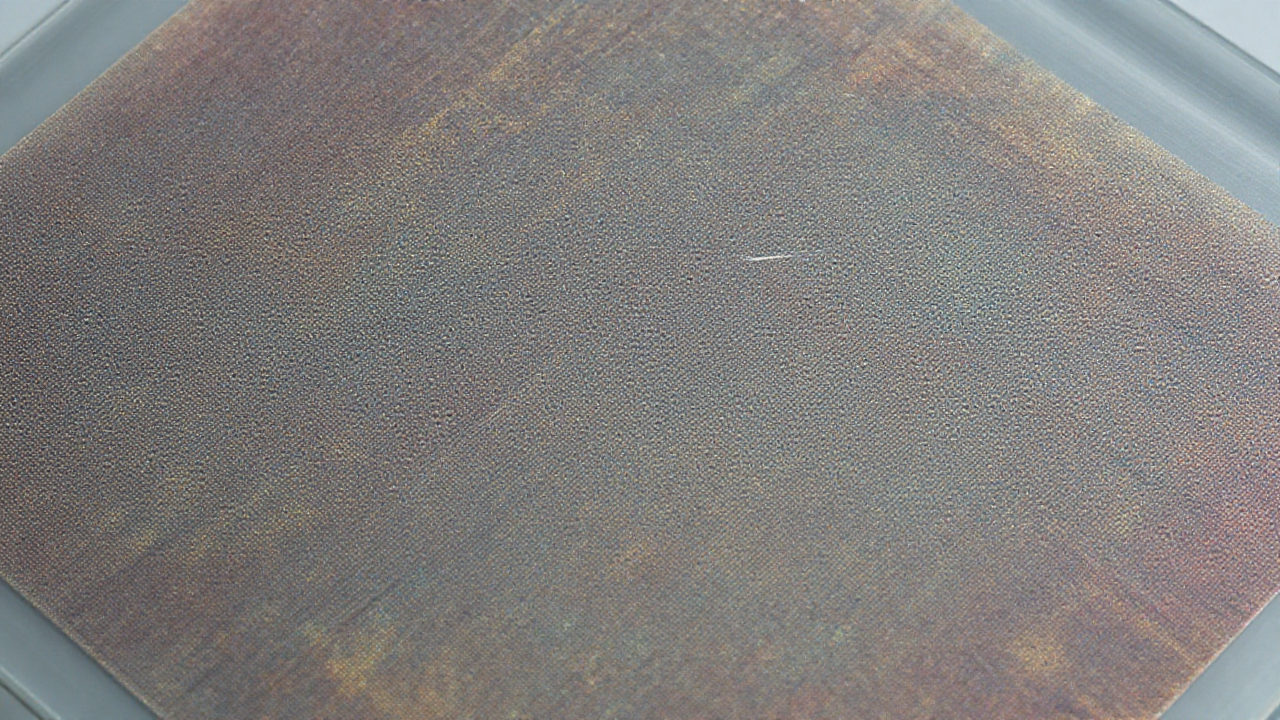
Researchers at Stanford University have successfully created a flexible material that mimics the adaptive skin of octopuses and cuttlefish. Published in Nature on March 30, 2026, the study describes a system capable of rapidly shifting surface patterns and colors. This innovation addresses a long-standing scientific challenge in replicating biological camouflage in man-made materials. The team demonstrated the ability to form features smaller than a human hair through dynamic topography control.
Key Details
To produce these shifting textures, the team combined electron-beam lithography with a water-responsive polymer film. When exposed to a focused beam of electrons, specific regions of the film become more or less absorbent. As the material takes in water, those regions swell differently to form intricate patterns that only appear when wet. This precision allows for remarkable detail not previously possible with standard soft matter systems.
"Textures are crucial to the way we experience objects, both in how they look and how they feel," said Siddharth Doshi. He is a doctoral student in materials science and engineering at Stanford and the first author on the paper. The technology enables dynamic control over topography at the micron scale, matching the capabilities of cephalopods. This level of control opens new doors in nanophotonics for uses in electronics and encryption.
What This Means
Potential uses extend well beyond camouflage to include flexible displays that change color for wearable devices. Fine control over surface texture could help regulate friction, allowing small robots to either grip surfaces or slide across them. The material can generate complex color patterns by selecting specific wavelengths of light using Fabry-Pérot resonators. Researchers even created a tiny version of Yosemite's El Capitan to demonstrate the structural precision.
"There's just no other system that can be this soft and swellable, and that you can pattern at the nanoscale," said Nicholas Melosh. He is a professor of materials science and engineering and a senior author on the research. The introduction of soft materials that can expand and contract opens up a new toolbox in optics. This capability surpasses what current screens can achieve in terms of visual effects and tactile feedback.
The process is reversible because adding an alcohol-like solvent removes the water and returns the material to a flat state. By carefully adjusting how much the material swells, the team can also control how it reflects light. This makes it possible to switch between glossy and matte finishes without electronic components. With the right balance of water and solvent, a plain surface can transform into a vibrant array of patterns.
Future plans involve automating the process by adding computer vision and AI systems to analyze surroundings. The team hopes to control this with neural networks that compare the skin and its background to modulate it automatically. "We want to be able to control this with neural networks - basically an AI-based system - that could compare the skin," Doshi said. This automation would allow real-time matching without human intervention in dynamic environments.
Funding for the project came from the Department of Energy, the National Science Foundation, and private foundations. Additional support included the Wu Tsai Human Performance Alliance and the Joe and Clara Tsai Foundation. This work was led by co-authors including Mark Brongersma and Alberto Salleo from Stanford's photon science department. As researchers collaborate with artists, the technology moves from the laboratory toward creative industries and defense sectors.
"Small changes in the properties of soft materials over micron distances are finally possible, which will open up all sorts of possibilities," Melosh said. The introduction of expandable soft materials opens a new toolbox in optics to manipulate how things look. Industry observers note this could shift manufacturing standards for soft robotics and optical engineering. The team is even collaborating with artists to explore creative uses for the material. As the field evolves, global economic implications for defense and consumer electronics will likely grow significantly.