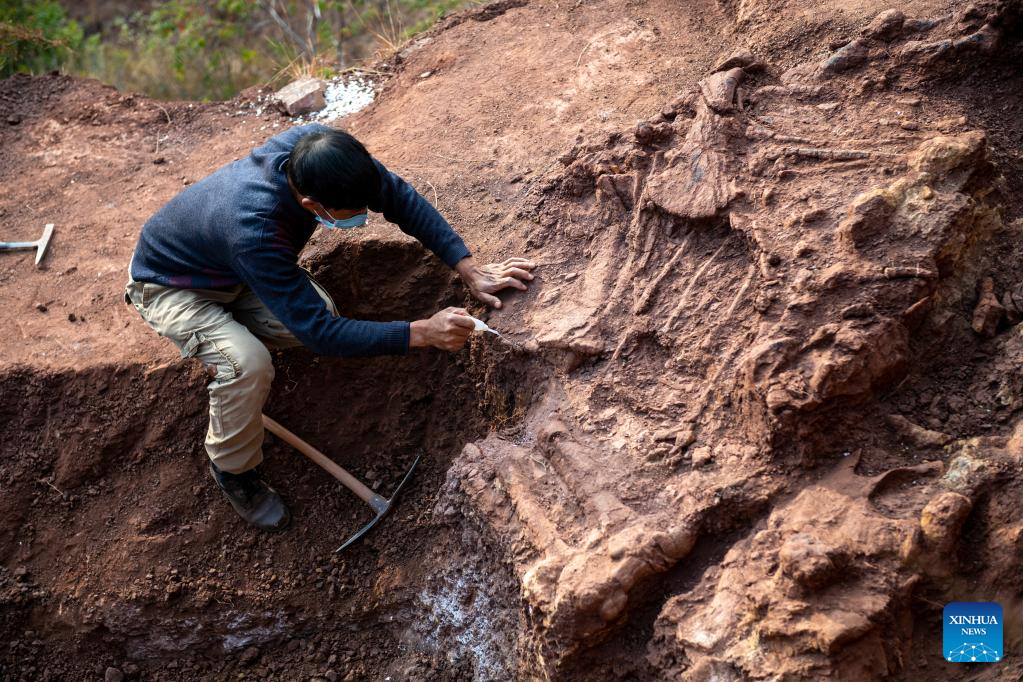
Researchers from the University of Oxford and Yunnan University have uncovered a treasure trove of fossils in southwest China that effectively pushes back the clock on the origins of complex animal life. The discovery, detailed in the journal Science, centers on the Jiangchuan Biota in Yunnan Province, where over 700 specimens were retrieved from rock layers dating back 554 to 539 million years.
For decades, the scientific consensus held that the 'Cambrian explosion'—a rapid diversification of animal life—began roughly 535 million years ago. This new evidence suggests that the evolutionary shift occurred at least four million years earlier during the late Ediacaran period.
A transitional ecosystem
The site yielded surprisingly advanced organisms, including the oldest known relatives of deuterostomes, the group that includes modern vertebrates. Researchers also identified early ancestors of starfish and acorn worms, as well as worm-like bilaterians and potential comb jellies.
'Our discovery closes a major gap in the earliest phases of animal diversification,' said lead author Dr. Gaorong Li. 'We demonstrate that many complex animals, normally only found in the Cambrian, were present in the Ediacaran period.'
Unlike most fossils from this era, which are typically found as simple impressions in sandstone, the Jiangchuan specimens are preserved as carbonaceous films. This rare preservation method allowed paleontologists to study intricate details, such as digestive systems and specialized feeding structures.
Several of these creatures display features that defy current classification, including bizarre combinations of tentacles and stalks. Dr. Frankie Dunn of the Oxford University Museum of Natural History noted the oddity of the find, describing one specimen that bears a striking resemblance to the fictional sand worms from the 'Dune' franchise.
Associate Professor Luke Parry, a co-author from Oxford’s Department of Earth Sciences, described the site as a 'transitional community.' He noted that the ecosystem represents a bridge between the mysterious world of the Ediacaran and the clearer, more recognizable animal groups that emerged later.
This discovery provides a long-sought physical link for evolutionary biologists who have long suspected that animal lineages existed well before the Cambrian period. By providing fossil evidence for these early ancestors, the research resolves a significant discrepancy between genetic studies and the historical geological record.