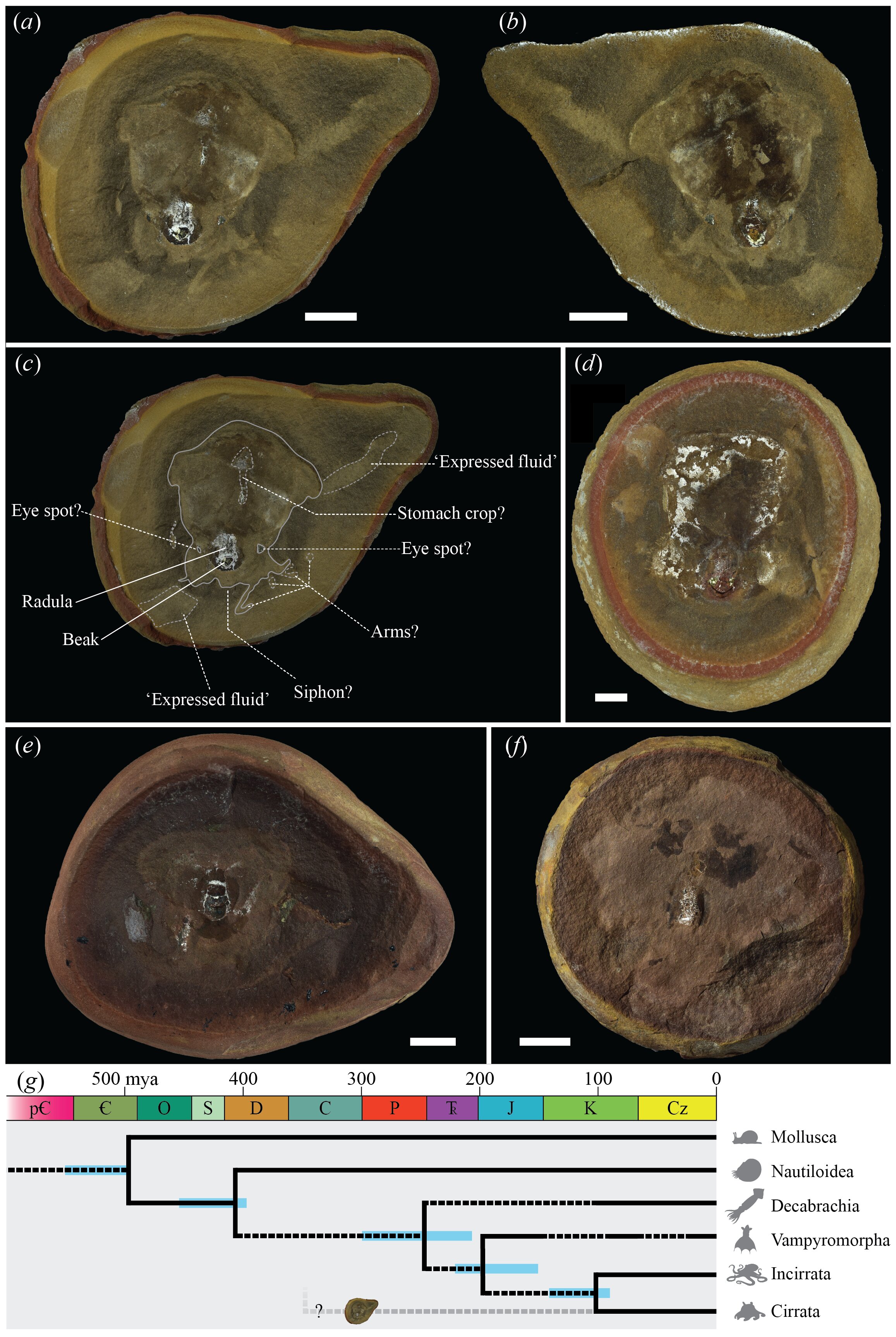
A 300-million-year-old fossil once hailed as the world’s oldest octopus has been stripped of its title after researchers revealed it is not an octopus at all. The specimen, known as Pohlsepia mazonensis, has long been a fixture in textbooks and even earned a place in the Guinness Book of Records.
Scientists at the University of Reading utilized advanced synchrotron imaging to peer inside the rock housing the fossil. The scans uncovered tiny, hidden teeth that confirm the creature was a nautiloid—a multi-tentacled mollusc with an external shell—rather than an ancient octopus.
A case of mistaken identity
The findings, published Wednesday in the journal Proceedings of the Royal Society B, suggest the fossil's octopus-like appearance was merely the result of decomposition. Researchers believe the animal had been rotting for weeks before it was buried in sediment, creating a distorted shape that misled paleontologists for 25 years.
"It turns out the world's most famous octopus fossil was never an octopus at all," said Dr. Thomas Clements, lead author and Lecturer in Invertebrate Zoology at the University of Reading. "It was a nautilus relative that had been decomposing for weeks before it became buried and later preserved in rock."
The imaging technology, which uses light beams brighter than the sun, allowed the team to conduct a forensic-style examination of the fossil. They discovered a radula—a tongue-like feeding organ—containing rows of teeth that are distinct to nautiloids. While octopuses typically possess seven or nine teeth per row, the fossilized specimen showed 13, matching the anatomy of a known nautiloid species, Paleocadmus pohli.
This discovery effectively resets the timeline for octopus evolution. Previous studies had used the Pohlsepia fossil to claim that octopuses existed 150 million years earlier than other evidence suggested. With the specimen now reclassified, experts believe the split between octopuses and their ten-armed relatives, such as squid, occurred much later, during the Mesozoic era.
"We now have the oldest soft tissue evidence of a nautiloid ever found, and a much clearer picture of when octopuses actually first appeared on Earth," Clements said. "Sometimes, reexamining controversial fossils with new techniques reveals tiny clues that lead to really exciting discoveries."
The research provides the oldest known record of soft tissue preservation for a nautiloid, pushing that specific evolutionary timeline back by approximately 220 million years. The findings mean the Guinness Book of Records will likely need to remove the entry for the oldest octopus, as the fossil no longer qualifies.