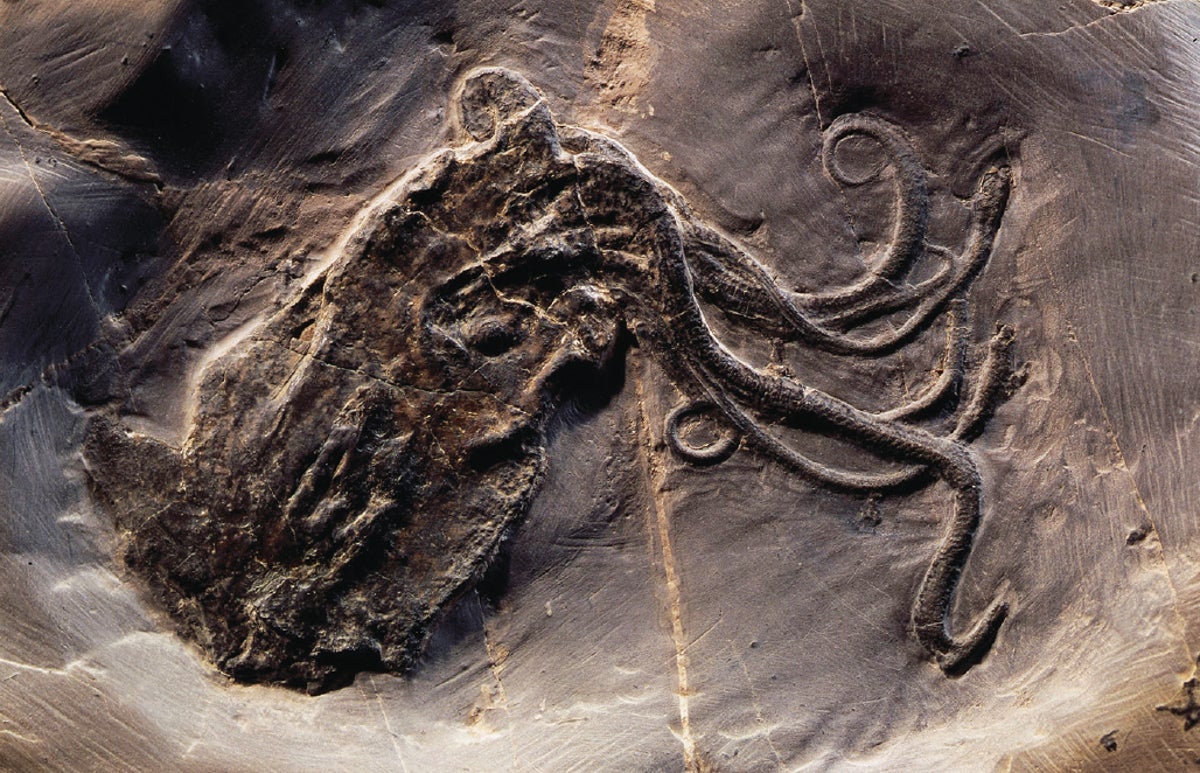
A 300-million-year-old fossil once hailed as the oldest known octopus has been reclassified after researchers discovered it was misidentified due to decay. The specimen, known as Pohlsepia mazonensis, previously held a place in the Guinness Book of Records for its supposed evolutionary significance.
A team led by the University of Reading utilized cutting-edge synchrotron imaging to peer inside the rock. The process revealed hidden, tooth-like structures that fundamentally altered the scientific understanding of the creature.
A case of mistaken identity
The scans exposed a radula, a ribbon-like feeding organ common to mollusks, featuring at least 11 tooth-like structures per row. Because modern octopuses possess seven or nine, the fossil’s anatomy proved to be a mismatch. Instead, the features align closely with nautiloids, marine animals that typically sport 13 teeth per row.
Dr. Thomas Clements, a lecturer in invertebrate zoology at the University of Reading, explained that the specimen had likely been decomposing for weeks before it was buried. This decay distorted the animal’s body, creating an appearance that misled researchers when the fossil was first described in 2000.
"It turns out the world's most famous octopus fossil was never an octopus at all," Dr. Clements said. "It was a nautilus relative that had been decomposing for weeks before it became buried and later preserved in rock."
The findings, published April 8 in the journalProceedings of the Royal Society B, resolve a long-standing mystery regarding the evolution of cephalopods. The reclassification removes the fossil from its status as the oldest octopus, pushing the true evolutionary origins of the species much later into the Jurassic period.
This study also provides the earliest known example of preserved soft tissue from a nautiloid, surpassing the previous record by approximately 220 million years. By clearing up the historical record, researchers have gained a clearer picture of when octopuses first split from their ten-armed relatives, such as squids.
"It's amazing to think a row of tiny hidden teeth, hidden in the rock for 300 million years, have fundamentally changed what we know about when and how octopuses evolved," Dr. Clements added.