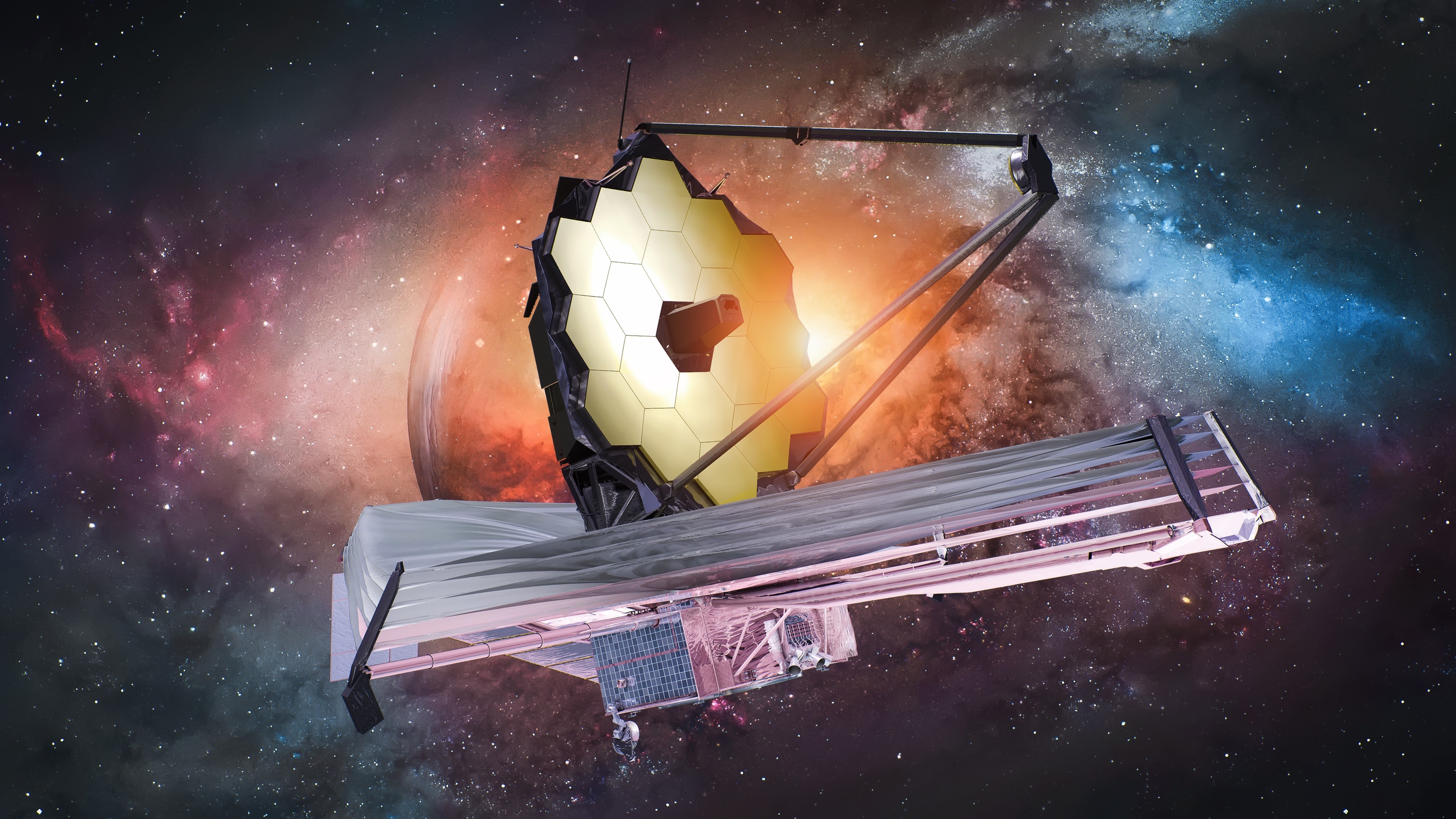
A giant exoplanet designated TOI-5205 b is forcing scientists to rethink how worlds are created. New observations from the James Webb Space Telescope (JWST) reveal the planet contains fewer heavy elements than its own host star, a discovery that contradicts current planetary formation models.
The findings were published in The Astronomical Journal by an international team led by NASA’s Caleb Cañas and Carnegie Science’s Shubham Kanodia. The planet, which is roughly the size of Jupiter, orbits a small, cool red dwarf star that is only 40 percent as massive as the Sun.
Challenging the rules of planetary birth
Planets are traditionally thought to form within a rotating disk of gas and dust surrounding a young star. However, TOI-5205 b defies this conventional wisdom because it is a massive gas giant orbiting a star significantly smaller than itself.
"We observed much lower metallicity than our models predicted for the planet's bulk composition," Kanodia said. "This suggests that its heavy elements migrated inward during formation and now its interior and atmosphere are not mixing."
To reach these conclusions, astronomers monitored three separate transits—events where the planet passes in front of its star. By using spectrographs to break down the starlight, they identified the chemical signatures of methane and hydrogen sulfide. Notably, the atmosphere contains significantly fewer heavy elements than Jupiter, a result that surprised the research team.
To reconcile the data, researchers Simon Muller and Ravit Helled from the University of Zurich utilized advanced interior modeling. Their analysis indicates that while the atmosphere appears metal-poor, the planet as a whole is likely 100 times more metal-rich than its outer layer suggests. This indicates a highly carbon-rich, oxygen-poor environment.
This study is part of the GEMS—Giant Exoplanets around M dwarf stars—survey. The project aims to clarify the internal structures and formation histories of planets that exist in systems previously thought to be unlikely candidates for such large gas giants.
To ensure the accuracy of their atmospheric readings, the team had to account for starspots on the host star. These dark, active regions can bias data by altering the brightness of specific wavelengths. By adjusting for this interference, the researchers believe they have set a new standard for analyzing the atmospheres of planets orbiting small stars.