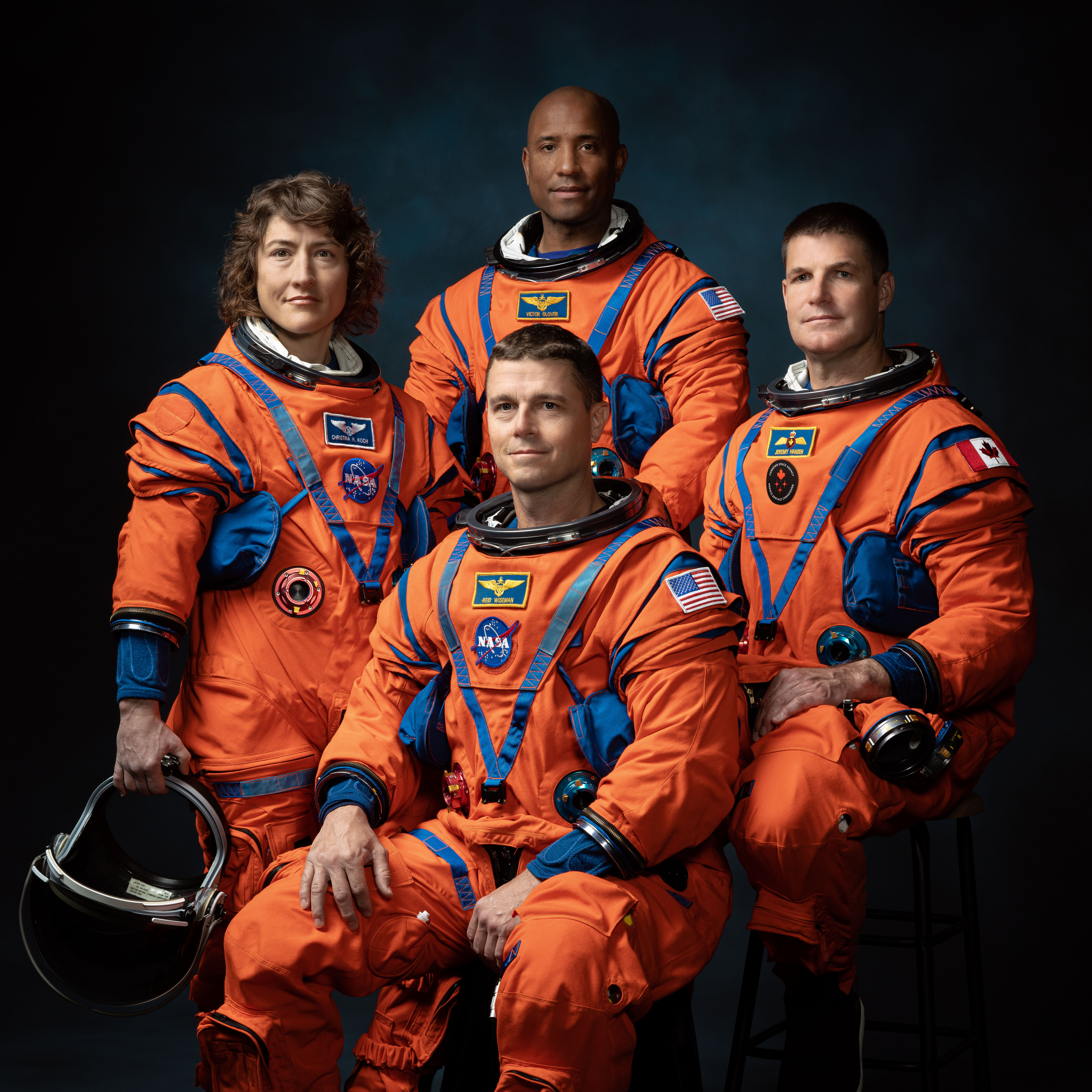
NASA’s Artemis II crew completed a historic lunar flyby on Monday, setting a new record for the farthest distance any human has ever traveled into space. Commander Reid Wiseman, along with crewmates Victor Glover, Christina Koch, and Jeremy Hansen, reached a maximum distance of 252,756 miles (406,771 kilometers) from Earth at 7:02 pm EDT, according to Ars Technica.
During this maneuver, the Orion spacecraft, dubbed Integrity, reached its closest point to the lunar surface at 4,067 miles (6,545 kilometers). The milestone occurred while the capsule was behind the Moon, resulting in a 40-minute lapse in communication with mission control in Houston.
“No matter how long we look at this, our brains are not processing this image in front of us. It is absolutely spectacular, surreal,” Wiseman said of the view. “There are no adjectives. I’m going need to invent some new ones to describe what we’re looking at outside this window.”
According to the BBC, the mission has surpassed performance expectations since its April 1 launch. The Space Launch System (SLS) rocket generated 8.8 million pounds of thrust at liftoff, and the spacecraft's trajectory was so precise that two of three planned course corrections were deemed unnecessary. Dr. Simeon Barber of the Open University noted, “Credit to them - they got it right the first time.”
NASA Administrator Jared Isaacman has used the mission’s success to advocate for a change in operational tempo. Isaacman stated that “launching a rocket as important and as complex as SLS every three years is not a path to success,” urging the agency to move away from treating each vehicle as a singular work of art.
A collaborative leap for deep space exploration
Beyond the flight milestones, the mission serves as a critical test of international space cooperation. Didier Schmitt, Head of Future Preparation for the European Space Agency, told France24 that the mission is a pivotal technical exercise in validating life support and propulsion systems. Schmitt highlighted the integral role of the European Service Module in the project, emphasizing that the mission paves the way for future exploration of the Moon’s far side and south pole.
While the mission has performed flawlessly, questions persist regarding the feasibility of a 2028 Moon landing. The BBC reports that NASA and the U.S. presidential administration remain committed to this timeline, though industry observers continue to weigh the technical requirements against current mission cadences.
As the crew continues their journey, NASA is working to downlink sharper telephoto imagery of the lunar surface. While initial GoPro footage was restricted by deep-space bandwidth limitations, the agency expects higher-resolution data to become available as the mission progresses.