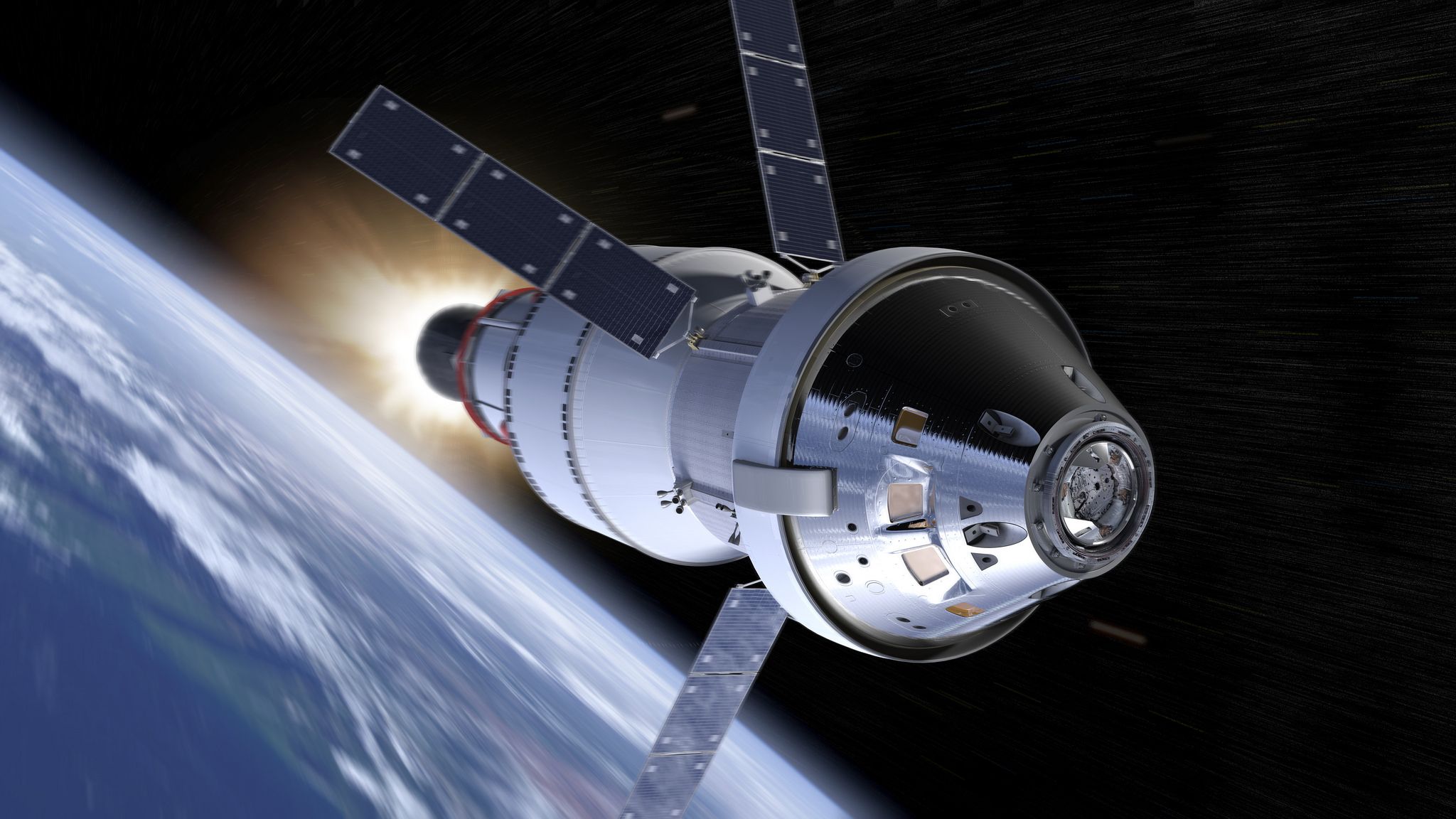
The four astronauts aboard NASA’s Orion spacecraft broke the record for the farthest human travel from Earth on Monday, surpassing the mark set by the Apollo 13 mission in 1970. According to Al Jazeera, the crew eclipsed the previous record of 400,171 kilometers (248,655 miles) at 15:58 GMT.
NASA expects the spacecraft to reach a maximum distance of approximately 406,788 kilometers (252,760 miles) from Earth at 23:07 GMT, France 24 reported. This flight is part of a "free-return trajectory" that will take the crew around the far side of the moon before they begin a four-day journey back to Earth.
Before the mission, the late astronaut Jim Lovell, who flew on Apollo 8 and 13, provided a recorded message for the crew. "It’s a historic day, and I know how busy you’ll be, but don’t forget to enjoy the view," Lovell said. "Welcome to my old neighborhood. I’m proud to pass that torch on to you as you swing around the moon."
The Silent Dark Side
As the Orion capsule passes behind the moon, the crew will experience a period of total communication blackout. The BBC reported that radio and laser signals will be blocked by the lunar mass for approximately 40 minutes, leaving the astronauts in complete silence. Pilot Victor Glover noted the significance of this isolation before the mission: "When we're behind the Moon, out of contact with everybody, let's take that as an opportunity. Let's pray, hope, send your good thoughts and feelings that we get back in contact with the crew."
Ground teams remain vigilant during this period. Matt Cosby, chief technology officer at Goonhilly Earth Station, told the BBC that while the team is confident, they remain nervous until the signal is reacquired. "We're going to get slightly nervous as it goes behind the Moon, and then we'll be very excited when we see it again, because we know that they're all safe," Cosby said.
Fayerwayer reported that the mission is utilizing a new laser communications network to stream high-definition data, testing systems that will be necessary for future lunar bases. Lead scientist for the mission, Kelsey Young, emphasized the value of the crew’s observations during the flyby. "The human eye is basically the best camera that could ever or will ever exist," Young told AFP. "The number of receptors in the human eye far outweighs what a camera is able to do."
The crew, which includes commander Reid Wiseman, Victor Glover, Christina Koch, and Jeremy Hansen, is spending roughly seven hours observing the lunar surface. Expansión noted that the crew is working in pairs to document features on both the near and far sides of the moon. The data gathered during this flyby is intended to certify the route for the Artemis III mission, which is scheduled for 2027 and aims to establish a permanent human presence on the lunar surface.