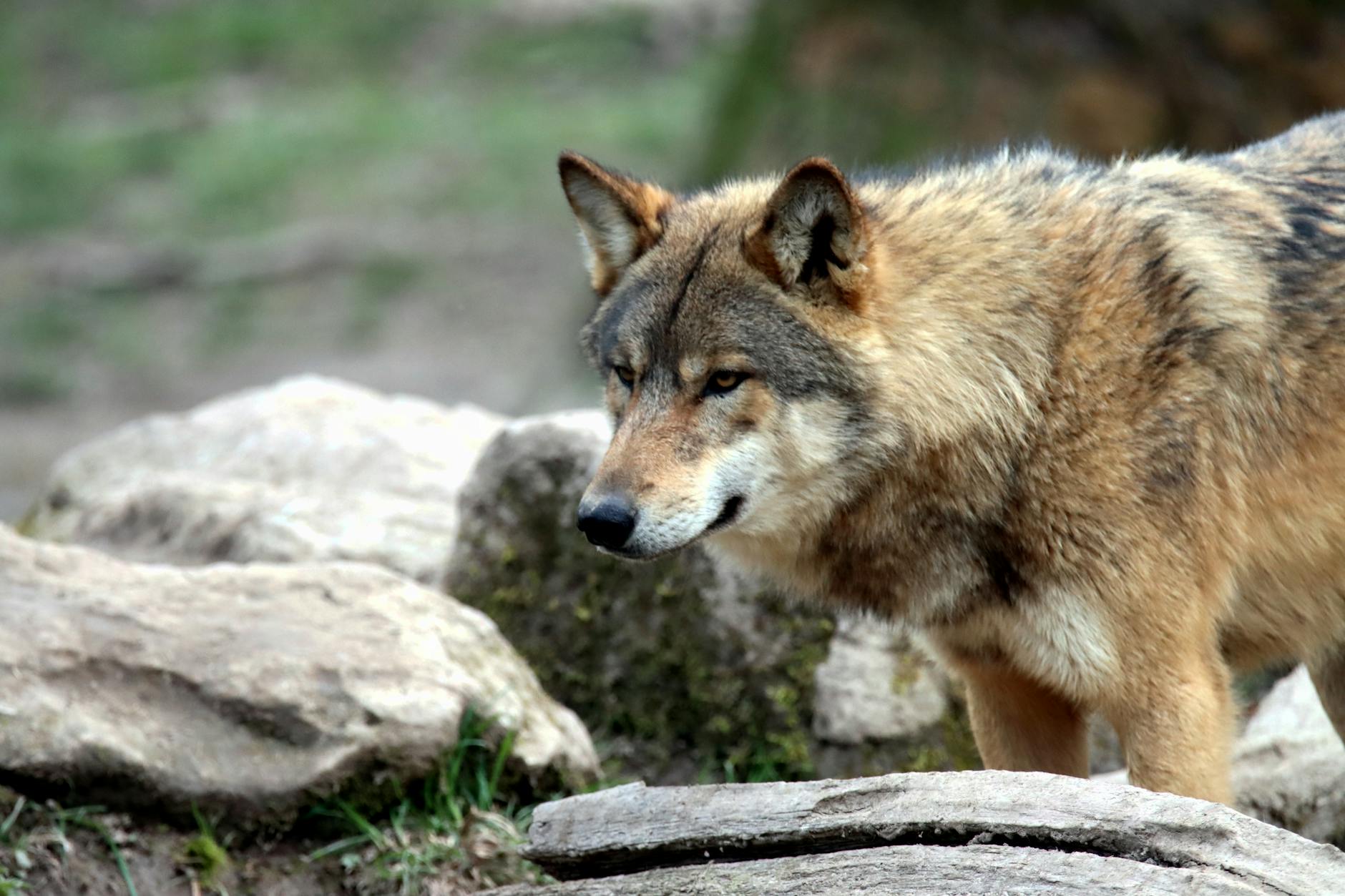
A woman was bitten by a wolf on a major shopping street in Hamburg, Germany, according to local authorities. The incident occurred on Monday evening in the Grosse Bergstrasse district near an inner-city Ikea store. This marks the first recorded attack on a person since wolves began reestablishing themselves in the country decades ago.
The woman reportedly attempted to guide the disoriented animal away from the pedestrian zone. Police reports indicate the wolf bit the woman's face before fleeing the scene. She was transported to a hospital but has since been discharged. Medical staff treated the injuries before her release.
The animal was located later that night in the Binnenalster lake. Authorities spent approximately one hour restraining the creature with shields and ropes. The Ministry for the Environment confirmed the wolf is now in safety receiving veterinary care. Police described the capture as a difficult operation due to the animal's resistance.
"There has not been a case like this since the reintroduction began in 1998," a spokeswoman for the Federal Agency for Nature Conservation told German press agency dpa.
This statement underscores the exceptional nature of the event within the region. Officials are treating the incident as a unique anomaly in recent wildlife history. The agency maintains strict protocols for monitoring wildlife interactions in urban zones.
Historical Context
Wolves had been absent from Germany for 150 years before returning after the fall of the Berlin Wall in 1989. Initially, animals crossed from Poland, but today they roam forests across many German states. A federal agency spokeswoman confirmed no similar cases have occurred since reintroduction began in 1998. The species has slowly expanded its range over the last two decades. The population growth has been steady despite earlier fears of extinction.
Policy Implications
Last week, Germany's Upper House approved measures to allow wolf hunting under new federal laws. The legislation aims to manage populations and protect livestock such as sheep. Federal Environment Minister Carsten Schneider stated wolves must be allowed to stay. The move was intended to balance conservation goals with agricultural interests.
"Minister Schneider emphasized that the goal is finding viable ways to live peacefully alongside the species," the ministry said.
Hunting season is scheduled to run from July 1 to October 31. Local officials will decide on the captured animal's future arrangements. Experts will consult closely before finalizing decisions regarding the specific wolf involved.
Local officials will decide on the captured animal's future arrangements. Experts will consult closely before finalizing decisions regarding the specific wolf involved. Animal welfare laws will dictate whether the creature can return to the wild. This process ensures that public safety remains a priority during recovery. Veterinary teams are monitoring the animal's condition daily.
This case highlights the ongoing challenges of urban-wildlife coexistence in densely populated areas. The incident occurred in a bustling commercial district, raising questions about animal behavior near humans. Future policy decisions will likely face increased scrutiny from both conservationists and residents.
The reintroduction program was designed to restore ecological balance across European landscapes. However, rapid population growth has created friction in regions previously devoid of the species. Authorities must now navigate complex social dynamics while managing wildlife populations.
Local residents are expected to monitor the situation closely as the animal recovers. The outcome of this case could influence how similar incidents are handled nationwide. Germany will continue to refine its approach to coexistence in the coming years.