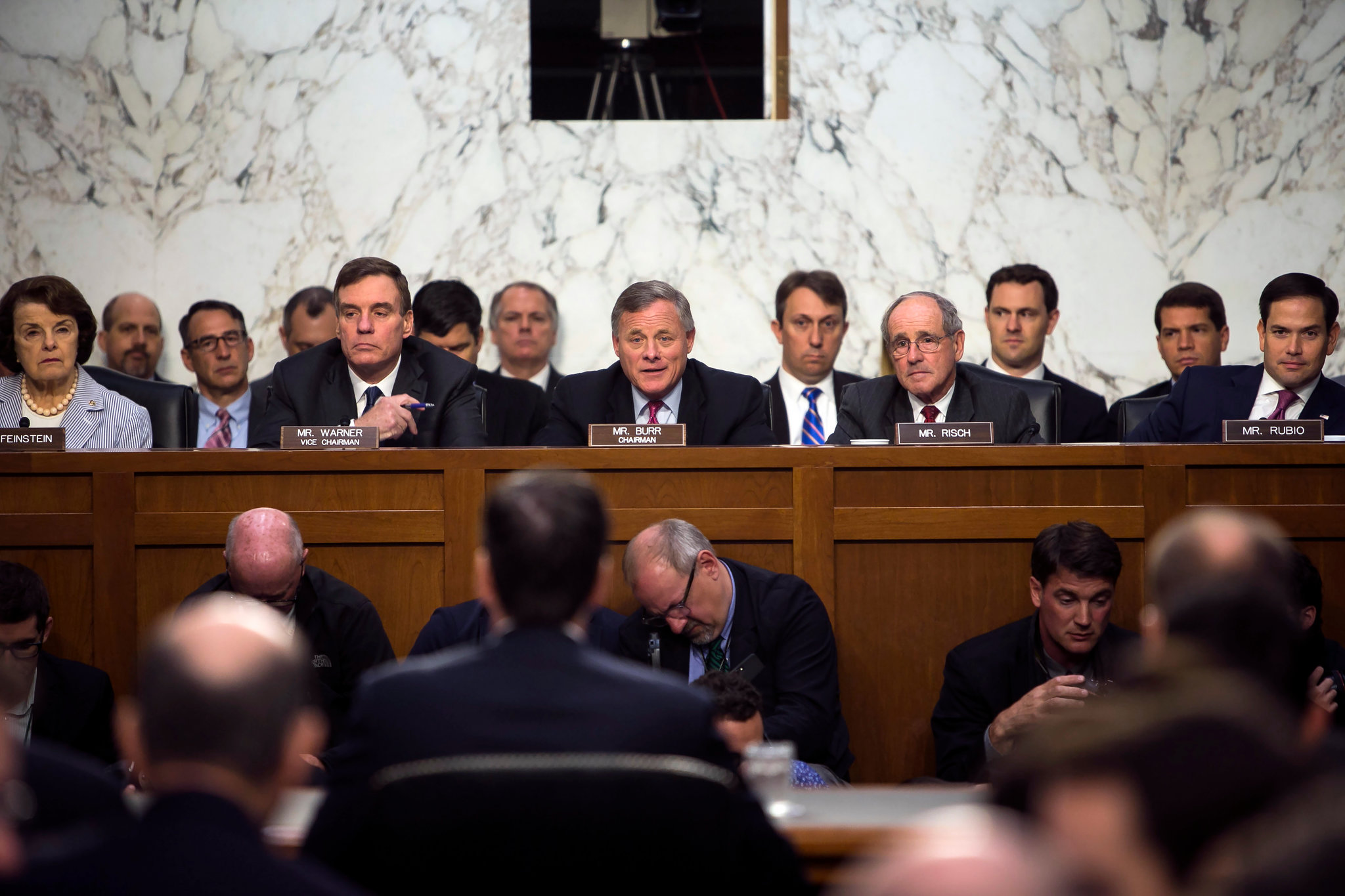
A Public Disagreement in the Senate
In a rare and tense display of public dissent, top officials from the Trump administration appeared before the Senate Intelligence Committee on Wednesday to testify on the ongoing conflict with Iran. Three weeks into the hostilities, the hearing served as a crucible for the administration’s narrative, as Director of National Intelligence (DNI) Tulsi Gabbard and CIA Director John Ratcliffe faced rigorous questioning regarding the accuracy of President Trump’s recent public statements.
Under oath and testifying before Congress, both Gabbard and Ratcliffe provided assessments that frequently stood in stark contrast to the rhetoric emanating from the White House. The hearing underscored a deepening friction between the administration’s political messaging and the classified intelligence assessments held by the nation’s security agencies.
Nuclear Capabilities Under Scrutiny
Central to the debate was the status of Iran’s nuclear program. President Trump had previously claimed that Tehran was attempting to rebuild its nuclear infrastructure following US strikes in June, even suggesting in his State of the Union address that the regime was "starting from scratch." Furthermore, White House advisor Steve Witkoff had alarmingly suggested that Iran was potentially only a week away from producing weapons-grade material.
Director Gabbard offered a definitive rebuttal to these claims. She testified that the operation conducted on June 22, dubbed "Operation Midnight Hammer," had effectively "annihilated" Iran’s enrichment program. When pressed by Senator Jon Ossoff on whether her department stood by that assessment, Gabbard confirmed that no efforts to reconstruct those capabilities had been detected since the operation.
The ICBM Threat and Regional Stability
Discrepancies also emerged regarding the threat posed by Iranian ballistic missiles. President Trump has frequently warned that Iran is developing intercontinental ballistic missiles (ICBMs) capable of reaching the United States in the near future. While Senator Tom Cotton, chair of the committee, cited external analysts who suggested a threat could emerge within six months, CIA Director John Ratcliffe notably declined to endorse such a timeline.
Ratcliffe acknowledged concerns over Iran’s long-term ambitions but pointedly avoided echoing the President’s sense of immediate urgency. Instead, he framed the threat as a hypothetical scenario that would only manifest "if they were not checked," refusing to validate the administration's claims of an imminent danger to the US mainland.
Intelligence vs. Rhetoric
Perhaps most striking was the rejection of President Trump’s claim that Iran’s retaliation against its Gulf neighbors was unforeseen by experts. During the hearing, it was noted that the possibility of such a response had been public knowledge and widely anticipated by the intelligence community.
As the hearing concluded, the testimony left lawmakers and observers with a clear picture of a fractured administration. By prioritizing established intelligence over political narratives, Gabbard and Ratcliffe have signaled that the internal debate regarding the scope and nature of the Iran conflict remains far from settled.