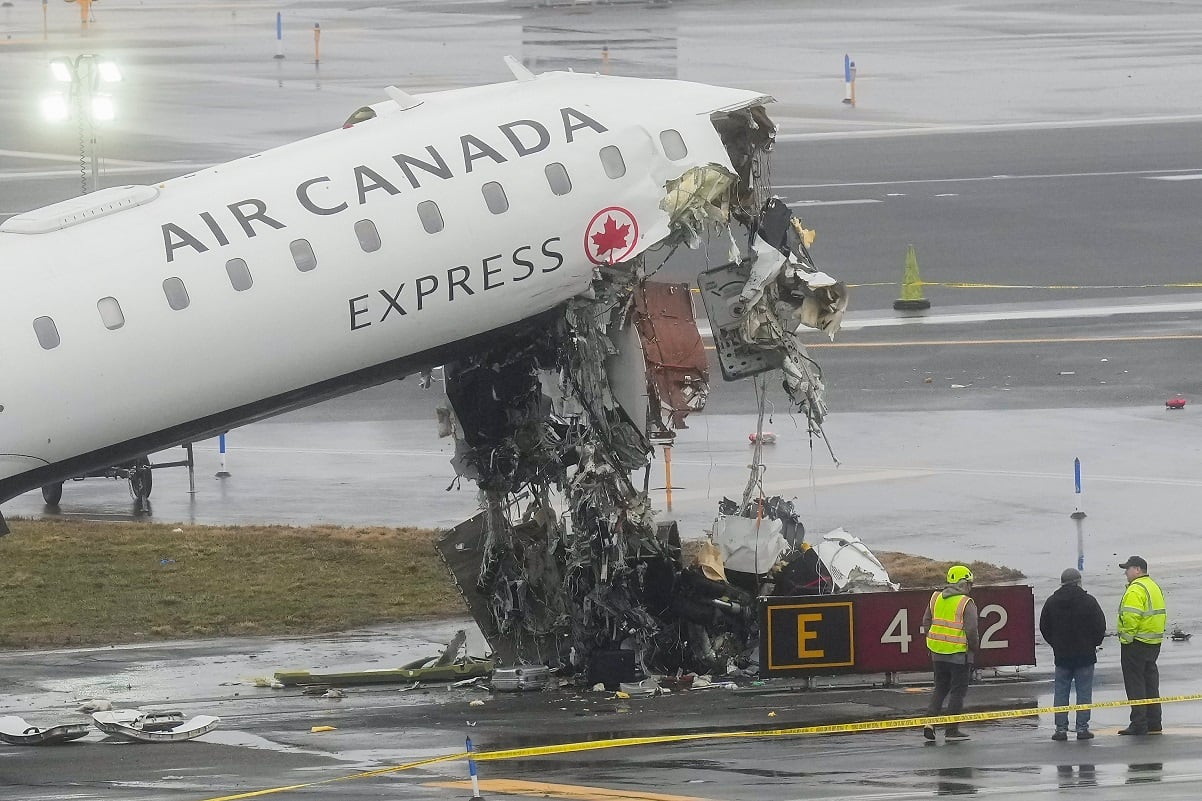
New York authorities successfully recovered the black box from the Air Canada jet that collided with a fire truck at LaGuardia Airport. The National Transportation Safety Board confirmed the recovery on Monday as investigators began examining the cause of the fatal collision. Two pilots died in the accident involving the emergency vehicle on the runway in Queens. The incident occurred late Sunday night and has triggered a major safety investigation by federal officials. This event has raised immediate concerns regarding airport ground operations and emergency response protocols.
NTSB Chair Jennifer Homendy stated that access to the flight recorder required drilling one hole in the aircraft’s roof. The device reached the agency’s Washington D.C. laboratories where officials verified it sustained no damage during the impact. Experts hope to share preliminary information regarding the data recorders by tomorrow. Homendy emphasized the complexity of retrieving the voice recorder from the cockpit. The recovery process involved careful technical work to preserve the integrity of the evidence.
Investigators plan to deploy 25 specialists to the scene to examine hydraulic systems and tire components. Air traffic control operations and rescue protocols also face scrutiny as part of the comprehensive safety review. The team must document evidence and determine which debris requires laboratory testing. Homendy noted that the process will be thorough to ensure all factors are considered. This level of detail is standard for major aviation incidents involving fatalities.
The collision occurred at 11:37 p.m. local time while the aircraft traveled at roughly 130 miles per hour. Flightradar24 data indicates the plane’s speed moments before the impact with the emergency vehicle. Visual evidence from the site shows severe damage to the aircraft’s front fuselage. The aircraft was moving at 210 kilometers per hour when the crash happened. This speed is critical data for understanding the kinetic energy involved in the impact.
Four crew members and passengers were on board the aircraft while two firefighters operated the truck. The incident resulted in the deaths of both pilots and required immediate emergency response from ground crews. Survivors faced significant trauma from the crash and the subsequent rescue efforts. The total number of people on the plane included 72 passengers and four crew members. Firefighters on the ground also faced significant risk during the emergency response.
An air traffic controller reportedly admitted to radio errors after authorizing the truck to cross the active runway. Homendy noted that personnel involved in the incident are typically separated from their duties during investigations. The controller expressed regret over the mistake made during the traffic management process. Homendy stated that interviewing the controller is a priority for the investigation team. This admission highlights the potential for human error in high-pressure airport environments.
The affected section of the tarmac will remain closed for an extended period due to ongoing debris removal. Investigators must photograph and collect evidence before clearing the area for normal airport operations. Security and safety protocols will undergo review to prevent similar runway incursions in the future. The amount of debris found in the zone is significant enough to require careful documentation. Recovery teams must prioritize safety while removing wreckage from the active runway.
International aviation safety standards directly influence tourism flows and trade logistics vital to the Mexican economy. This incident highlights the importance of rigorous oversight in global transportation networks that support cross-border commerce. Stakeholders will monitor the investigation results for potential changes to air safety regulations. Aviation security remains a priority for governments managing international travel hubs. Future reports will determine if regulatory frameworks require immediate updates for international carriers.