A Test of the Political Landscape
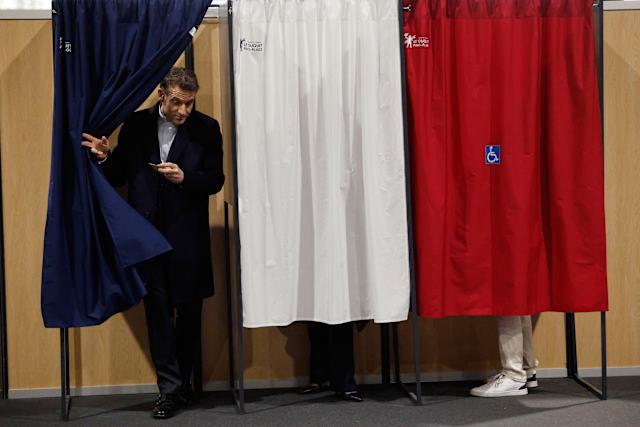
France is set to head to the polls this Sunday for the decisive final round of its municipal elections. These local contests serve as a vital barometer for the country’s political climate, arriving exactly one year before the highly anticipated presidential election. While the initial round of voting revealed that the far-right National Rally (RN) did not achieve the sweeping success some analysts had predicted, the party’s steady expansion remains a focal point of concern for mainstream political factions.
According to reports, the National Rally has already increased its municipal presence compared to the 2020 cycle. While the party held a majority in 17 municipalities previously, current data indicates they have already secured victories in 24, with leads in an additional 60. This growth suggests a strategic, albeit gradual, solidification of their influence at the local level.
The Battle for the South
Southern France has emerged as the primary theater for these elections. Major urban centers, most notably Nice and Toulon, are currently poised to potentially elect far-right mayors. In Marseille, the political climate remains particularly tense as incumbent mayor Benoit Payan faces a high-stakes runoff against the National Rally’s Franck Allisio.
Analysts have cautioned that the results in these regions could hold "unpleasant surprises" for those hoping to curb the influence of the far right. Jean-Francois Poupelin, a journalist with Marsactu, noted that while the far right failed to achieve their goal of a massive, scalable breakthrough in medium-sized cities, their ability to threaten control in major metropolitan hubs is a significant development.
The Shadow of Abstention
Beyond the ideological battle, the most pressing issue facing the French electorate is the record-low voter turnout. The first round saw participation at just 57 percent, marking the second-lowest turnout in the history of the Fifth Republic. This trend of voter apathy is particularly pronounced in working-class neighborhoods, where left-wing parties like France Unbowed (LFI) had hoped to mobilize support.
Experts suggest that this high rate of abstention disproportionately favors the National Rally. As Baptiste Colin, a local resident, observed, there is a pervasive sense of disinterest among the electorate that threatens to undermine the legitimacy of the upcoming results. With both the municipal runoffs and the looming presidential race on the horizon, the ability of mainstream parties to engage these disillusioned voters will be the defining challenge of the coming year.
Looking Ahead
As the nation awaits the final tally, the stakes for local governance have never been higher. While the National Rally has not yet achieved the total political dominance some feared, their "real, significant gains"—as described by political observers—signal a shift in the French electorate. Whether the final round will see a consolidation of these gains or a last-minute pushback from the left remains the central question for the coming weekend.