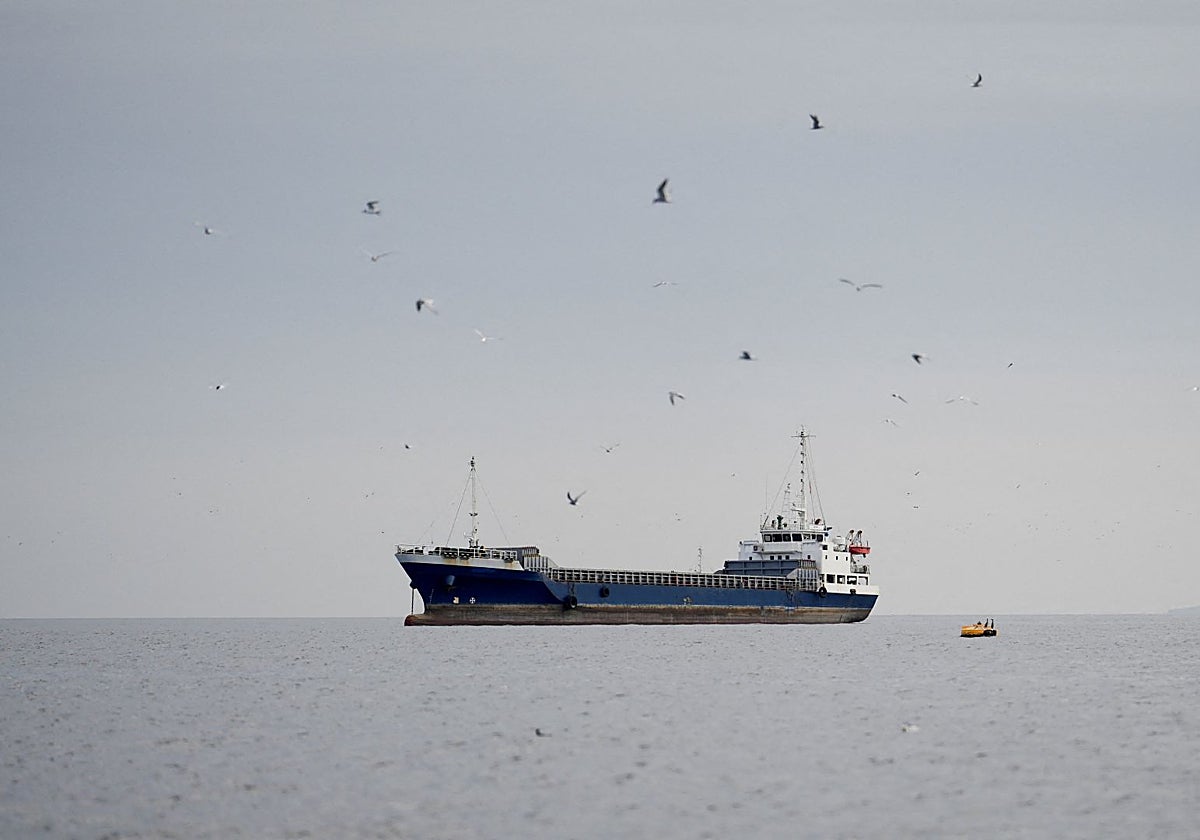
The United States military has implemented a naval blockade on Iranian ports and coastal zones, a move that has paralyzed maritime traffic in the Strait of Hormuz and triggered a global humanitarian warning.
According to the United Nations Development Programme (UNDP), the conflict and the subsequent closure of the Strait are driving a "development reversal." The agency warns that more than 3ally 32 million people worldwide could fall into poverty due to the economic fallout.
US Central Command (CENTCOM) began enforcing the blockade at 10:00 a.m. ET this Monday, targeting all maritime traffic entering or exiting Iranian ports in the Persian Gulf and Gulf of Oman. The measure follows the collapse of ceasefire negotiations in Pakistan.
President Donald Trump announced the operation via Truth Social, stating that the US would "eliminate" any Iranian vessel interfering with the blockade.
"The Iranian Navy lies at the bottom of the sea, completely destroyed: 158 ships," Trump wrote. "Warning: If any of these boats approaches our BLOCKADE, it will be ELIMINATED immediately, using the same elimination system we use against drug traffickers on ships at sea. It is fast and brutal."
Trump also claimed that 98.2% of drugs entering the US by sea have been stopped as part of the strategy.
Global economic fallout
Tehran has condemned the blockade as an act of "piracy." An Iranian military spokesperson told state media that any US restrictions on ships in international waters would be "illegal."
Iranian officials warned that if Persian Gulf or Gulf of Oman ports are threatened, "no port... would remain safe." The Iranian Revolutionary Guard had previously declared that any military vessel approaching the Strait would be viewed as a ceasefire violator.
The UNDP report identifies a "triple crisis" involving energy, food, and stunted economic growth. The agency notes that the impact will hit the Gulf region, Asia, Sub-Saharan Africa, and island nations hardest.
UNDP Administrator and former Belgian Prime Minister Alexander De Croo stated, "A conflict like this represents a setback in development. Even if the war ceases, a ceasefire would certainly be very welcome. But the impact is already present."
De Croo added that the most devastating aspect is the effect on the poorest populations: "There will be a lasting impact, especially in the poorest countries, where people are pushed back into poverty. That is the most heartbreaking aspect. Those who fall into poverty are, very often, people who previously lived in it. They managed to get out and now they are falling back into it."
Energy prices have surged in the six weeks since initial US and Israeli airstrikes on Tehran. The UK Maritime Trade Operations (UKMTO) confirmed that access restrictions are currently affecting the Persian Gulf, the Gulf of Oman, and the Strait of Hormuz.
Experts warn the disruption to oil, gas, and fertilizer supplies has created a "time bomb" for food security. IMF Director Kristalina Georgieva noted last week that even if a lasting peace deal is reached, the "aftermath" of the conflict has permanently damaged the global economy.