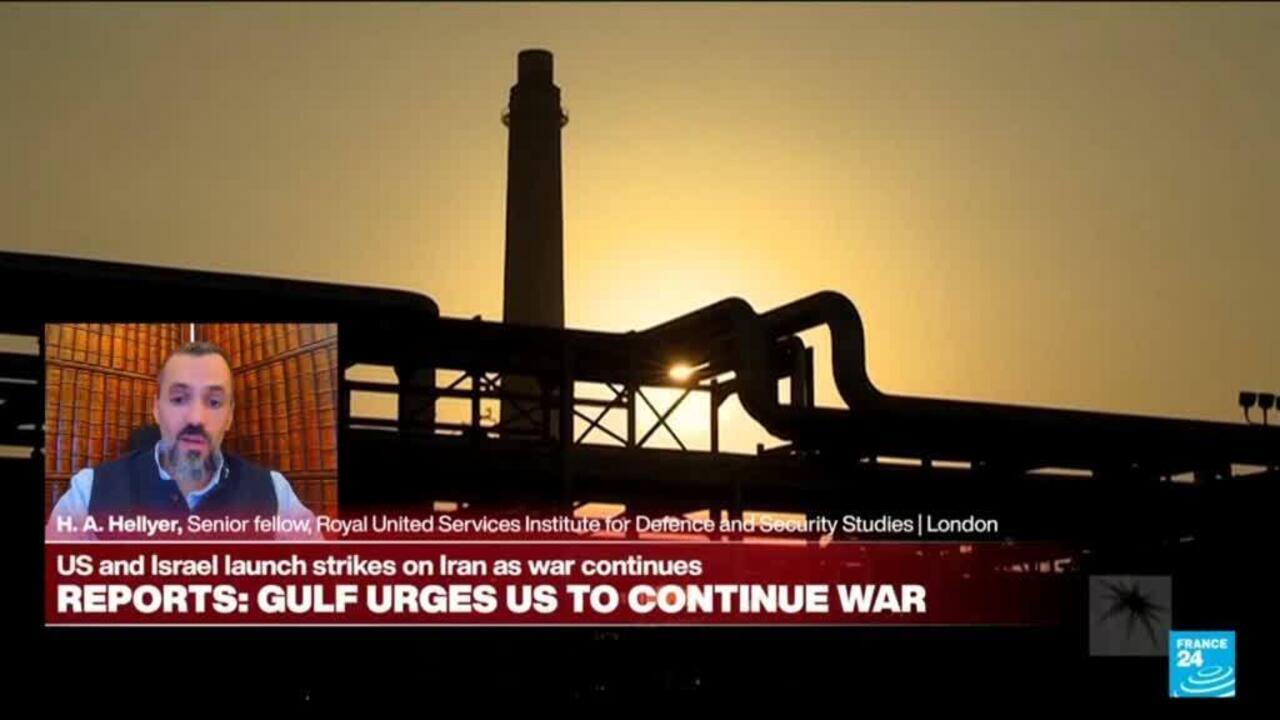
President Donald Trump is reportedly considering a ground operation to seize Iran's stockpile of enriched uranium. The potential mission aims to prevent the regime from developing nuclear weapons amidst ongoing regional conflict. Military experts warn the plan presents significant logistical and security challenges for the Pentagon. Recent reports indicate the administration is weighing multiple military options to achieve its strategic objectives in the Middle East.
Key Details
Such an operation would require deploying ground troops to secure underground facilities deep within the country. Removing the uranium stockpile could take several days or even weeks to complete according to senior officials. It represents one of the most complicated special operations in history, said Mick Mulroy, a former deputy assistant secretary of defence. The complexity stems from the need to locate specific containers within damaged infrastructure.
At the start of the war, Iran possessed approximately 440kg of uranium enriched to 60%. The material can be quickly enriched to the 90% threshold needed for weapons-grade uranium. Most of the highly enriched uranium is believed to be stored at Isfahan, one of three underground nuclear sites. Iran also has roughly 1,000kg of uranium enriched to 20%, and 8,500kg that are enriched to the 3.6% threshold accepted for medical research.
Gaining access presents another set of challenges assuming the US knows where the stockpile is located. Satellite imagery from February indicated all entrances to the tunnel complex appeared to be sealed off with earth. US forces would likely need heavy machinery to dig through rubble in order to locate the enriched uranium. This would occur while facing potential counterattacks from Iranian defence forces in the region.
What This Means
Unlike previous air strikes, securing enriched uranium could not be done without using ground forces. The US and Israel have been degrading Iranian defence capabilities to enable this type of operation if it was necessary. Nevertheless, experts said it would still be a high risk operation for isolated troops. Gaining access to the highly enriched uranium presents another set of challenges for the Pentagon.
US ground troops would be isolated at Isfahan, which is located approximately 300 miles inland from Iran's third largest city. Medical evacuations become difficult given the distances and vulnerability to anti-aircraft fire. The operation would likely involve the seizure of an airfield or landing zone from which US forces could operate. The 82nd Airborne Division, which is trained to secure airfields and other infrastructure, could be used along with other US forces.
"You've got basically a half ton of what's effectively weapons grade uranium that you've got to extricate," said Jonathan Ruhe. He added that there are 1 million things that could go wrong during the extraction process. Specialized teams trained to handle nuclear material would then be sent in to retrieve the enriched uranium. The extraction requires precise coordination to avoid accidental detonation or contamination.
Senior administration officials said at the start of the war that the US might consider diluting Iran's highly enriched uranium on site. But that would be a large, complex and time-consuming operation compared to removal. Seizing and taking the uranium out of Iran is faster and would allow the US to dilute the material in the United States safely.
What Comes Next
The scenario is just one of several military actions that Trump could take in Iran. Others include the US taking control of Kharg Island in an effort to pressure Iran to fully reopen the Strait of Hormuz. The administration may also be using the threat of new military operations to pressure Iran to the negotiating table without direct engagement. The administration may also be using the threat of new military operations to pressure Iran to the negotiating table.
Gaining access to the highly enriched uranium presents another set of challenges for the Pentagon. Experts said the ideal scenario is knowing exactly where the material is stored before deployment. The White House said Trump was yet to make a final decision on the matter. Rafael Grossi, the director of the International Atomic Energy Agency, said last month that more detailed information was not available.