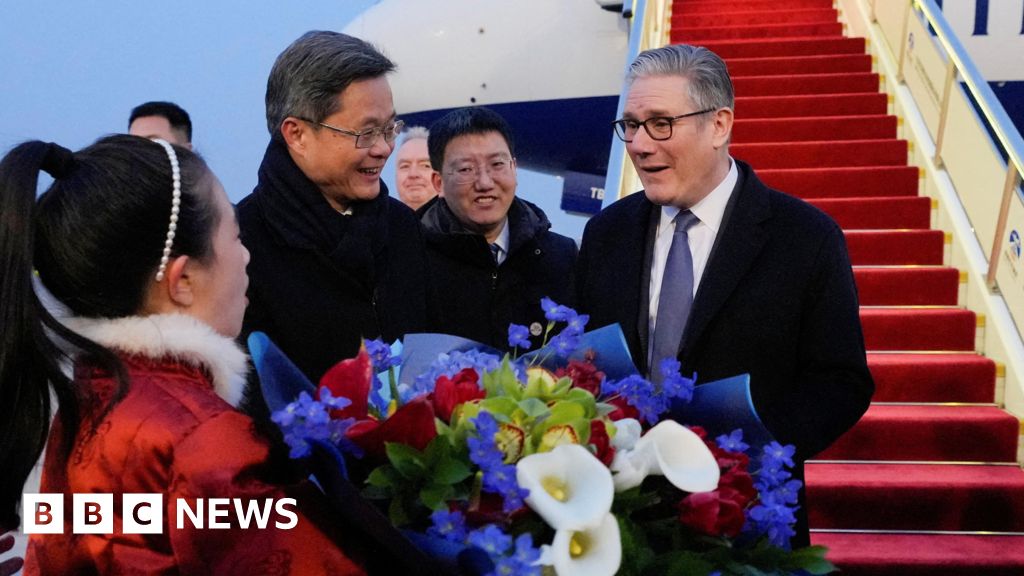
The arrival of the UK Prime Minister in Beijing marks a significant diplomatic pivot, signaling London's intent to re-engage robustly with the world's second-largest economy after a period of heightened geopolitical friction. This three-day visit, the first by a British head of government since 2018, is fundamentally an exercise in economic pragmatism, underscored by the presence of a large delegation of British business leaders.
Upon arrival, the Prime Minister emphasized a commitment to an 'outward-looking' posture, framing the engagement as essential for securing the UK's national interest. This approach directly confronts the growing domestic debate regarding the appropriate balance between economic necessity and national security, particularly given recent warnings from UK intelligence services concerning Chinese state espionage activities.
The political calculus for the visit remains acutely complex. While the Prime Minister insists on maintaining a 'strategic and consistent relationship,' this dialogue occurs against a backdrop of severe international criticism regarding Beijing’s human rights record, notably concerning the Uyghur population in Xinjiang and the ongoing legal proceedings against Hong Kong media tycoon Jimmy Lai.
Addressing the inherent tension, the Prime Minister indicated a willingness to raise contentious issues directly with President Xi Jinping during their scheduled meeting. The stated strategy is to utilize engagement as a channel for discussing disagreements while simultaneously progressing areas of mutual benefit, a delicate tightrope walk in current Sino-Western relations.
Domestically, the trip has drawn sharp criticism from opposition figures. Critics argue that prioritizing trade dialogue risks overlooking fundamental security threats and human rights abuses. Specific concerns have been raised over the recent approval for a large-scale Chinese embassy complex in London, which opponents fear could become a hub for intelligence operations.
Furthermore, the Prime Minister is navigating the delicate geopolitical alignment between the UK, the US, and China. A key objective appears to be maintaining close transatlantic ties with Washington while simultaneously avoiding a forced binary choice that would necessitate completely severing economic ties with Beijing. This balancing act reflects a broader European strategy of 'de-risking' rather than outright 'decoupling' from the Chinese market.
This diplomatic initiative, therefore, is less about immediate resolution of deep-seated disputes and more about establishing a durable framework for managing a relationship defined by both deep economic interdependence and profound ideological divergence. The outcomes of the high-level meetings will be closely scrutinized for any indication of shifts in the UK's long-term strategic posture toward Beijing. (Source: Based on reporting from bbc.com)