President Donald Trump announced Sunday that the US Navy will begin blockading all ships entering or leaving the Strait of Hormuz following the breakdown of high-level negotiations in Islamabad.
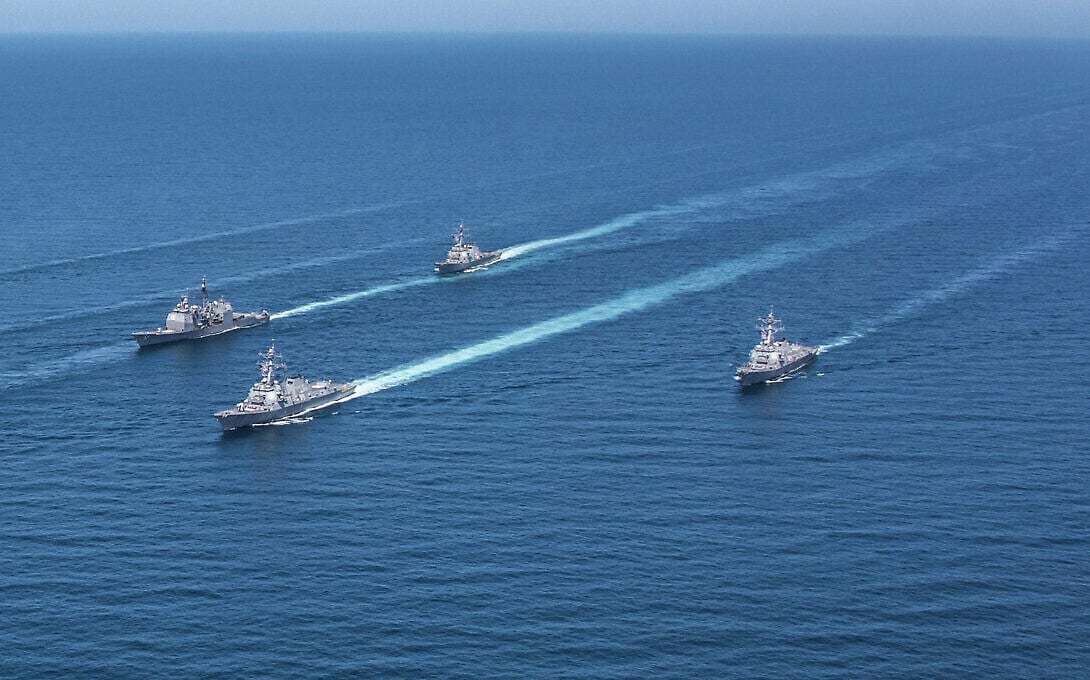
Trump stated in a social media post that the US Navy "will begin the process of BLOCKADING any and all Ships trying to enter, or leave, the Strait of Hormuz".
The threat follows 12 hours of face-to-face negotiations between US and Iranian delegations in Pakistan that ended without an agreement. This escalation occurs amidst a six-week conflict in the Middle East involving the US, Israel, and Iran, which has already seen significant damage and loss of life from US-Israeli attacks, according to The Guardian.
US Vice President JD Vance, leading the American delegation alongside special envoy Steve Witkoff and Jared Kushner, stated that the US requires an "affirmative commitment that they will not seek a nuclear weapon, and they will not seek the tools that would enable them to quickly achieve a nuclear weapon".
US military moves to interdict maritime traffic
According to Al Jazeera, the US military's Central Command (CENTCOM) announced it will block all maritime traffic entering and exiting Iranian ports, including those in the Gulf and the Gulf of Oman. The blockade is scheduled to begin at 10:00 a.m. Washington, D.C. time on Monday. The announcement has left global markets in further uncertainty regarding how the blockade will be enforced, The Guardian reported.
Trump accused Iran of "extortion" and added that the US Navy would hunt down and interdict ships in international waters that had paid Iran a toll to traverse the strait.
Analysts warn the move could dismantle the two-week ceasefire between the US and Iran. The Strait of Hormuz has emerged as Iran’s most effective weapon in its asymmetric war with the US, The Guardian reported. Chris Featherstone, a political scientist at the University of Denmark, told Al Jazeera that Trump's threat is "absolutely an escalation" in the war on Iran.
Featherstone noted, "Trump is using the threat of the blockade as a tool in the negotiations with Iran. Trump has said Iran holds no cards, and this attempt to leverage a blockade on Iran would constitute an attempt to further pressure Iran to comply with US goals in the negotiations".
Pakistan's Deputy Prime Minister and Foreign Minister Ishaq Dar said after the talks, "Pakistan has been and will continue to play its role to facilitate engagements and dialogue between the Islamic Republic of Iran and the United States of America in the days to come".
While the ceasefire has allowed shipping to continue, the Strait of Hormuz remains a vital chokepoint, handling 20 percent of the world's oil and liquefied natural gas (LNG) supplies.
Vance described the US position as a "final and best offer," stating, "We leave here with a very simple proposal, a method of understanding that is our final and best offer. We’ll see if the Iranians accept it".