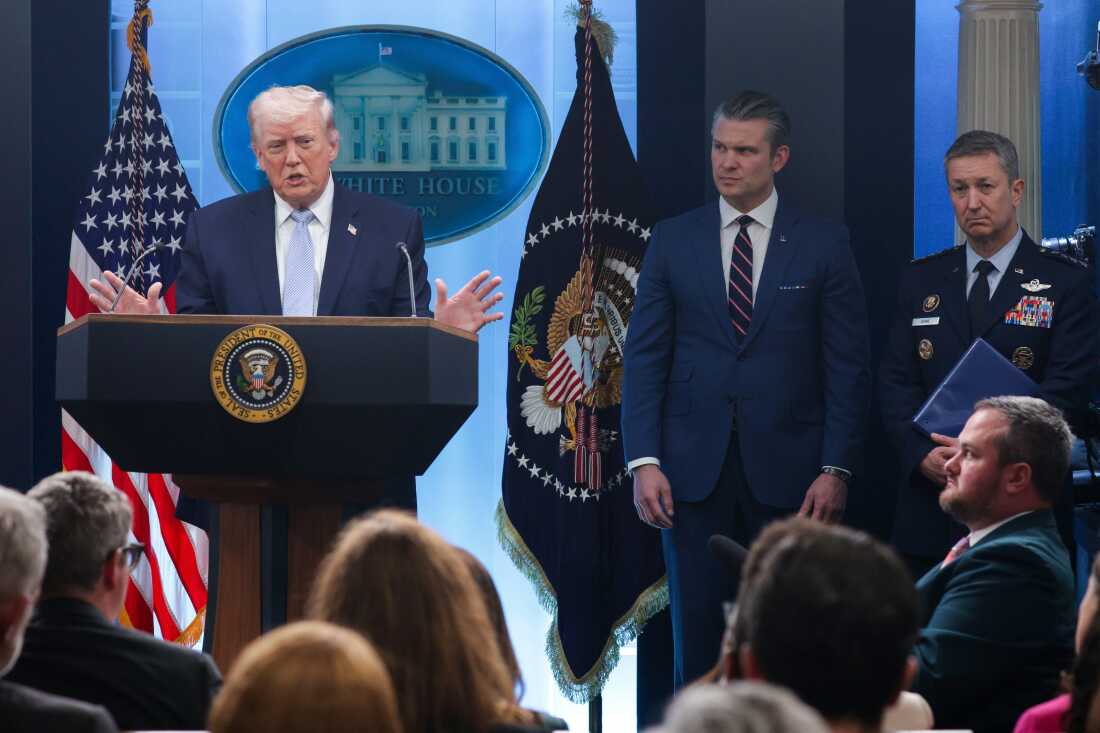
President Donald Trump announced a two-week suspension of planned military strikes against Iran on Tuesday evening, reversing his threat to attack civilian infrastructure just hours before his deadline. The pause was confirmed by the White House shortly after 6:30 p.m. Eastern time, less than 90 minutes before the 8:00 p.m. deadline for the operation.
Trump credited Pakistan for the breakthrough, citing conversations with Prime Minister Shehbaz Sharif and Field Marshal Asim Munir. In a post on Truth Social, Trump explained his decision: “Based on conversations with Prime Minister Shehbaz Sharif and Field Marshal Asim Munir, of Pakistan, and wherein they requested that I hold off the destructive force being sent tonight to Iran, and subject to the Islamic Republic of Iran agreeing to the COMPLETE, IMMEDIATE, and SAFE OPENING of the Strait of Hormuz, I agree to suspend the bombing and attack of Iran for a period of two weeks.”
Iranian Foreign Minister Abbas Araghchi confirmed the tentative agreement shortly after the announcement. “If attacks against Iran are halted, our Powerful Armed Forces will cease their defensive operations,” Araghchi wrote on social media. He added that safe passage through the Strait of Hormuz would be managed through coordination with Iran’s armed forces, with "due consideration of technical limitations."
While the U.S. framed the pause as a conditional suspension, Iran’s Supreme National Security Council characterized the outcome as a victory, claiming the U.S. had been forced to accept a 10-point plan proposed by Tehran. The Iranian council indicated that the ceasefire could be extended further depending on the progress of upcoming negotiations, which are scheduled to take place in Islamabad.
Market reaction and regional tension
Global financial markets reacted sharply to the news of the reprieve. West Texas Intermediate (WTI) crude oil prices fell approximately 15% to $95.33 per barrel, while Brent crude dropped over 12% in after-hours futures trading to $92.21. The Japanese yen, a traditional safe-haven asset, appreciated 0.4% against the dollar as investors recalibrated for a lower probability of an immediate energy market disruption.
In Mexico, the S&P/BMV IPC index fell 0.66%, though the Mexican peso strengthened 0.40% to close at 17.69 per dollar. Analysts noted that despite the diplomatic window, market sentiment remains cautious given the conditional nature of the agreement and the history of recent deadline extensions.
Before the reversal, the situation had reached a fever pitch. On Tuesday morning, Trump had issued a stark warning on social media: “A whole civilization will die tonight, never to be brought back again. I don’t want that to happen, but it probably will.” In Iran, the threat of strikes on power plants, bridges, and other infrastructure prompted symbolic protests, including performances by musician Ali Ghamsari outside the Damavand power station, which provides roughly half of Tehran’s electricity.