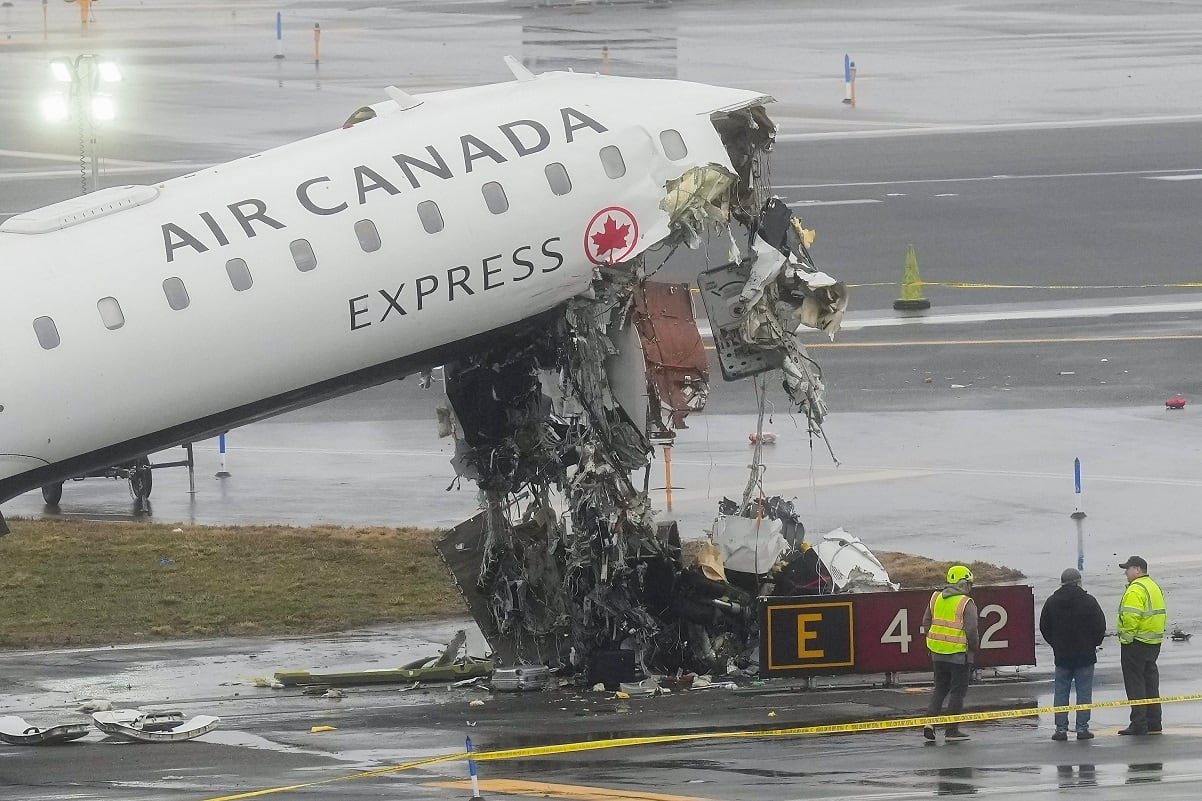
US authorities recovered the flight recorder from an Air Canada plane that collided with a fire truck at LaGuardia Airport on Monday. The National Transportation Safety Board confirmed the black box was found intact following a fatal accident that killed two pilots on Sunday night. This development marks a critical step in determining the cause of the incident that disrupted major operations in New York.
Jennifer Homendy, the chairwoman of the National Transportation Safety Board, stated that investigators had to cut a hole in the aircraft roof to access the data. She confirmed that the recorder showed no visible damage and is now being transported to Washington laboratories for detailed technical analysis. Officials expect to share preliminary findings within the coming days with the public and relevant industry stakeholders. The recovery of this data is vital for understanding the final moments before the aircraft struck the ground vehicle.
A team of 25 specialists will examine the aircraft components including hydraulic systems and tires to rule out any mechanical failure. The investigation also covers air traffic control communications and the procedures used by rescue operations on the active runway. Federal regulators will review the entire sequence of events leading up to the collision to ensure no procedural errors occurred.
The accident occurred at 23:37 local time when the aircraft was traveling at approximately 210 kilometers per hour before impact. Reports indicate that 72 passengers and four crew members were on board while two firefighters were driving the truck involved. The front section of the plane sustained severe damage during the collision which is now being documented for forensic purposes.
Audio recordings show an air traffic controller admitting to a mistake regarding the authorization for the fire truck to cross the active runway. The controller reportedly told a pilot over the radio that they had messed up the situation shortly after the crash occurred. Homendy noted that standard protocol involves separating such personnel from their duties during the inquiry process.
International aviation safety standards established by bodies like the International Civil Aviation Organization often influence protocols adopted by Mexican aviation authorities to ensure compliance with global treaties. Mexican carriers and travelers rely on these standardized safety measures to maintain confidence in transborder air transport corridors essential for regional commerce. Any disruption in safety at a major hub could temporarily impact passenger sentiment across the North American region. Mexico's tourism sector depends heavily on US travel, making such safety incidents a matter of economic concern for federal officials.
The National Transportation Safety Board indicated that the specific runway area will remain closed for an undetermined period to facilitate the investigation. Investigators must photograph the scene and collect debris to determine the exact mechanics of the failure without disturbing evidence. This closure will likely cause delays for other flights operating in the New York airspace during the recovery phase.
Broader implications include potential regulatory changes regarding runway incursion prevention and training for ground crews at major airports. Insurance companies and airlines may adjust risk assessments following the determination of liability in this high profile incident. Economic analysts will watch how these outcomes impact travel volumes to key business centers in the United States. Higher insurance premiums could eventually lead to increased ticket prices for passengers flying between Mexico and the US.
Future inquiries will likely focus on whether current communication protocols between towers and ground vehicles are sufficient for busy airports. Updates to these safety measures could require significant investment from airport operators across the hemisphere. Stakeholders in Mexico and the United States will monitor these developments closely for potential trade and tourism impacts on the North American economy.
The Mexican Ministry of Transportation may update its own safety guidelines based on the final report from US investigators. This review aims to protect Mexican interests and ensure that travel connectivity remains robust despite international security challenges. Industry observers will track whether the incident influences future investment in aviation security infrastructure in the region. Air Force of Mexico officials will also study the findings to improve their own operational safety protocols.