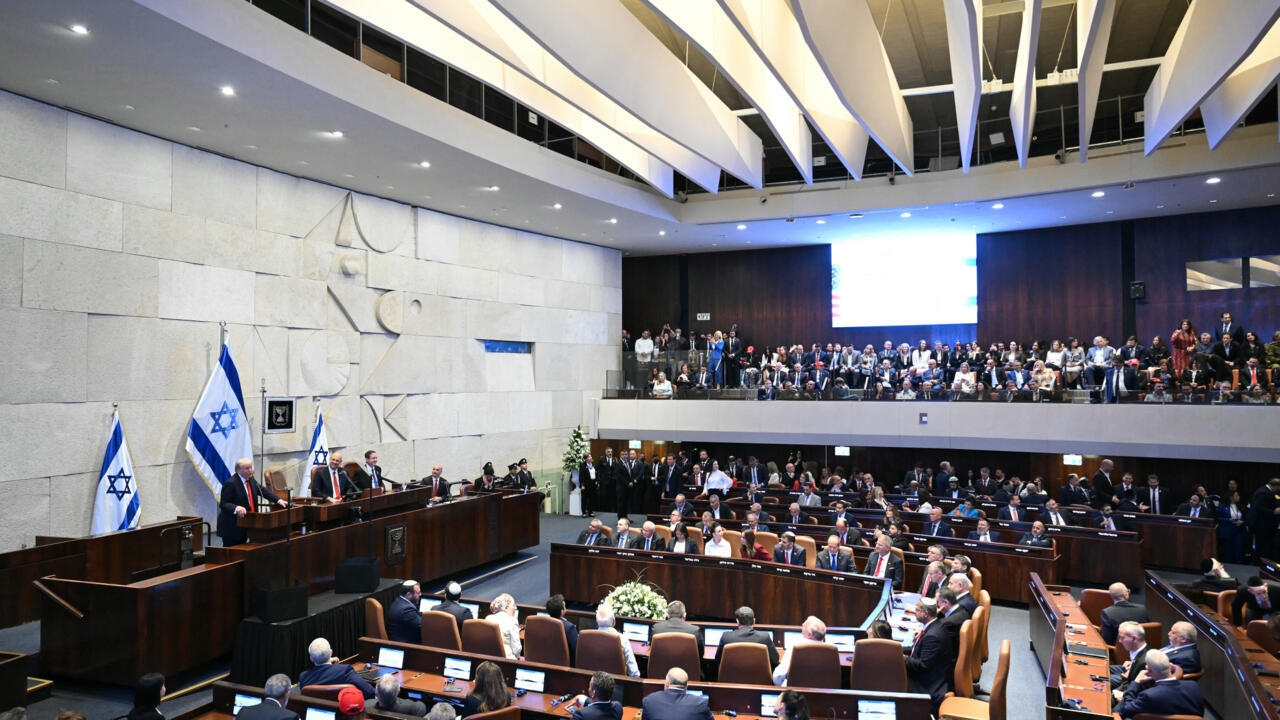
Israel's parliament approved a controversial bill on Monday that legalizes the death penalty for Palestinians convicted of murdering Israelis. The legislation, championed by far-right National Security Minister Itamar Ben Gvir, passed with sixty-two lawmakers voting in favor and forty-eight against. This decision marks a significant shift in Israeli criminal justice policy within the occupied territories. The law was issued on March 30, 2026, according to France24.
Legislative Details and Voting
Ben Gvir celebrated the outcome on social media, stating that the government delivered on a key campaign promise. He wore a lapel pin shaped like a noose during the debate to symbolize his support for the legislation. The bill establishes hanging as the method of execution, to be carried out within ninety days of sentencing. A possible postponement of up to one hundred eighty days is permitted under special circumstances.
The law creates distinct legal tracks for Palestinians in the West Bank compared to Israeli citizens in civilian courts. Palestinians in the West Bank are automatically tried in Israeli military courts where the death penalty becomes the default punishment for terror charges. In contrast, Israeli criminal courts apply the death penalty only to those who act with the aim of negating the existence of the State of Israel. This distinction has drawn sharp criticism from human rights organizations.
Legal Challenges and International Reaction
The Association for Civil Rights in Israel announced it filed a petition with the Supreme Court immediately after the vote. The group argued that the law creates two parallel tracks designed to apply to Palestinians in different jurisdictions. They contend that the legislation violates Basic Laws which prohibit arbitrary discrimination. The law creates two parallel tracks, both designed to apply to Palestinians, the Association for Civil Rights in Israel said in a statement.
Opposition lawmaker Ram Ben Barak expressed outrage during the parliamentary debate regarding the implications of the law. He questioned the moral standing of having one law for Arabs in Judea and Samaria and a different law for the general public. Ben Barak stated that the legislation suggests Hamas has defeated Israel by eroding its values. Do you understand what it means that there is one law for Arabs in Judea and Samaria, and a different law for the general public for which the State of Israel is responsible?
European nations including Britain, France, Germany, and Italy expressed deep concern over the bill on Sunday. They warned that the legislation risks undermining Israel's commitments with regards to democratic principles. Amnesty International had previously urged lawmakers to reject the legislation citing its discriminatory application against Palestinians. The Palestinian Authority condemned the adoption, stating that Israel has no sovereignty over Palestinian land.
Support for the bill came from Limor Son Har-Melech, a lawmaker who survived a terrorist attack that killed her husband. She described the legislation as a necessary step to end a cycle of terror and release of militants. For years, we endured a cruel cycle of terror, imprisonment, release in reckless deals, and the return of these human monsters to murder Jews again.
Israel has been a de facto abolitionist country since the execution of Adolf Eichmann in 1962. The occupation of the West Bank since 1967 has seen violence soar following the October 7, 2023 attack by Hamas. This new law represents the first time the death penalty has been codified for terror charges in this context. The Supreme Court will now review the constitutionality of the measure before any executions can proceed.
Legal experts suggest the Supreme Court may annul the legislation on jurisdictional and constitutional grounds. The outcome of this challenge will define the future of human rights protections in the region. International observers will watch closely for any impact on diplomatic relations with Western allies. The situation remains volatile as the conflict continues to evolve.