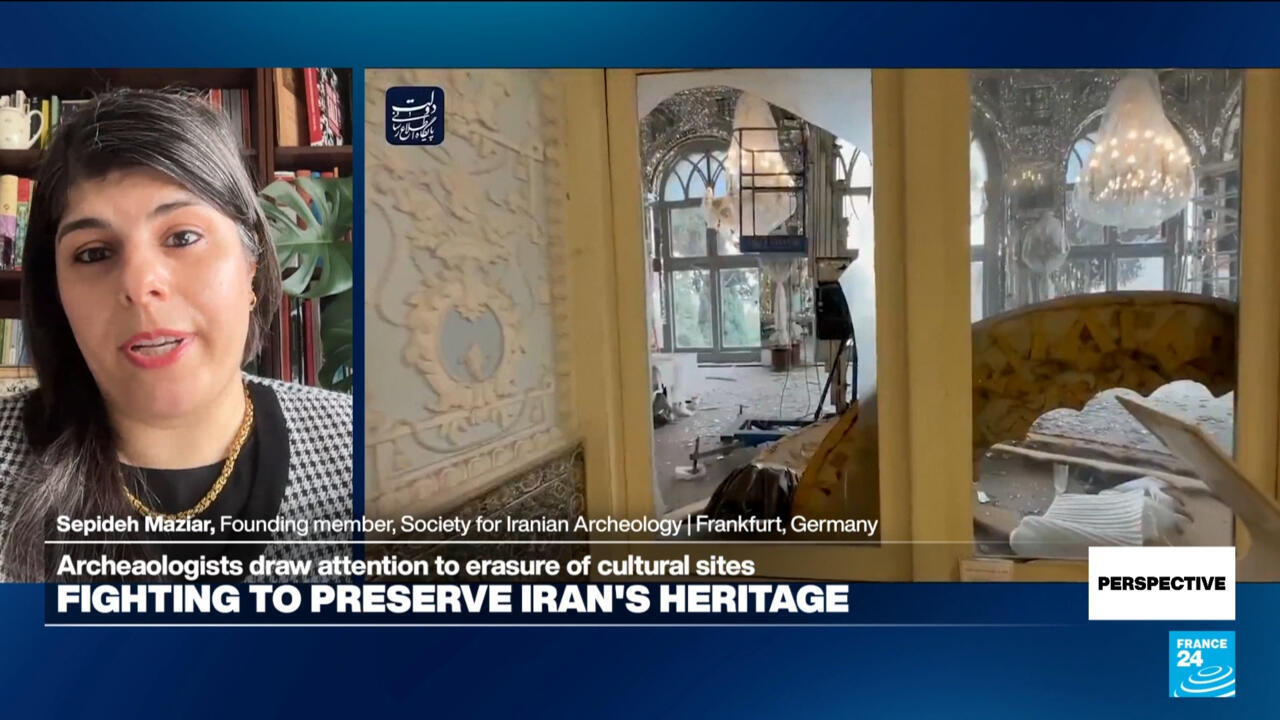
Sepideh Maziar, a senior researcher at Goethe University Frankfurt, has warned that ongoing military actions in the Middle East are erasing irreplaceable cultural history for future generations in a way that cannot be reversed. Speaking to France 24 in late March 2026, the Iranian archaeologist highlighted the systematic destruction of heritage sites across Iran that have stood for thousands of years. She argues that these losses diminish the collective memory of humanity rather than affecting only one nation or local population.
Maziar is a founding member of the Society for Iranian Archaeology and holds a position as a lecturer at her German institution. Her expertise allows her to identify the specific historical value of locations that are currently under threat from aerial bombardment. This professional background gives weight to her claims regarding the severity of the damage occurring in the region.
Along with her colleagues, Maziar has constructed an interactive map designed to record the specific locations of damaged infrastructure. The project aims to preserve the memory of the Iranian people and their achievements amid the constant bombing in the region. This digital archive serves as a critical tool for historians who wish to study the impact of modern warfare on ancient civilization.
Cultural Loss and Historical Significance
The destruction of these sites means that physical evidence of thousands of years of history is vanishing permanently from the landscape. Maziar states that each destroyed monument represents a loss of knowledge that cannot be recovered through digital means alone. The erasure of these landmarks complicates efforts to understand the evolution of human society in the region.
Conflict in the Middle East has intensified, creating an environment where archaeological sites are often caught in the crossfire of larger geopolitical struggles. Previous reports from the region indicate that military operations frequently disregard the protection of non-military historical structures. This pattern of destruction raises concerns for international bodies responsible for heritage conservation.
Implications for Global Heritage Preservation
International organizations are now facing the challenge of documenting damage while active hostilities continue in the area. The interactive map created by Maziar provides a baseline for future reconstruction efforts once peace is established. Experts hope that this data will eventually secure funding for the physical restoration of the affected sites.
The broader implications extend beyond Iran to include concerns about the safety of heritage sites throughout the Middle East. If current trends continue, the region risks losing a significant portion of its historical identity to modern military tactics. This outcome would represent a failure of global cooperation to protect cultural assets during times of war.
Maziar continues to advocate for the protection of these sites as belonging to all of humanity rather than just local populations. Her work highlights the urgent need for international intervention to prevent further cultural erasure in conflict zones. The coming months will determine how effectively the global community responds to these documented threats.