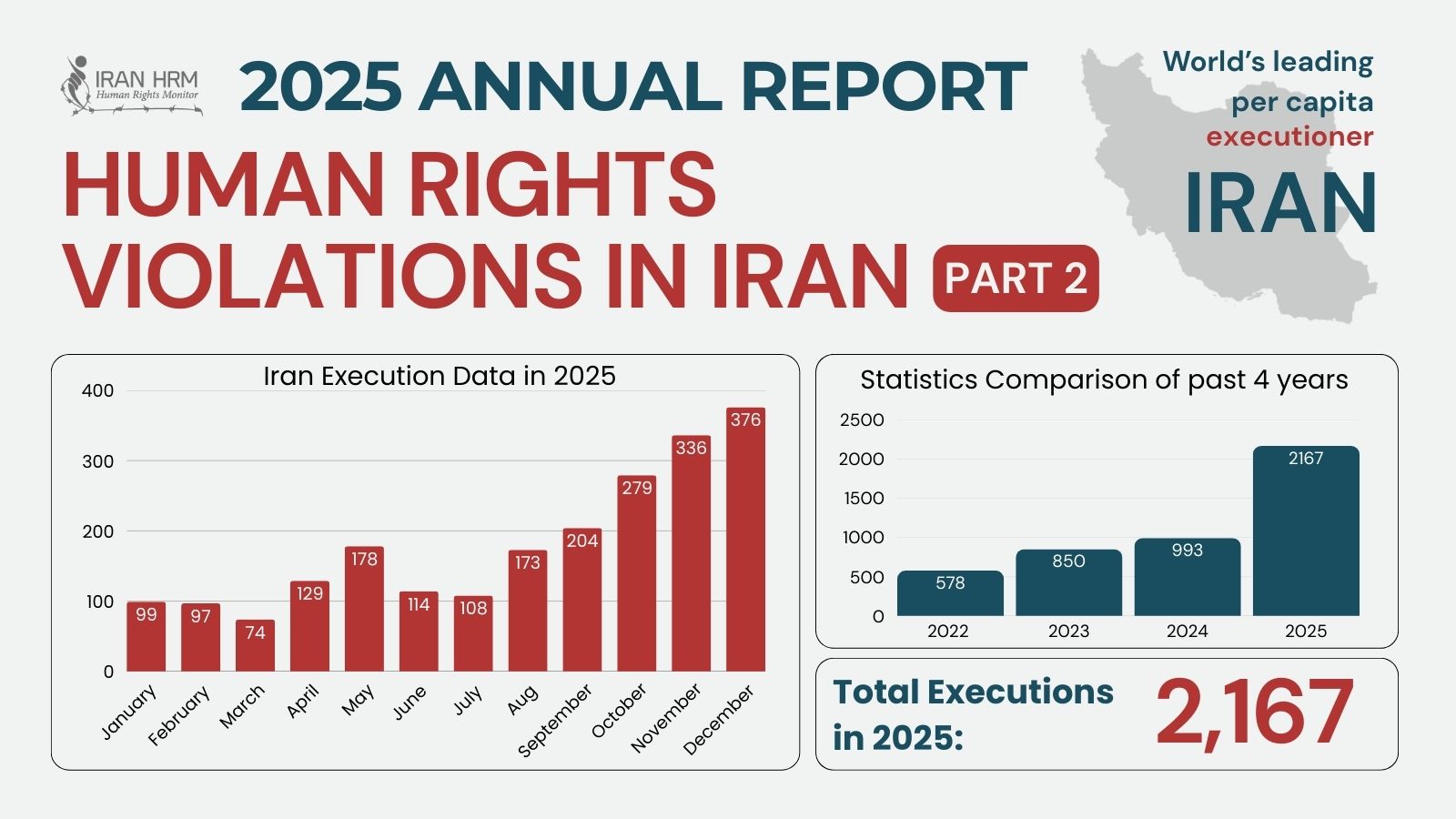
Iranian authorities carried out at least 1,639 executions in 2025, according to a new joint report from Norway-based Iran Human Rights (IHR) and the Paris-based group Together Against the Death Penalty (ECPM). The figure represents a 68 percent increase from 2024, when 975 people were put to death.
The findings establish that an average of more than four people were executed every day throughout the year. This total marks the highest number of state-sanctioned killings in Iran since 1989, shortly after the Islamic Revolution.
A tool for political repression
Human rights advocates argue that the regime is utilizing capital punishment to suppress dissent and maintain control during a period of intense domestic and international instability. The report highlights that 48 women were among those hanged in 2025.
"By creating fear through an average of four to five executions per day in 2025, authorities tried to prevent new protests and prolong their crumbling rule," said IHR director Mahmood Amiry-Moghaddam. He warned that if the government survives its current crises, it will likely increase the use of the death penalty as a tool of repression.
IHR researchers note that their data represents an "absolute minimum," as the majority of executions in Iran are not officially reported by state media. The organization requires two independent sources to confirm each case before adding it to their tally.
Following widespread anti-government protests in January 2026, rights groups fear the situation will deteriorate further. Thousands are estimated to have died during the government's subsequent crackdown, with tens of thousands of citizens currently held in detention centers.
"The death penalty in Iran is used as a political tool of oppression and repression, with ethnic minorities and other marginalised groups disproportionately represented among those executed," said ECPM executive director Raphaël Chenuil-Hazan. The report specifically identifies the Kurdish and Baluch minority populations as being at heightened risk.
Despite the ongoing conflict with the United States and Israel, the Iranian judiciary has continued to issue and carry out capital sentences. Since the war began on February 28, authorities have executed seven individuals in connection with the January protests, including six members of the opposition group People's Mujahedin of Iran (MEK) and one dual Iranian-Swedish citizen accused of espionage.