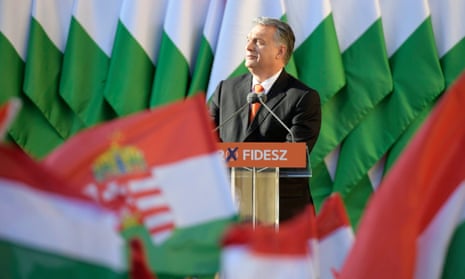
Prime Minister Viktor Orbán’s Fidesz party has integrated artificial intelligence into its campaign strategy, releasing a series of fabricated videos to attack election rival Péter Magyar. The campaign aims to frame Magyar, who leads the center-right Tisza party, as a pro-war candidate who would force Hungary into the conflict in Ukraine.
In February, the Fidesz social media accounts shared a video depicting a young girl waiting for her father to return from war. The clip abruptly cuts to the father, blindfolded and bound, being executed by captors. The video tells viewers: "The video is an AI video, but the war is really horrible. Péter Magyar doesn't want you to see this video. He doesn't want you to see what an irreversible tragedy it is to join a war."
Fidesz claims that if Magyar wins the April 12 election, he will use pension funds to support Ukraine and implement forced conscription. Magyar has rejected these allegations, noting in his party’s manifesto that he has no plans to send troops to Ukraine or revive the draft. He labeled the Fidesz campaign "heartless manipulation" and stated the ruling party has "crossed all limits."
Generative AI as a campaign tool
Zsófia Fülöp, a journalist at the independent fact-checking site Lakmusz, notes that while Fidesz has long utilized aggressive narratives, the scale of AI adoption is unprecedented. "It is omnipresent in this campaign, especially in the communication of the ruling party and its media and proxies," Fülöp said. "They've used it before but now it's massive."
Another AI-generated clip recently surfaced from the National Resistance Movement (NEM), a pro-Fidesz activist group. The video purports to show a phone conversation between European Commission President Ursula von der Leyen and Péter Magyar regarding financial aid to Ukraine. The video, which did not disclose its AI origins, garnered 3.7 million views.
Prime Minister Viktor Orbán shared the video on his own social media channels. While Orbán acknowledged the clip was AI-generated, he warned his followers that its content could "become a reality."
Despite the aggressive use of these digital tools, the strategy has not significantly shifted voter sentiment. Most opinion polls currently show Péter Magyar leading the race as he attempts to unseat Orbán after his 16-year tenure.
Researchers at the Central European University’s Democracy Institute argue the campaign relies on a fabricated reality. "We're in a state of hallucination," said researcher Éva Bognár. "In a way the whole campaign is a disinformation campaign because it's all based on a complete false narrative that we're on the brink of war."