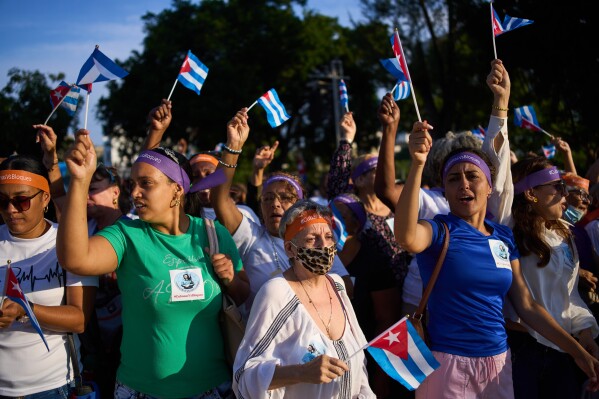
Hundreds of women marched through the streets of Havana on Tuesday to protest the de facto oil blockade imposed by the United States. Demonstrators carried signs reading “Tumba el bloqueo” (Tear down the blockade) and waved Cuban flags while calling for an end to the current energy crisis.
The protest coincided with what would have been the 96th birthday of Vilma Espin, a prominent leader of the Cuban Revolution. High-ranking government officials, including Deputy Prime Minister Ines Maria Chapman and Deputy Foreign Minister Josefina Vidal, led the march to condemn the US policy.
“This policy of abuse has to stop,” Vidal told The Associated Press. “The Cuban people don’t deserve this. It’s the most comprehensive, all-encompassing, and longest-running system of coercive measures ever imposed against an entire country.”
A country in the dark
Cuba has faced severe energy shortages since the Trump administration implemented strict measures to cut off the island’s foreign oil imports. These policies include an executive order targeting any foreign government that facilitates oil deliveries to Cuba.
According to the International Energy Agency, Cuba relies on imports for nearly 60 percent of its oil supply. The resulting fuel scarcity has caused at least two island-wide blackouts in the last month, impacting hospitals and essential services.
President Miguel Diaz-Canel has been active in public demonstrations against the policy, recently joining protesters on bicycles outside the US Embassy in Havana. While a Russian tanker was allowed to dock in late March, the government continues to face significant logistical hurdles.
President Donald Trump has repeatedly signaled that he intends to keep the pressure high. During an Oval Office appearance on March 16, Trump described Cuba as a “weakened nation” and stated he would have the honor of “taking” the country.
The diplomatic climate remains tense, though some communication has begun. US Representatives Pramila Jayapal and Jonathan Jackson visited Havana on Monday to meet with President Diaz-Canel. In a joint statement, the lawmakers urged the White House to end the blockade, citing the humanitarian impact on food supplies and local infrastructure.
Vidal acknowledged these preliminary discussions but noted that formal negotiations have yet to materialize. “We are in a very preliminary, very initial phase, and there are still no structured negotiations between the two governments,” she told AFP.