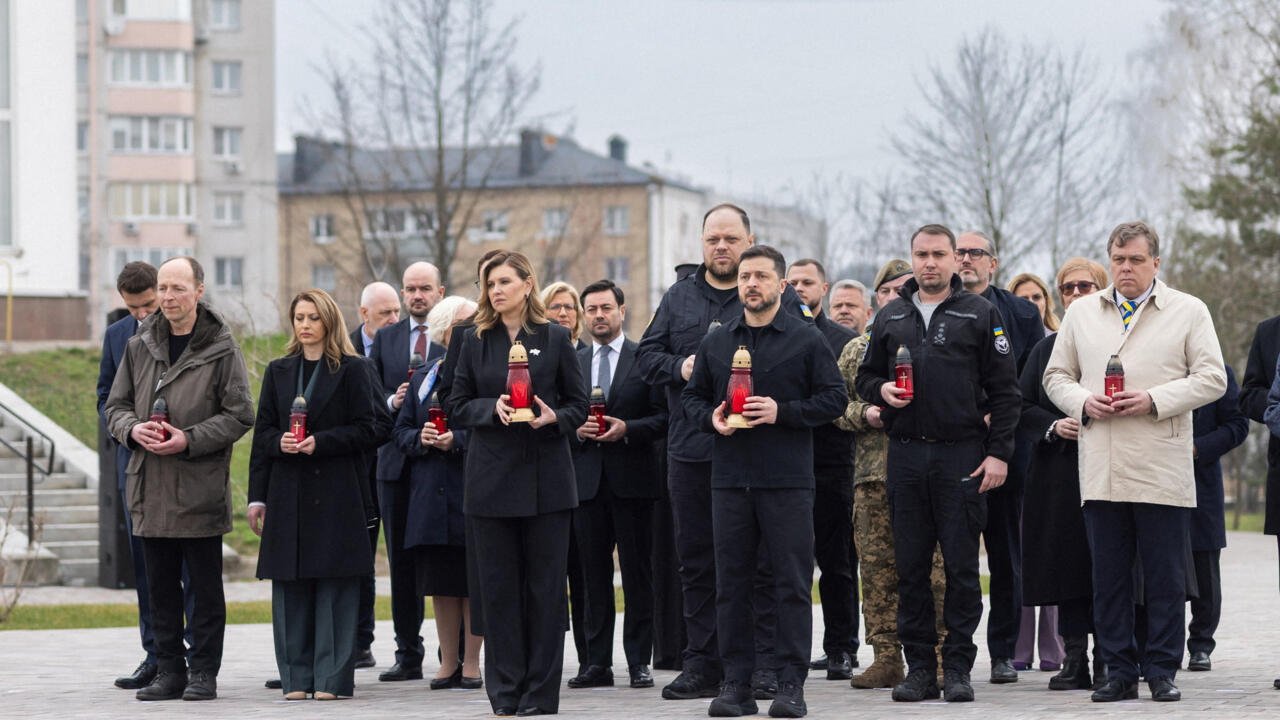
Top European diplomats traveled to Ukraine on Tuesday to commemorate the fourth anniversary of the Bucha massacre, a pivotal event in the war. The visit marks a significant moment as the conflict remains unresolved more than four years after the initial Russian invasion. Officials gathered near Kyiv to honor victims and underscore the ongoing nature of the atrocities committed by the invading army. This diplomatic mission highlights the continued international focus on the war despite global attention shifting elsewhere. The location was chosen to draw attention to the specific devastation caused by Russian forces in the region.
The European Union's foreign affairs commissioner addressed the gathering, stating the crimes were not isolated incidents. She emphasized that the violence continues as part of a broader campaign against Ukrainian sovereignty. According to the report, the commissioner linked the past events directly to current military actions in the region. This statement reinforces the narrative that the invasion has not ceased but evolved over time. She described the actions as a deliberate campaign to pave a road of destruction to Kyiv and surrounding areas.
Key Details
The massacre in Bucha occurred in 2022 during the initial phase of the Russian offensive. Thousands of civilians fled the town before it was retaken by Ukrainian forces in April. Investigations have since documented numerous war crimes committed by Russian troops against the local population. Evidence collected by international bodies suggests systematic abuses targeting non-combatants during the occupation. The town now serves as a permanent memorial to the suffering endured during the occupation period by foreign forces.
What This Means
This commemoration highlights a shift in how international bodies view the conflict. It moves beyond immediate humanitarian aid to address long-term accountability and justice mechanisms. The visit signals a sustained commitment from European leadership to support Kyiv through diplomatic channels. Such high-level visits often precede new policy announcements regarding defense or economic support. It demonstrates that memory of the war remains a priority for European foreign policy makers and regional security.
Economic implications remain significant as reconstruction costs rise alongside continued military spending. Sanctions imposed by Western nations aim to degrade Russia's war machine but impact global energy and food markets. Diplomats noted that financial stability is crucial for Ukraine's ability to rebuild its infrastructure. The cost of rebuilding cities destroyed during the conflict runs into the tens of billions of dollars. Western allies must balance immediate military needs with long-term economic recovery plans for the nation to ensure sustainability and growth.
"These crimes were 'not isolated'," said the EU foreign affairs commissioner at the ceremony.
This quote underscores the severity of the situation and rejects any notion of temporary conflict. It serves as a formal acknowledgment of the systematic nature of the violence by the European Union. Such declarations are critical for maintaining legal pressure on the Russian Federation. The language used signals a unified front against aggression in the region and across broader Eastern Europe.
What Comes Next
Future developments will likely focus on the legal proceedings against those responsible for the atrocities. International tribunals are expected to continue trials related to the invasion and occupation of Ukrainian territories. The outcome of these cases could set precedents for future international law enforcement. Nations will watch closely to see if accountability leads to tangible policy changes in the Kremlin. Continued diplomatic engagement is expected to remain a key strategy for the European Union and its member states.
Observers will watch for new aid packages or policy shifts in the coming months. The war continues to reshape global security alliances and economic partnerships across Europe. Continued scrutiny of the situation remains essential for maintaining international order. The anniversary serves as a reminder of the human cost that persists long after the initial fighting began. Global markets will react to any announcements regarding further sanctions or aid commitments to support the region.