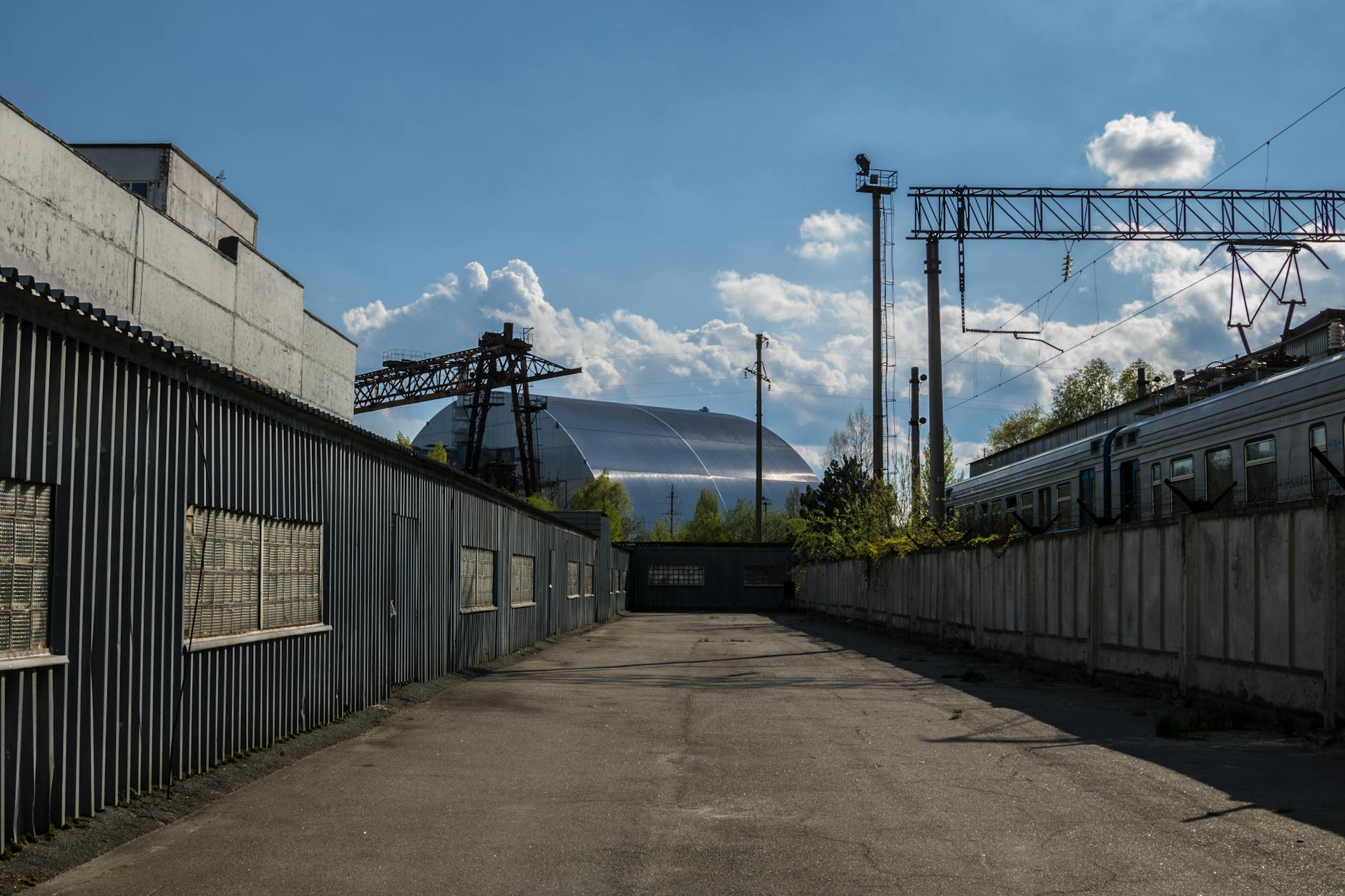
The nuclear accident at the Chernobyl plant, widely regarded as the worst nuclear catastrophe in history, served as a decisive factor in the collapse of the Soviet Union five years after the event, according to expansion.mx.
The disaster highlighted a deep-seated crisis of state legitimacy within the USSR, Armando García, coordinator of the European Studies Program at UNAM’s Faculty of Political and Social Sciences, told expansion.mx.
García identified three specific levels of failure: the concealment of information, bureaucratic stagnation, and the hyper-centralization of power in Moscow, a hallmark of authoritarian regimes.
The explosion of reactor 4 released radioactive clouds equivalent to 500 nuclear bombs like those dropped on Hiroshima in 1945, contaminating much of the Western Hemisphere.
Despite the scale of the event, the Communist Party attempted to suppress information and control the narrative. While silence was the norm within Soviet borders, the international press covered the event extensively, bringing the truth to Soviet citizens.
The push for Glasnost
Under pressure from international media, Mikhail Gorbachev was forced to accelerate Glasnost, a policy of enough openness launched in 1985, the outlet reported.
This increased transparency created fertile ground for anti-government protests across the Soviet interior. The catastrophe proved the system could not protect its own people, signaling the end of the Soviet bloc just six years after the explosion.
“The catastrophe basically demonstrated that the Soviet authorities wanted to cover up that catastrophe. It also showed the incapacity, the deficiencies in the management of the nuclear plant and later in the management of the catastrophe,” said Beata Wojna, a professor of International Relations at Tec de Monterrey, Mexico City Campus.