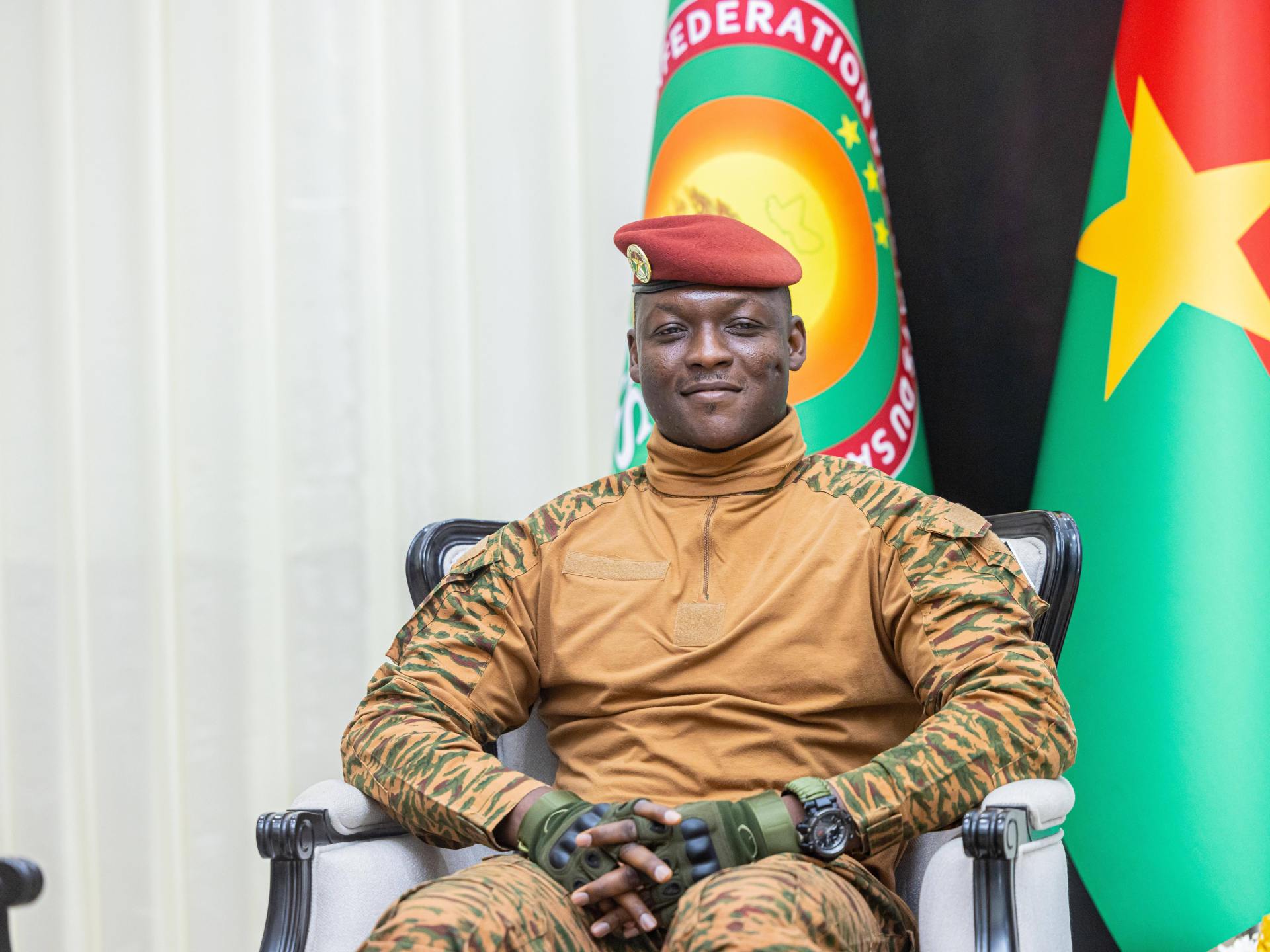
The military government of Burkina Faso, under Captain Ibrahim Traore, formally dissolved all political parties and confiscated their assets via a decree issued Thursday, effectively dismantling the nation's established political structures. The government accused existing parties of failing to adhere to regulatory guidelines as justification for scrapping the laws that established them. This action represents a substantial setback for democratic governance in the West African state, which has been under military rule since September 2022.
Interior Minister Emile Zerbo stated the decision was integral to a state rebuilding effort following alleged systemic failures within the previous multiparty framework. Zerbo claimed that the proliferation of political organizations fostered division and weakened social cohesion, although specific details regarding these alleged excesses were not provided. Prior to the 2022 coup, Burkina Faso hosted over 100 registered political entities across its political spectrum.
This centralization of power follows other authoritarian indicators, including a December 2023 constitutional change that placed the judiciary under direct government supervision, according to Beverly Ochieng of Control Risks. Ochieng noted that this development suggests a diminishing autonomy across civic and political sectors, implying the military leadership intends to extend its tenure indefinitely. The government has already postponed previously promised elections from 2024 until 2029.
Geopolitically, Traore's administration has pursued a distinctly anti-Western trajectory, withdrawing from the Economic Community of West African States (ECOWAS) to form the Alliance of Sahel States with Mali and Niger. The three nations also withdrew from the International Criminal Court (ICC) and severed security ties with former colonial power France, replacing them with Russian security support. This pivot has coincided with a marked deterioration in security.
Security challenges remain acute, with armed groups linked to ISIL and al-Qaeda controlling approximately 60 percent of the national territory, according to the Africa Center for Strategic Studies (ACSS). Fatalities attributed to groups like Jama’at Nusrat al-Islam wal-Muslimin (JNIM) and Islamic State Sahel Province (ISSP) have reportedly tripled since Traore assumed power in 2022. Despite the security focus, rights groups accuse the military and allied militias of committing atrocities against civilians.
The junta has also suppressed internal dissent through measures targeting the media and judiciary, including suspending access to several international news outlets’ digital platforms. Authorities have reportedly forced critics, including journalists and judicial officials like Deputy Prosecutor Abdoul Gafarou Nacro, into military conscription and deployment to active conflict zones. This pattern indicates a broader crackdown on any form of opposition to the current regime.
The immediate implication is the removal of any organized political opposition ahead of the revised 2029 electoral timetable, solidifying the military’s grip on governance. The ongoing security crisis provides a sustained rationale for maintaining emergency powers, which the government appears intent on institutionalizing through administrative control. International scrutiny regarding the erosion of fundamental freedoms is expected to intensify.