A new literary commentary explores the historical trajectory of mathematics, mapping its journey from the construction of ancient pyramids to the modern study of infinity.
The work, titled "Matemáticas. De la creación de las pirámides a la exploración del infinito," serves as a chronological survey of mathematical progress. It examines how human logic evolved from solving immediate physical challenges to grasping abstract, limitless concepts.
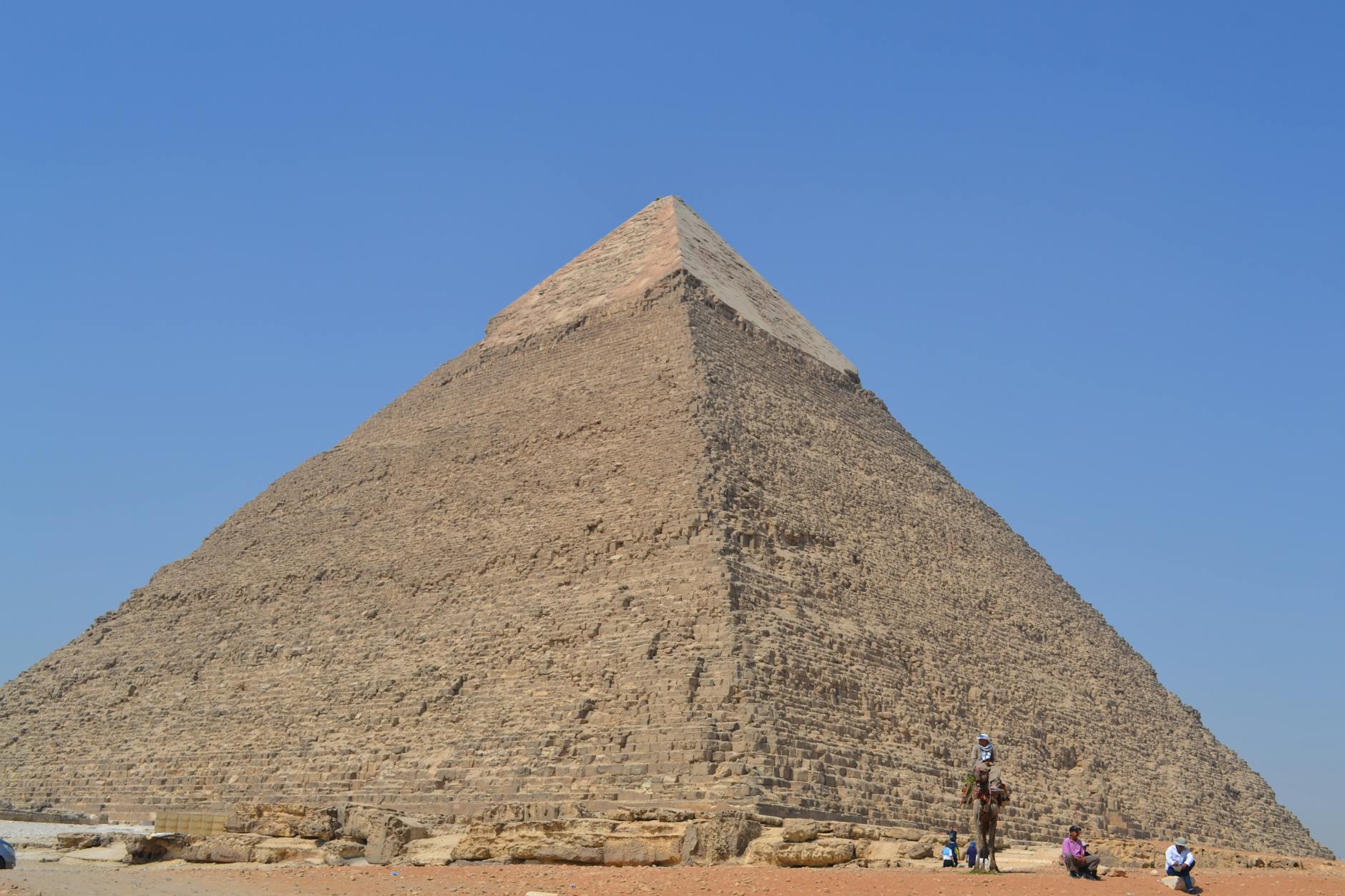
The commentary begins with the practical applications of mathematics in antiquity. It describes how early civilizations utilized geometry to facilitate large-scale engineering projects, such as the pyramids of Egypt.
During this era, mathematical knowledge functioned primarily as a tool for survival and monument building. The text notes that these early calculations focused on area, volume, and the alignment of structures with celestial bodies.
The shift toward abstraction
The narrative moves from these tangible applications to the development of more complex mathematical theories. It tracks the period when mathematics began to move away from the physical world and toward the study of pure numbers and patterns.
This transition allowed mathematicians to explore concepts that had no physical counterpart. The commentary highlights how this evolution paved theway for the discovery of the infinite.
As mathematical thought matured, the focus shifted toward the properties of numbers that exist beyond measurable boundaries. The study examines how the concept of infinity challenged previous understandings of the universe and forced a reevaluation of mathematical limits.
This leap in logic provided the necessary framework for the development of modern calculus and advanced physics. The text describes the intellectual struggle required to define a quantity that possesses no end.
The study suggests that the same fundamental principles used by ancient architects remain present in the complex equations used today. It connects the precision of ancient masonry to the precision of modern computational theory.
By tracing this timeline, the commentary illustrates the continuity of human intellect. It shows how the pursuit of measurement eventually led to the pursuit of the unknowable.