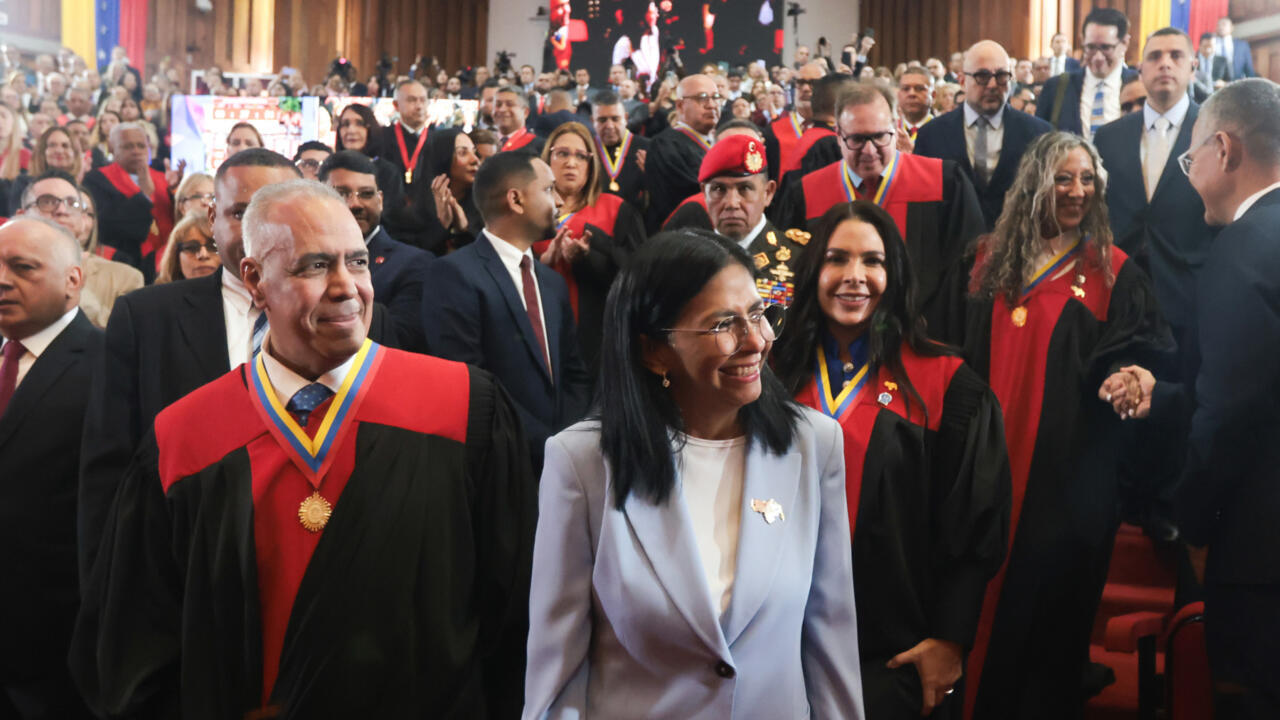
Venezuela's interim President Delcy Rodriguez announced on Friday a proposal for a general amnesty law intended to trigger the mass release of political detainees nationwide. The proposed legislation covers the entire span of political violence from 1999, the year Hugo Chavez assumed power, through the present day under the administration of ousted leader Nicolas Maduro, according to reports from Caracas.
Rodriguez stated the law is designed to begin healing societal divisions resulting from political conflict, while also proposing a major national consultation to reform the country's judicial system. Furthermore, the interim administration committed to closing El Helicoide prison, a facility rights organizations have long cited as a site of torture used by Maduro's intelligence services against political opponents.
The closure of El Helicoide, an imposing structure originally conceived as a shopping mall, is slated for transformation into a sports, cultural, and commercial center for police families and neighboring communities, Rodriguez detailed during her address at the Supreme Court.
This legislative push by Rodriguez, Maduro's former vice president, aligns closely with demands previously articulated by the United States government. Analysts note that the timing of these reforms follows closely after the US-backed removal of Maduro weeks prior, prompting the swift rollback of several key US sanctions targeting Venezuela's vital oil sector.
Opposition figures, including Nobel laureate Maria Corina Machado, expressed cautious optimism, suggesting the amnesty was a direct result of external pressure from Washington rather than a voluntary concession. Lawmaker Tomas Guanipa echoed this sentiment, hoping the measure signals the definitive end of an era of state repression in the South American nation.
Since January 8, when the government agreed to release prisoners deemed political, rights groups like Foro Penal report fewer than 300 individuals have been freed, leading to criticism over the pace of implementation. The announcement follows the final release of all Americans known to have been held prisoner in Venezuela, according to US authorities.
In a clear indication of improved diplomatic relations, the US administration lifted the ban on American commercial flights to Venezuela. Washington is also preparing to re-establish a diplomatic presence, with seasoned diplomat Laura Dogu expected to arrive in Caracas shortly as the charge d'affaires.