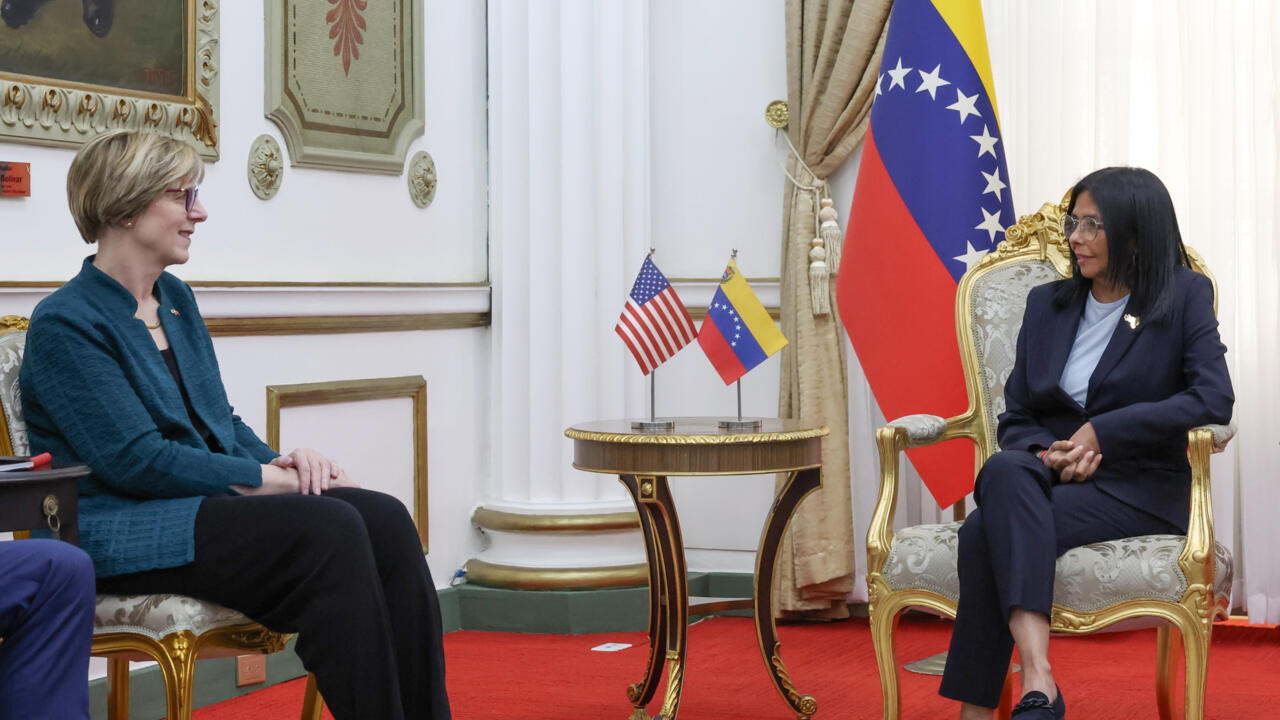
Venezuela’s interim president Delcy Rodriguez consolidated her new government Monday by appointing key ministers and meeting Washington’s envoy, Laura Dogu, in Caracas to discuss stabilization and transition planning. This high-level engagement follows the recent ouster of Nicolas Maduro, signaling a potential shift in diplomatic and economic engagement between the two nations.
Dogu confirmed the discussion focused on US plans for “stabilisation, economic recovery, reconciliation and transition,” according to a statement posted on X. Foreign Minister Yvan Gil later stated that the diplomatic focus would involve addressing historical controversies and reviewing a common agenda covering energy, trade, and politics.
Rodriguez simultaneously moved to restructure her administration, appointing former Foreign Minister Felix Plasencia to lead Venezuela's diplomatic mission in Washington. Gil indicated that Plasencia’s arrival would accelerate diplomatic and political work aimed at developing a shared agenda between the two capitals.
The appointment of Plasencia is significant, as diplomatic relations between Caracas and Washington were severed in 2019 when the US recognized an opposition-led parallel government. This move suggests an immediate effort by the interim administration to re-establish formal channels for bilateral negotiations.
Further cabinet changes included the appointment of Daniella Cabello, daughter of powerful figure Diosdado Cabello, as tourism minister. Diosdado Cabello’s endorsement is viewed as critical for the stability of Rodriguez’s administration, following her assumption of power after the US military operation that removed Maduro.
These personnel moves follow weeks after Rodriguez cleared ranks among the nation’s top military brass, appointing twelve senior officers to regional commands. The dismissals included businessman Alex Saab, who served as industry minister under the former Maduro administration.
Meanwhile, opposition leader Maria Corina Machado expressed conditional willingness to meet with Rodriguez to define a concrete transition timeline. However, Machado maintained a critical stance, characterizing Rodriguez’s interim government as fundamentally unchanged despite the new nomenclature.
The immediate focus for Washington appears to be engineering a stable economic framework capable of supporting a political reorganization, setting the stage for complex negotiations regarding energy contracts and trade normalization.