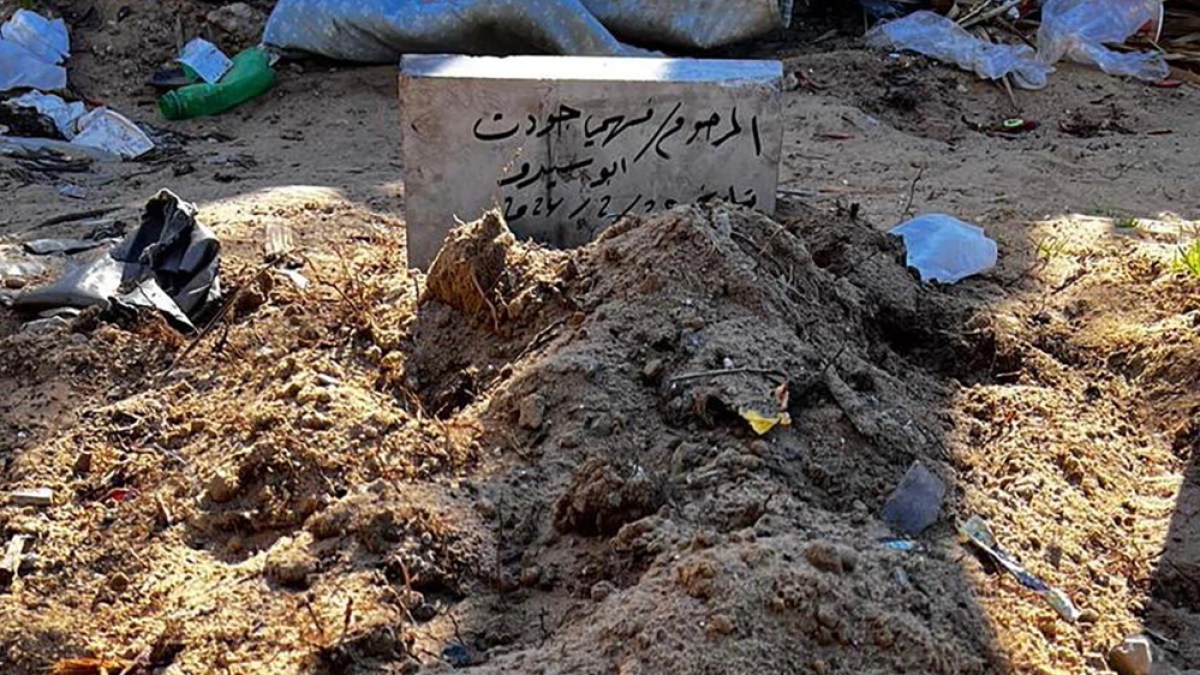
The aftermath of Israeli military operations in Gaza City has extended beyond immediate conflict zones, drawing sharp international focus to the treatment of burial sites. Reports emerging from the Tuffah neighbourhood indicate that al-Batsh cemetery was excavated by Israeli forces during a search operation to recover the remains of an Israeli captive, resulting in the disturbance of hundreds of graves.
For residents like Fatima Abdullah, whose husband was interred there, the military action represents a profound violation. Abdullah described the unbearable tension as the operation neared her husband’s resting place, noting that the use of heavy machinery led to the scattering of remains and the destruction of markers. “Even the dead were not spared,” she stated, highlighting the erosion of the right to mourn with dignity.
The operation, reportedly conducted to locate Israeli policeman Ran Gvili, involved the examination of approximately 250 graves, leading to the exhumation of both recent and older interments. Aerial imagery suggests significant alteration to the cemetery’s landscape. Families are now left uncertain about the fate of their relatives’ remains, with no clear accounting of what was recovered or returned.
This incident is not isolated. Human rights monitors, including the Euro-Med Human Rights Monitor, have documented the destruction or severe damage of roughly 21 out of Gaza’s 60 cemeteries over recent periods. These documented instances involve exhumation, mixing of remains, and wholesale land levelling, drawing condemnation from organizations like Hamas as unethical and illegal acts.
The impact on bereaved families is acute. Madeline Shuqayleh, whose sister and infant niece were buried in al-Batsh, described the situation as a re-infliction of trauma: “After a lot of effort, we found the place... But now, to this moment, they’ve deprived us … as if they killed her again.” Such actions deny families the closure of a fixed, respected burial site.
Furthermore, previous reports from UN bodies have documented mass graves discovered at hospital sites, such as al-Shifa and Nasser, containing hundreds of bodies, some reportedly bound and naked, raising serious concerns regarding potential grave breaches of international humanitarian law. The systematic nature of cemetery damage across the Strip compounds the humanitarian crisis.
The destruction of these sites, whether through bombardment or deliberate levelling, obstructs the fundamental human need for remembrance and final disposition. As long as military operations continue near these areas, families like Rola Abu Seedo’s, whose father’s grave marker was lost in subsequent incursions, face perpetual uncertainty regarding their loved ones’ final resting places.
The situation underscores a critical challenge in post-conflict stabilization: accountability for the treatment of the deceased and the restoration of basic rites of passage, which are essential components of recovery in any conflict zone. (Source: Al Jazeera)