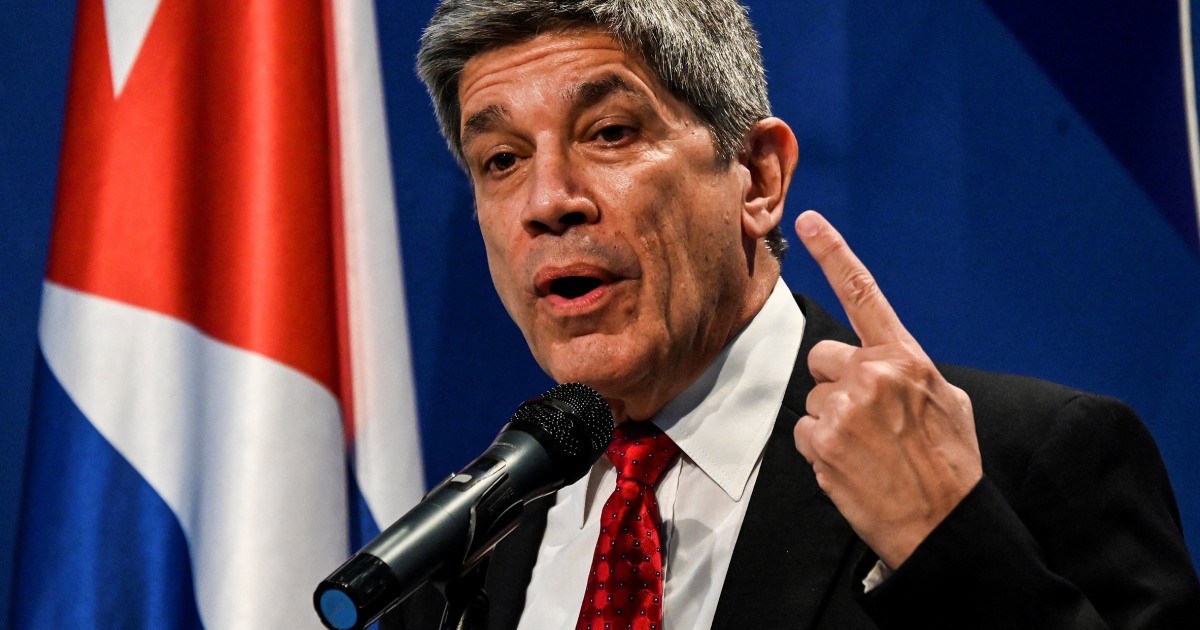
Havana announced Saturday that its armed forces are actively mobilizing to counter potential external threats from the United States. Deputy Foreign Minister Carlos Fernández de Cossío stated this preparation is necessary following recent diplomatic incidents in the region. He argued ignoring potential threats would be naive given current global instability and specific regional actions observed by officials. Havana maintains that the military remains ready to protect national sovereignty against any coercive measures.
Tensions between the two nations have escalated significantly following the U.S. military operation in Venezuela. That operation led to the capture of President Nicolás Maduro, who maintains a close relationship with Cuba’s leadership. During a press conference following the operation, U.S. President Donald Trump and Secretary of State Marco Rubio warned that intervention could be next. Rubio stated that if he lived in Havana, he would be concerned about the security of the government.
Cuban hospitals struggle to treat patients amid daily power outages caused by the ongoing economic blockade. Power grids in the country collapsed Saturday, leaving the nation without electricity for the third time this month. Fernández de Cossío said the oil blockade is the result of United States aggression against Cuba. He noted that the boycott cannot be sustained forever despite the severity of the situation.
Earlier this month, President Trump said that Cuba is going to fall pretty soon and its leaders want to make a deal. Later in the month, the President told reporters he would have the honor of taking Cuba and doing anything he wants. Those comments came just a few days after Cuban President Miguel Díaz-Canal acknowledged that leaders were in talks to avoid conflict. The Cuban official insisted that regime change was not part of the negotiation table.
Fernández de Cossío responded to comments Rubio made at the White House this week regarding the need for new leadership. The Secretary of State claimed the people in charge do not know how to fix the situation. The Cuban official insisted that the nature and structure of the government are not negotiable for any sovereign country. He argued that domestic political systems are not subject to international bargaining.
When asked whether Cuban leaders would allow more than one political party to operate, the official slammed the United States system. He noted that the U.S. only has two political parties that can go to government. He questioned if the United States would negotiate to have 10 parties with equal possibilities. This exchange highlighted the deep ideological divide between the two administrations.
The broader implications suggest a dangerous shift in regional stability and economic relations. Markets will watch closely for any escalation of sanctions or military posturing in the Caribbean. Analysts predict that the oil blockade will continue to strain the Cuban economy in the coming months. The situation remains fluid as diplomatic channels attempt to de-escalate the rhetoric.