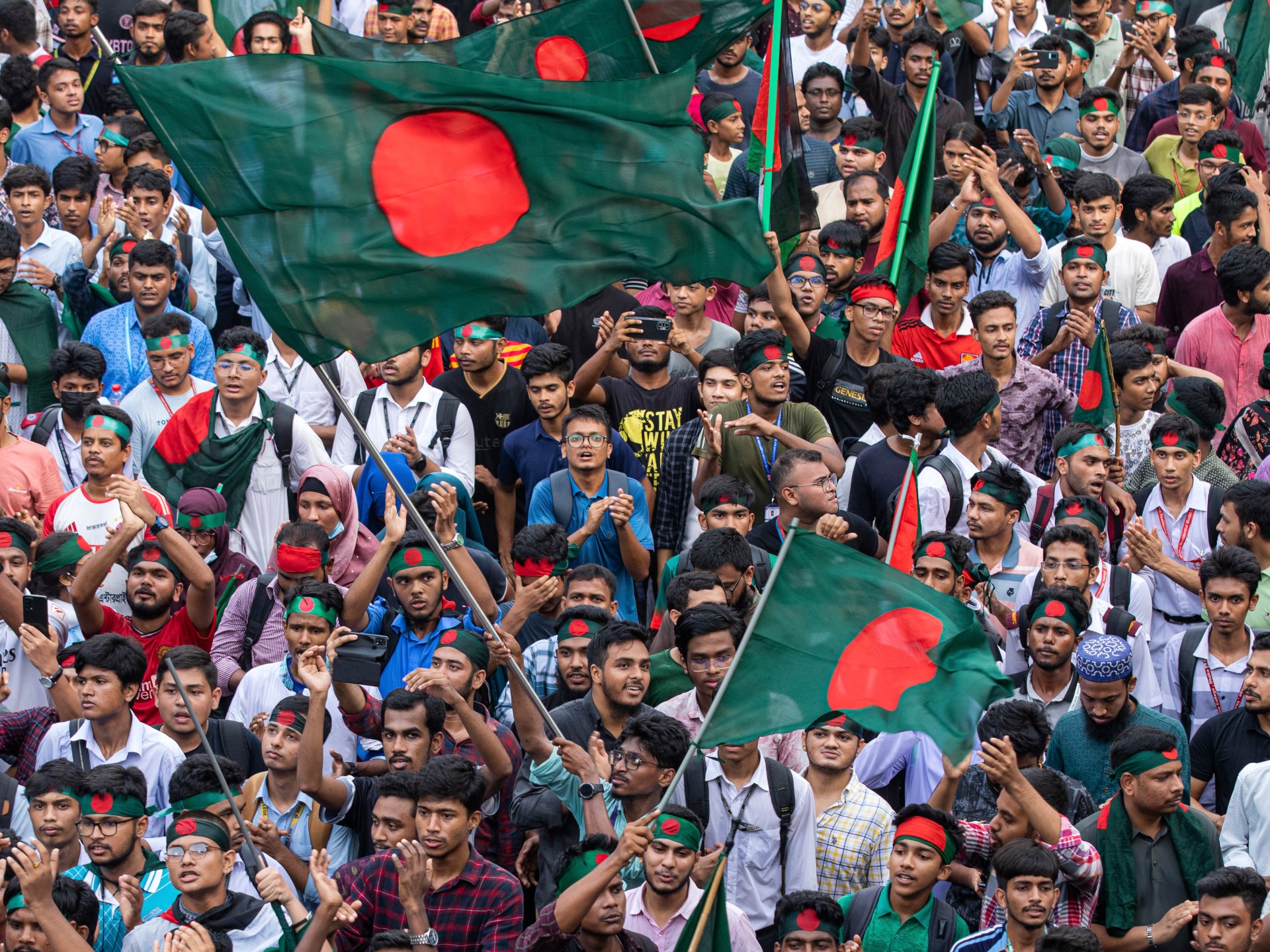
Bangladesh is preparing to hold general elections on February 12, managed by an interim government led by Nobel laureate Muhammad Yunus, following the 2024 removal of Prime Minister Sheikh Hasina and the Awami League. This political realignment has significant implications for regional dynamics, particularly concerning India and Pakistan, who have historically vied for influence in Dhaka. The two principal competing factions are the Bangladesh Nationalist Party (BNP) and Jamaat-e-Islami (JIB), initiating their campaigns in late January.
The Awami League, historically a close partner to New Delhi, has been excluded from the ballot following the violent suppression of 2024 student protests, actions for which Hasina was tried in absentia and sentenced to death. Hasina, currently in exile in India, has condemned the upcoming polls, arguing the resulting administration lacks legitimacy to unify the country. Analysts suggest that the period since Hasina’s removal has already initiated a geopolitical realignment, reversing previous foreign policy patterns, according to Khandakar Tahmid Rejwan of the Independent University, Bangladesh.
India, which previously viewed Dhaka as a crucial security partner, has seen relations deteriorate sharply since Hasina’s departure, exacerbated by India’s refusal to extradite the former leader. Bilateral trade, which saw India export $11.1 billion versus imports of $1.8 billion in the preceding fiscal year, has experienced recent restrictions due to escalating tensions. Michael Kugelman, Senior Fellow for South Asia at the Atlantic Council, noted that New Delhi views the current environment with discomfort, perceiving potential influence from religious actors threatening Indian interests.
Conversely, diplomatic ties between Bangladesh and Pakistan, which opposed Bangladesh’s 1971 independence supported by India, have reportedly warmed considerably. The BNP often allies with JIB, an Islamist group advocating for stronger Pakistani ties, presenting a clear challenge to India’s long-standing regional security architecture. This shift is evident in recent cultural spats, including Bangladesh’s unsuccessful bid to relocate its T20 World Cup matches from India, which prompted Pakistan to announce it would boycott its scheduled February 15 fixture against India in solidarity.
China’s strategic relationship with Bangladesh, focused on infrastructure and trade, has reportedly deepened during this transitional phase, suggesting a revision rather than a complete reversal of its engagement strategy. While opposition parties frequently employ anti-India rhetoric during campaigns, analysts suggest that practical governing necessities will ultimately constrain extreme anti-India policy shifts, as noted by Rejwan.
India’s foreign policy priority remains its ‘Neighbourhood First’ doctrine, aiming for a stable Bangladesh to safeguard its security interests, as stated by Foreign Secretary Vikram Misri following a meeting with interim head Yunus. New Delhi is reportedly hoping the election yields a government amenable to engagement, though the immediate future remains constrained by the ongoing dispute over Hasina’s status.
The forthcoming election is therefore critical, not only for the internal governance structure of Bangladesh but as a barometer for shifting geopolitical influence across the South Asian subcontinent. The outcome will determine whether the current trend toward distancing from India and rapprochement with Pakistan continues, or if pragmatism dictates a return to established regional balances.