European Football's New Divide: Barcelona Secures Direct Passage as PSG Faces Post-Group Stage Playoff Gauntlet
The expanded UEFA Champions League group stage concluded with starkly different outcomes for European giants. FC Barcelona leveraged a strong second-half surge against Copenhagen to clinch direct qualification to the Round of 16. Conversely, reigning champion Paris Saint-Germain, hampered by a draw against Newcastle, must navigate the newly introduced playoffs, signaling significant geopolitical shifts in continental football power.
European Football's New Divide: Barcelona Secures Direct Passage as PSG Faces Post-Group Stage Playoff Gauntlet
Publicidad
Publicidad
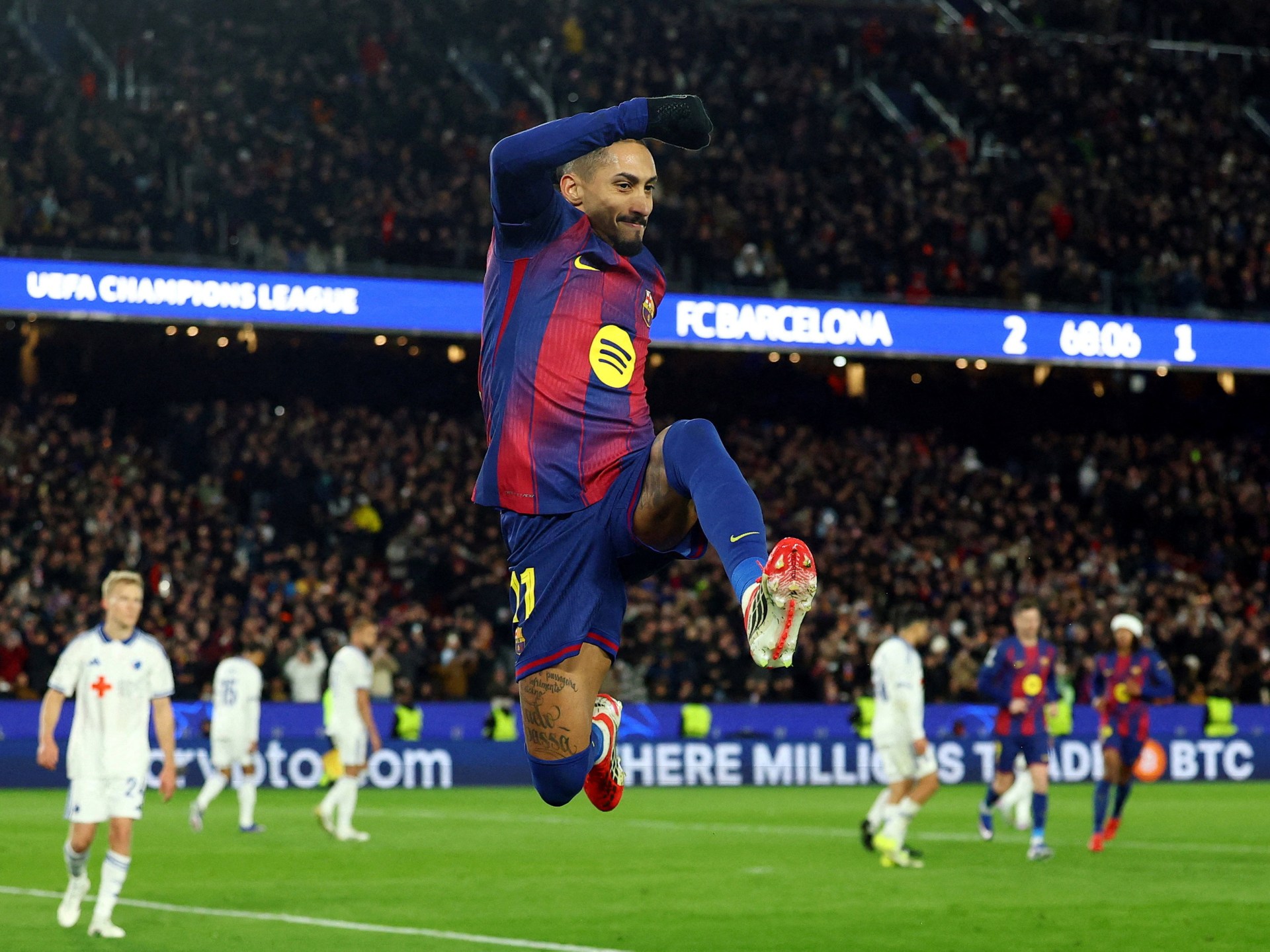
The final round of fixtures in UEFA’s overhauled Champions League group stage has crystallized a new competitive hierarchy, immediately impacting the fixture load and prestige pathways for Europe’s elite clubs. FC Barcelona secured crucial top-eight placement, guaranteeing direct passage to the knockout phase, while Paris Saint-Germain (PSG) faces the uncertainty of the play-in tournament.Barcelona overcame an early deficit against FC Copenhagen, ultimately winning 4-1 at Camp Nou. Goals from Lewandowski, Lamine Yamal, and Raphinha powered the Catalans to 16 points, securing the necessary position based on goal difference ahead of several rivals. Despite the convincing finish, the match highlighted defensive vulnerabilities, as Barcelona completed the group phase without a clean sheet—an anomaly for a top-tier qualifier.In contrast, the narrative surrounding PSG was one of stagnation. The capital club was held to a 1-1 draw against Newcastle United. This result, coupled with missed opportunities, including an Ousmane Dembele penalty save, relegated PSG outside the automatic qualification bracket. They, along with Borussia Dortmund and Juventus, will now enter the high-stakes playoffs, a structure designed to maximize competitive tension across the expanded league format.The implications for these clubs extend beyond immediate sporting concerns. Direct qualification minimizes fixture congestion, a critical factor in navigating demanding domestic and international calendars, providing a competitive edge in subsequent rounds. For clubs entering the playoffs, the extra two-legged ties increase the risk of fixture pile-up and potential fatigue, which can influence domestic league performance.Elsewhere, English clubs demonstrated significant depth, with five of six representatives advancing directly. Manchester City’s narrow 2-0 victory over Galatasaray lifted them into eighth place, sparing them the playoff scenario that befell them last season. Arsenal achieved a perfect record, cementing their status as a dominant force under the new structure.The suspense created by the 36-team group stage, which saw qualification decided in the final moments across multiple fixtures, underscores UEFA’s success in engineering a more financially and competitively engaging initial phase. Clubs finishing ninth through 24th, including PSG, Dortmund, and Atletico Madrid (who suffered a shock home defeat to Bodo/Glimt), now await the draw to determine their playoff opponents. The results confirm that while established financial power remains influential, tactical discipline and consistency across the entire group phase are now non-negotiable prerequisites for avoiding the added complexity of the newly mandated preliminary knockout round.Source: Adapted from Al Jazeera reporting on UEFA Champions League fixtures.