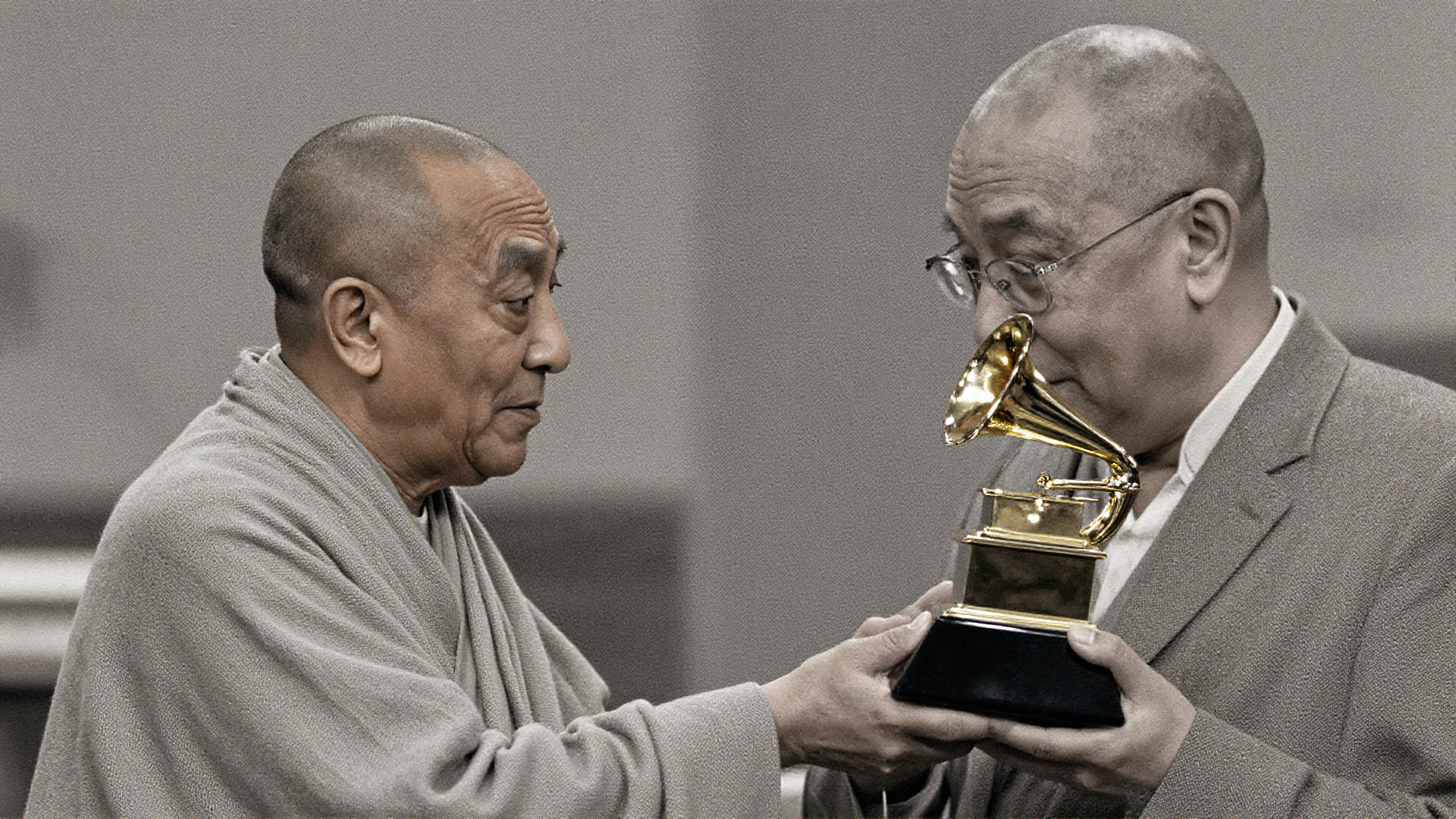
Beijing issued a sharp rebuke following the Dalai Lama's unexpected win at the recent Grammy Awards, asserting that the recognition constituted political maneuvering against China. The Tibetan spiritual leader was honored in the audiobook category for *Meditations: The Reflections of His Holiness the Dalai Lama*, according to reports from the event.
Chinese Foreign Ministry spokesman Lin Jian stated during a press briefing that the government firmly opposes using art awards as instruments for anti-China political manipulation, describing the stance as consistent. The 90-year-old leader has resided in Dharamshala, India, since 1959, following the suppression of a Tibetan uprising by Chinese forces, and Beijing maintains that Tibet is an inalienable part of the People's Republic of China.
The Dalai Lama accepted the award with expressions of humility, viewing it not as a personal achievement but as validation of shared universal responsibility. Musician Rufus Wainwright, who contributed to the recording, accepted the prize on the Dalai Lama's behalf at the ceremony.
The geopolitical friction is further intensified by the Dalai Lama’s recent confirmation of plans to select his successor. Traditional Tibetan Buddhist custom dictates reincarnation, a process Beijing insists must adhere to Chinese law and government approval.
China's insistence on controlling the succession process is viewed by many exiled Tibetans as a strategy to solidify political control over the historically autonomous region. The spiritual leader has previously indicated his reincarnation may occur outside of mainland China, a statement Beijing has summarily rejected.
This event highlights the enduring culture war intersecting with international recognition, where cultural accolades become inadvertent platforms for political dissent. The Grammy win serves as a minor, yet symbolic, diplomatic flashpoint between China and supporters of the exiled Tibetan government.
The broader implication involves the projection of soft power and international narrative control, as Beijing continues to counter narratives that legitimize the Dalai Lama’s authority or Tibet’s distinct identity on the global stage.