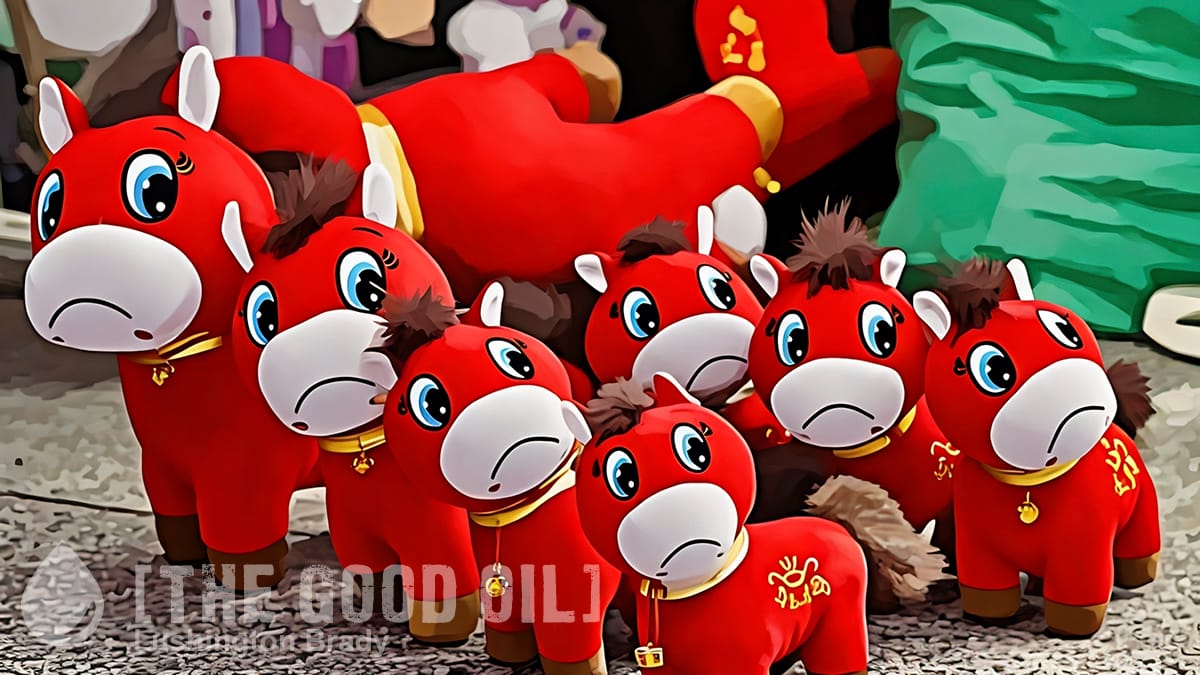
A plush toy, accidentally stitched with a downturned smile instead of its intended cheerful expression, has ignited a significant social media trend in China, signaling underlying worker discontent. The item, originating from a Yiwu-based shop, quickly gained traction after being posted online, leading to orders exceeding 15,000 units daily, according to reports cited by the Straits Times.
This phenomenon, highlighted by the hashtag #YiwuCryCry-HorseGoneViral, is being interpreted by some observers as a proxy indicator of economic and social stress, similar to how night-time city lighting is sometimes used to gauge economic activity. The demand surge for the flawed toy demonstrates a public appetite for symbols reflecting exhaustion, contrasting sharply with state-promoted optimism.
Buyers are reportedly using the sad-faced toy to represent their feelings about demanding work environments, according to commentary sourced by the South China Morning Post. Many young Chinese employees identify with the term 'niu ma,' meaning 'cattle and horse,' which serves as online shorthand for overworked and undervalued staff.
This cultural moment speaks directly to China's pervasive '996' work culture—9 a.m. to 9 p.m., six days a week—which remains common despite purported efforts to curb excessive overtime. The low cost of the toy, approximately under $5 USD, made it an accessible medium for this form of digital commentary, as reported by Business Insider.
Experts suggest the trend represents a psychological release valve for social fatigue, with one buyer noting the horse reflects their feeling at work, contrasting with the smiling version representing their demeanor post-work. This mirrors previous instances where cultural artifacts contradicting the official narrative have faced scrutiny.
Given the Chinese Communist Party’s consistent effort to project an image of unified societal satisfaction, such viral dissent presents a challenge to state legitimacy built upon claims of improving living standards. As noted by commentators, the CCP often moves to suppress media that deviates from its desired projection, citing historical examples like the censoring of certain animations or television programming.
The rapid spread and adoption of the 'crying horse' meme underscore the difficulty authorities face in completely controlling popular sentiment, even when monitoring digital platforms like Sina Weibo. The trajectory of this fad—whether it will be banned like other politically inconvenient memes—will offer further insight into Beijing’s tolerance for coded domestic criticism.